


AIO Liquid 240mm Setup and Configuration: Complete Tutorial
AIO Liquid 240mm Setup and Configuration. Clear setup instructions with SA-specific considerations, troubleshooting tips & recommended components.
Read moreDeciding on a laptop vs desktop for video editing in South Africa? This guide breaks down performance, portability, and price to help you choose the ultimate machine for your workflow. 💻 We compare rendering speeds, upgrade options, and value for money. Find your perfect editing rig today! 🚀
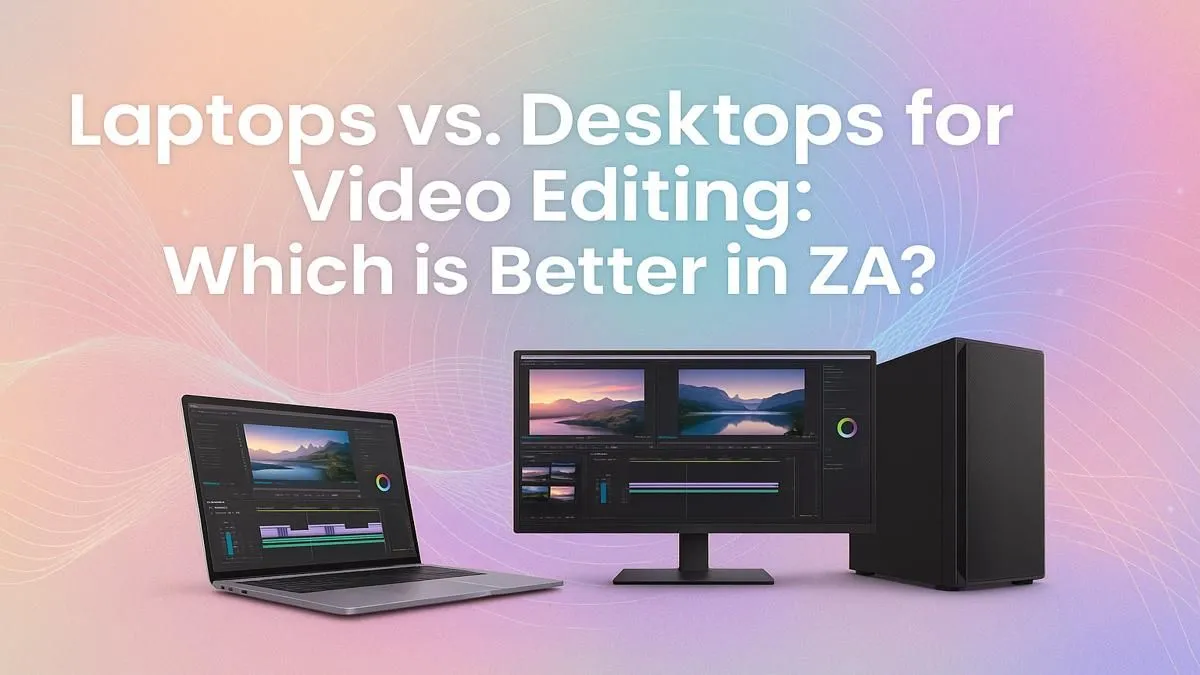
So, you're a content creator in South Africa, ready to cut your next masterpiece. But the big question looms: laptop vs desktop for video editing? Do you go for the raw, unadulterated power of a tower humming under your desk, or the freedom to edit a 4K vlog from a coffee shop in Kloof Street? It’s a classic tech dilemma, and getting it right is crucial for a smooth, frustration-free workflow. Let's break it down.
When your timeline is stacked with colour grades, effects, and multiple 4K streams, a desktop PC is your best friend. The core reason? Space and cooling. A larger chassis allows for more powerful components that can run at their peak potential without overheating—a common bottleneck for laptops during long render sessions.
This is where the real debate in building a machine for video editing begins. You have incredible multi-core options, whether you're looking at a powerful Intel PC setup known for its strong single-core performance, or a multi-threaded AMD Ryzen beast that chews through rendering tasks.
Furthermore, desktops offer unparalleled upgradability. If a new GPU drops that drastically cuts your export times, you can simply swap it in. This long-term flexibility often makes a desktop a better investment over time. Graphics acceleration is vital, and top-tier NVIDIA GeForce gaming PCs offer CUDA cores that many editing programs love. Similarly, the latest AMD Radeon gaming PCs deliver fantastic performance-per-Rand, making them a seriously competitive choice for editors.
The case for a laptop is simple and powerful: portability. A laptop gives you the freedom to work wherever inspiration strikes. You can edit on set, at a client's office in Sandton, or while travelling. For YouTubers, journalists, and on-the-go filmmakers, this isn't a luxury; it's a necessity.
Modern editing laptops are incredibly capable, packing immense power into a slim chassis. However, it's important to understand that a "mobile" version of a component, like an RTX 4070, is not the same as its desktop counterpart. It's tuned for lower power consumption and thermal limits. While still a fantastic performer, it won't quite match the sustained output of a full-sized desktop card during a gruelling 45-minute 4K export.
your editing laptop into a desktop powerhouse with a single cable. A good Thunderbolt or USB-C docking station can connect you to multiple large, colour-accurate monitors, a full-sized mechanical keyboard, a proper mouse, and external SSDs. This gives you the best of both worlds: portability when you need it, and a full-featured editing suite when you're back at your desk.
Choosing the right machine for video editing in South Africa goes beyond just pure specs. Here’s a quick breakdown of what truly matters.
This is the heart of the matter. A desktop will always offer more raw performance and better cooling for the same price. A laptop offers the freedom to work anywhere. Ask yourself: where do I do 80% of my work? If the answer is "at my desk," the performance benefit of a desktop is hard to ignore. If you're constantly on the move, a laptop is the clear winner.
A desktop is a modular system. You can upgrade the CPU, GPU, RAM, or storage whenever you want. This means your initial investment can last much longer. Laptops, on the other hand, are mostly fixed systems where only the RAM and storage are typically user-upgradable. This makes the initial purchase decision even more critical. If you want desktop power without the hassle of building it yourself, our range of pre-built PC deals offers a fantastic, upgradable starting point.
For professionals whose livelihood depends on performance—think 3D animators, VFX artists, and full-time filmmakers—neither a standard gaming desktop nor a consumer laptop might be enough. When your workflow demands absolute peak performance, certified drivers, and rock-solid stability for complex projects, a dedicated workstation PC is the ultimate tool, built from the ground up for these intense creative tasks.
The final verdict on the laptop vs desktop for video editing debate? It's personal. It hinges entirely on your workflow, your location, and your budget. By weighing the uncompromising power of a desktop against the incredible freedom of a laptop, you can find the perfect creative partner to bring your vision to life.
Ready to Build Your Editing Powerhouse? Whether you need the raw power of a desktop or the on-the-go freedom of a laptop, your perfect video editing machine is waiting. Explore our massive range of customisable PCs and Laptops and find the perfect rig to bring your vision to life.
Generally, yes. Desktops offer superior cooling, more powerful components for the same price, and easier upgradability, leading to faster rendering times for complex projects.
Absolutely. Modern high-end laptops with powerful CPUs, dedicated GPUs, and ample RAM can handle 4K editing, but may run hotter and render slower than a comparable desktop.
For 1080p, aim for an Intel Core i5/AMD Ryzen 5, 16GB RAM, a dedicated GPU with 4GB VRAM, and a fast SSD. For 4K, upgrade to an i7/Ryzen 7, 32GB RAM, and a GPU with 8GB+ VRAM.
A capable entry-level desktop build starts around R15,000-R20,000, while high-end systems can exceed R40,000. Laptops with similar capabilities often cost 20-30% more.
Yes, gaming laptops are excellent for video editing. They typically feature the powerful processors, dedicated graphics cards, and robust cooling systems needed for demanding editing tasks.
Both are crucial. The CPU handles general operations and playback, while the GPU accelerates rendering, effects, and encoding. A balanced system is key for a smooth workflow.
AIO Liquid 240mm Setup and Configuration. Clear setup instructions with SA-specific considerations, troubleshooting tips & recommended components.
Read more
Setting Up DDR5 64GB Kit. Tested & verified settings for best FPS and visual quality on SA hardware budgets.
Read more
Overwatch 2 Setup Guide Gamers. Clear setup instructions with SA-specific considerations, troubleshooting tips & recommended components.
Read more
R and RStudio on Mac: Data Science Setup Guide. Clear setup instructions with SA-specific considerations, troubleshooting tips & recommended components.
Read more
NVIDIA Broadcast Setup with GPU: Streamer Guide. Clear setup instructions with SA-specific considerations, troubleshooting tips & recommended components.
Read more
Core Ultra 7 265K Temperature Guide: Normal Range. Complete product range with SA pricing, key specs & recommendations for different budgets.
Read more
AMD RX 9050 XT: Rumoured Specs, Price & Release. SA-focused analysis with local pricing data, real-world insights & actionable buying advice.
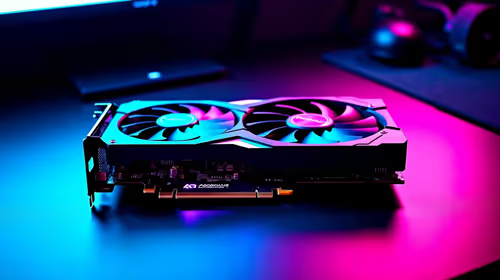
Can RTX 4080 Super Run AI Workloads for SA Developers Detailed answer with SA data, expert analysis & practical recommendations for local buyers.
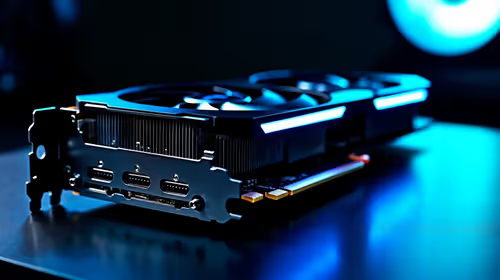
Can RTX 4090 Run AI Workloads for SA Developers Detailed answer with SA data, expert analysis & practical recommendations for local buyers.
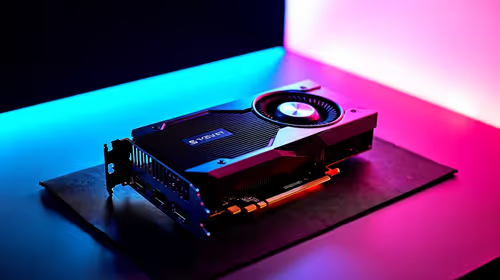
Top Settings for Intel Arc B580 at Ultrawide 1440p picks evaluated on performance, value & SA availability with current Rand pricing from Evetech.

RTX 4060 CS2 Low Settings at 1080p: FPS Results. Real-world benchmark data, FPS numbers & performance analysis. What SA gamers can actually expect.

Visual Artifacts: Possible GPU Issue Issue #1. Diagnosis steps, proven fixes & when to seek professional help. SA-specific support info included.
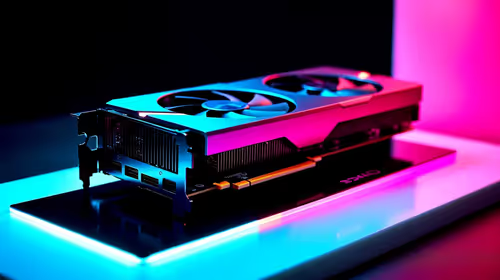
Can the RTX 4090 Handle 1440p 144Hz Gaming. Performance testing verdict with real data & practical recommendations for SA buyers.

Top ASUS GPU Under R15000 picks evaluated on performance, value & SA availability with current Rand pricing from Evetech.
GTA 6 Max Settings on RTX 5070. Tested & verified settings for best FPS and visual quality on SA hardware budgets.
Cyberpunk 2077 Max Settings on RTX 5080. Tested & verified settings for best FPS and visual quality on SA hardware budgets.
Starfield Max Settings on RTX 5070 Ti. Tested & verified settings for best FPS and visual quality on SA hardware budgets.
Top RTX 5090 Under R5000 picks evaluated on performance, value & SA availability with current Rand pricing from Evetech.