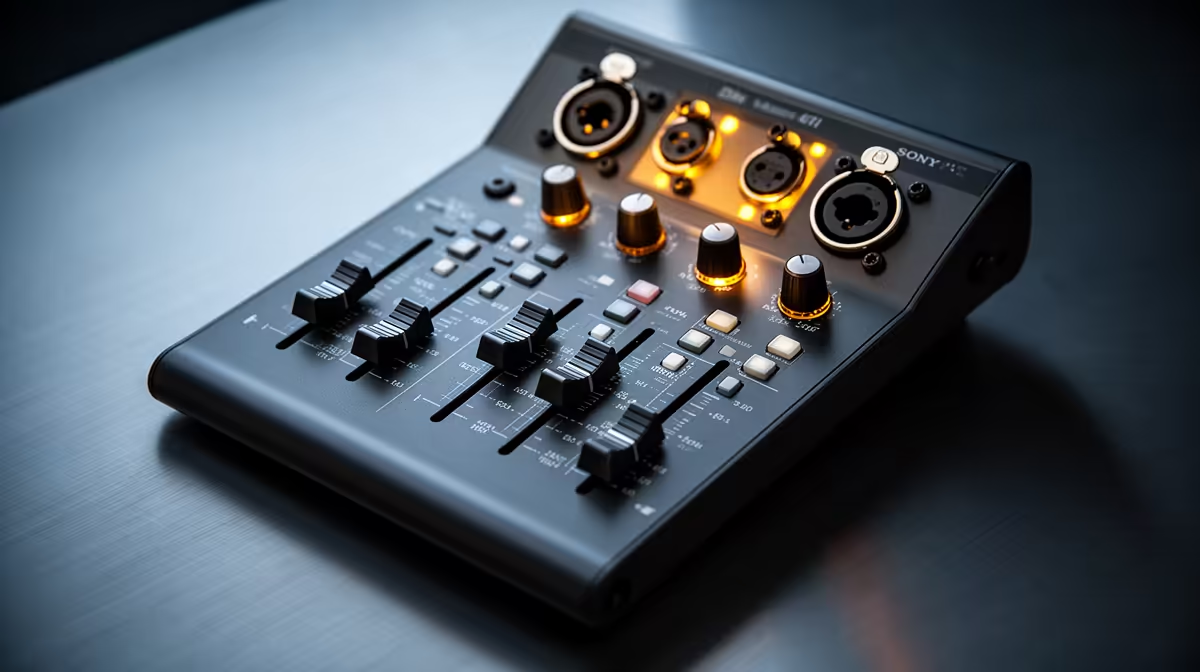
Rand for Rand, very few audio purchases expose value as clearly as the mixer category. A unit with two XLR combo inputs, 48V phantom power, and USB routing covers almost every podcast and streaming need that most South African creators will ever have, and the real question is not which feature list to buy but how to read the specifications that separate a genuinely clean preamp stage from a marketing-grade spec sheet. Getting that judgement right means your dual XLR and 48V phantom power mixer earns its keep for years, rather than becoming the first thing you replace when audio frustration grows.
Quick Answer
A dual-XLR USB mixer around R3,000 to R4,000 covers two condenser mics and streams directly without a separate interface. Prioritise published EIN near -128dBu and steady 48V phantom delivery over brand names, RGB lighting, or onboard touch screens. The preamp spec is where value is made or lost.
💰 Where the Rand Value Is: Preamp Noise vs Feature Count
The most common value trap in this category is a high feature count at the cost of a mediocre gain stage. RGB channel indicators, touch-sensitive faders, and companion apps photograph well and look impressive in comparison videos, but none of those affect whether a dynamic microphone sounds clean at 55dB of gain.
Equivalent input noise is the one figure that cannot be obscured by a feature list. A unit publishing -128dBu EIN will sound indistinguishable from silence when you push 60dB of gain into a quiet microphone. A unit that omits its EIN specification, or publishes a figure above -120dBu, is signalling that the gain stage is average at best and the marketing budget went elsewhere.
For a R3,000 to R4,000 all-in-one unit, spending around R500 more to step from a -120dBu EIN design to a -128dBu design is one of the clearest audible upgrades available in the category. The noise difference at high gain is directly perceptible, not a subtle change visible only on a spectrum analyser.
🔧 48V Phantom Power: What Specification to Actually Check
Phantom power is marketed by its voltage number: 48V. That is the correct figure for biasing a condenser microphone capsule. What the voltage spec does not tell you is whether the mixer delivers that voltage steadily under full load.
Some compact mixers supply 48V from a single shared rail that sags when two condensers are connected simultaneously. Each mic draws typically 5 to 10mA of current; a mixer that cannot supply that to both channels simultaneously will hold stable voltage at full phantom load. Ask or confirm the per-channel current delivery; a mixer that supplies 10mA per channel independently under dual load is correctly specified for two condensers.
The practical implication for ZAR value: a cheaper unit may supply phantom power that reads correctly on one channel while the second channel draws it down by 3 to 5V under load. That voltage sag reduces condenser sensitivity subtly, making two nominally matched microphones sound slightly uneven on the recording. A single confirmed spec -- maximum phantom current per channel -- protects against this.
Pro Tip ⚡
Before committing to a mixer, record a 30-second silence clip with both condensers connected and phantom power on for both channels. Listen to the noise floor at maximum gain. If you hear a hiss layer above room background noise, the phantom circuit or the preamp stage is the issue, and no update will fix that in hardware.
⚡ USB Integration: Replacing the Interface Costs
The most direct Rand saving a dual-XLR mixer offers is the elimination of a separate audio interface. A standalone two-channel USB interface suited for podcast use typically costs R2,500 to R3,500. An all-in-one mixer with onboard USB audio routing does the same job: it handles preamp gain, phantom power, and digital conversion on one USB connection to the recording PC, presenting as a class-compliant audio device with no driver installation.
That consolidation saves the interface cost entirely and removes one box from the desk. For South African creators working in compact home-office setups, both savings are material. The key technical requirement is class-compliant USB audio: the mixer must present itself as a standard audio device without proprietary driver dependency, which ensures it works with any recording application on any current operating system.
Multitrack USB output, where each XLR input records to its own independent track rather than a summed stereo file, adds post-production flexibility. When editing interviews you can remove a cough from one host without affecting the other. This feature is worth confirming if editing is part of your workflow; not all mixers at this price tier offer it, and it is rarely highlighted on the product page.
🎯 Prioritising Within a Fixed Rand Budget
Given a fixed budget of roughly R3,000 to R4,500 for a dual-XLR mixer, the priority order for features is straightforward. First: preamp noise specification. Second: stable dual-channel 48V phantom power. Third: class-compliant USB with headphone monitoring. Everything else -- effects, display, Bluetooth, companion apps -- is secondary.
That priority order maximises audio quality per Rand. It means a unit with a clean gain stage and adequate phantom power but no onboard LCD will out-perform a more expensive unit with RGB, a touchscreen, and a mediocre EIN. For South African creators where the recording environment already adds ambient noise challenges, starting with the cleanest signal chain available at the budget is the decision that matters most.
Frequently Asked Questions
What price bracket gives good Rand value for a dual-XLR mixer in South Africa?
The R3,000 to R4,500 range covers two combo jacks, independent 48V phantom power, onboard USB audio, and headphone monitoring in a class-compliant design. Units at this level from reputable audio brands can match the functional capability of mixers costing nearly twice as much, provided the EIN specification is confirmed near -128dBu.
Does a higher price always mean better audio quality in this category?
No. Preamp noise specification is the measurable audio quality indicator, and several units in the R3,000 to R4,000 bracket match the EIN figures of units costing R7,000 or more. The price difference at the top end often reflects brand prestige, build quality, higher channel counts, and professional features rather than superior two-channel audio performance.
Which additional feature justifies paying more?
A low-noise high-gain preamp stage. Spending an extra R400 to R600 to step from an average EIN figure to a confirmed -128dBu design directly improves recorded audio at every session. That return is larger and more consistent than the return from onboard effects, better lighting, or a companion mobile app.
Can a dual-XLR mixer replace both a mixer and an audio interface?
Yes, provided it has class-compliant USB audio output built in. The mixer handles all analogue gain and phantom power tasks, and the USB connection routes the processed signal directly to the recording PC as a standard audio device. This saves the cost of a separate interface and keeps the desk setup simpler.
Why does phantom power current delivery matter more than the voltage number?
The 48V figure is the standard voltage required, and virtually all phantom-equipped mixers can supply it under no load. The current capacity under dual-mic load determines whether both condensers receive stable voltage simultaneously. A mixer that sags below 44V when two condensers draw current will deliver inconsistent sensitivity and can cause subtle tonal differences between channels.
Ready to find the best Rand value in a dual-XLR mixer that covers every podcast and stream scenario?
Browse the audio mixer range at Evetech to compare units with confirmed low-noise preamp specifications and independent phantom power for South African home studios.