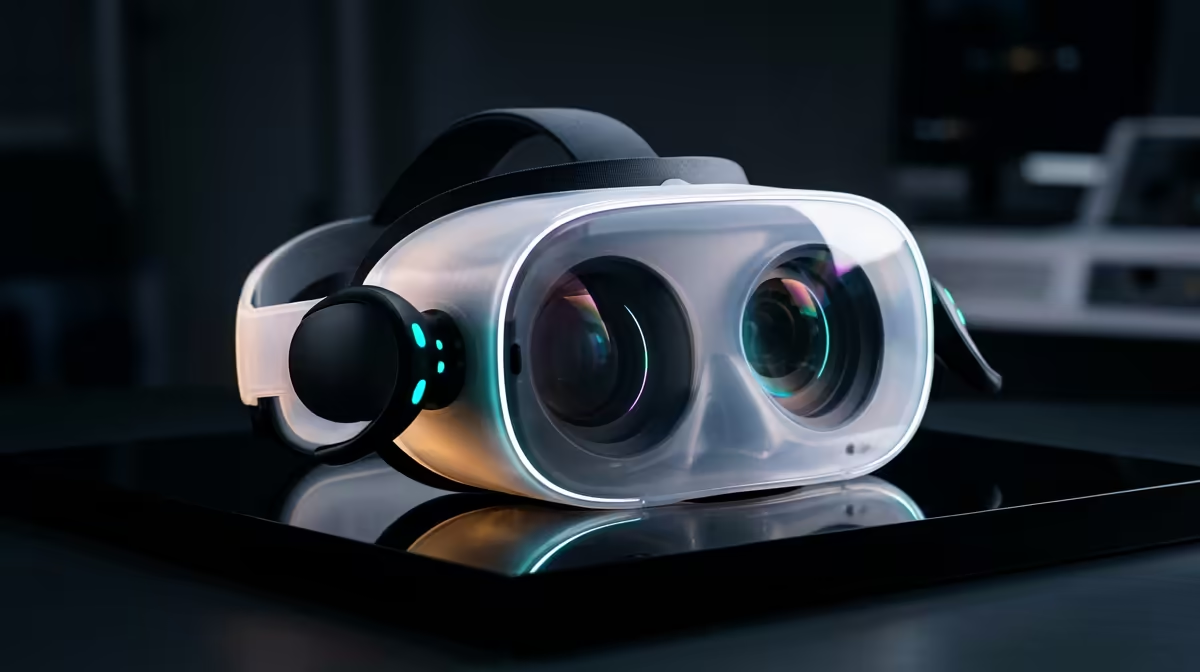
Standing in front of two Meta headsets with similar names and a real price gap, the honest question is what the extra Rands actually buy. The Quest 3 versus Quest 3S choice comes down almost entirely to optics and clarity. The Quest 3 uses newer pancake lenses and a higher-resolution display, while the Quest 3S reuses an older lens stack from the previous generation to hit a lower price. Both run the same chip and the same software library, so the decision is about how sharp you need the picture and how much storage you want.
Quick Answer
Buy the Quest 3S 128GB near R14,999 if you want the cheapest way into modern Meta VR and standalone mixed reality. Step up to the Quest 3 512GB near R18,499 if visual clarity, sharper text, and far more storage matter to you. Both share the same Snapdragon XR2 Gen 2 processor and run identical games.
The lens difference is the whole story
The single biggest gap between these two headsets sits in front of your eyes. The Quest 3 ships with pancake lenses, a compact optical design that delivers a sharper image edge to edge with a wider sweet spot, meaning you can look around without constantly recentring your head to find focus. The Quest 3S carries forward the older lens design from the Quest 2 era, which is perfectly usable but softer toward the edges and less crisp on fine detail.
Paired with that, the Quest 3 runs a higher-resolution display, so text in browsers, menus, and productivity apps reads cleanly where the 3S can look slightly fuzzy on small fonts. For fast-paced gaming the difference is easy to overlook in the moment. For reading, working, or watching films in a virtual cinema, the clarity gap is the thing you notice every session.
Where the two headsets are identical
It is worth being clear about what you do not lose by saving money. Both headsets use the Snapdragon XR2 Gen 2 chip, so raw performance and frame rates in games are the same. Both run full-colour passthrough for mixed reality, both access the entire Meta Quest store, and both work as standalone devices with no PC required. Controllers, tracking, and the core experience are shared. The Quest 3S is not a cut-down platform, it is the same platform with a cheaper lens and panel.
Storage shapes the long-term value
The common SA pairings put the 3S at 128GB and the headline Quest 3 at 512GB, and that matters more than it first appears. Modern VR titles are large, and a 128GB headset fills up faster than you expect once you install a handful of big games. The 512GB Quest 3 lets you keep a full library installed without constant uninstalling and redownloading. If you only play two or three titles at a time, 128GB is fine. If you collect games, the larger storage is part of what you are paying for.
Comfort and everyday use
Both headsets are similar in weight and balance, and both rely on a soft strap out of the box that many owners later upgrade for longer sessions. Neither has a built-in cooling advantage over the other since they share a chip. Battery life is comparable too, landing in the rough two-hour range depending on the game, which is normal for standalone VR. If you plan marathon sessions, factor in a comfort strap and possibly a battery accessory regardless of which model you choose.
The Quest 3 is marginally slimmer at the front thanks to those pancake lenses, which lets the optics sit closer to your face and shifts the balance slightly. It is a small difference in the hand, but over a long session the more even weight distribution is welcome. The 3S, carrying the older lens design, is a touch chunkier up front, though not in a way that makes it uncomfortable. Either headset rewards a few minutes spent getting the fit and the lens spacing right, since a poorly adjusted headset looks blurry no matter how good the panel is.
Setup and the SA reality
Both run entirely standalone, so you do not need a powerful gaming PC to start, which keeps the total cost predictable in Rand. You will want a stable home wireless network if you plan to stream PC VR wirelessly later, but for standalone play none of that matters on day one. A clear, snag-free play space of roughly two metres by two metres is the real requirement, and the headsets map your room with their own cameras so no external sensors are needed. That self-contained design is a large part of why the Quest line suits a SA living room or bedroom better than tethered alternatives.
Which one is right for you
Pick the Quest 3S if this is your first headset, your budget is the deciding factor, or you mostly play active games where you are moving rather than reading. It delivers the modern Meta experience for the lowest outlay and nothing about it feels obsolete. Pick the Quest 3 if you value image sharpness, want to use the headset for productivity or media as well as games, or simply want the better optics and the larger storage to grow into. A useful way to see current pricing and what is in stock is the AR and VR glasses range at Evetech, and pairing either headset with a comfort strap from the accessories best sellers makes long sessions far easier.
Frequently Asked Questions
Do the Quest 3 and Quest 3S play the same games?
Yes. Both use the Snapdragon XR2 Gen 2 chip and access the identical Meta Quest store, so every title that runs on one runs on the other at the same performance level. The only difference is how sharp the image looks.
Is the Quest 3S worth it over the Quest 3?
For first-time buyers and budget-conscious players, yes. The 3S near R14,999 delivers the same chip, software, and mixed reality for less. You give up lens sharpness, display resolution, and storage compared to the Quest 3.
What is the real difference in the lenses?
The Quest 3 uses newer pancake lenses with a wider sweet spot and sharper edge-to-edge clarity. The Quest 3S reuses the older lens design, which is softer toward the edges and less crisp on fine text and detail.
Does the Quest 3S do mixed reality and passthrough?
Yes. Both headsets offer full-colour passthrough and the same mixed reality features. The Quest 3 passthrough looks slightly sharper thanks to its display, but the capability is identical.
How much storage do I need for VR?
If you play only a few titles at once, 128GB on the Quest 3S is enough. If you keep a large library installed, the 512GB Quest 3 saves you from constantly uninstalling and redownloading big games.
Will I need to buy extra accessories?
Both headsets come ready to play, but many owners add a comfort strap for longer sessions and sometimes a carry case or extra controllers. None of these are required to start, they improve comfort over time.