

Complete Guide: Setting Up AIO Liquid 420mm
Setting Up AIO Liquid 420mm. Tested & verified settings for best FPS and visual quality on SA hardware budgets.
Read moreMPRT vs GtG response time explained: • Explain key differences • Show real-world impact • Provide testing tips • Recommend monitors 🎮🖥️
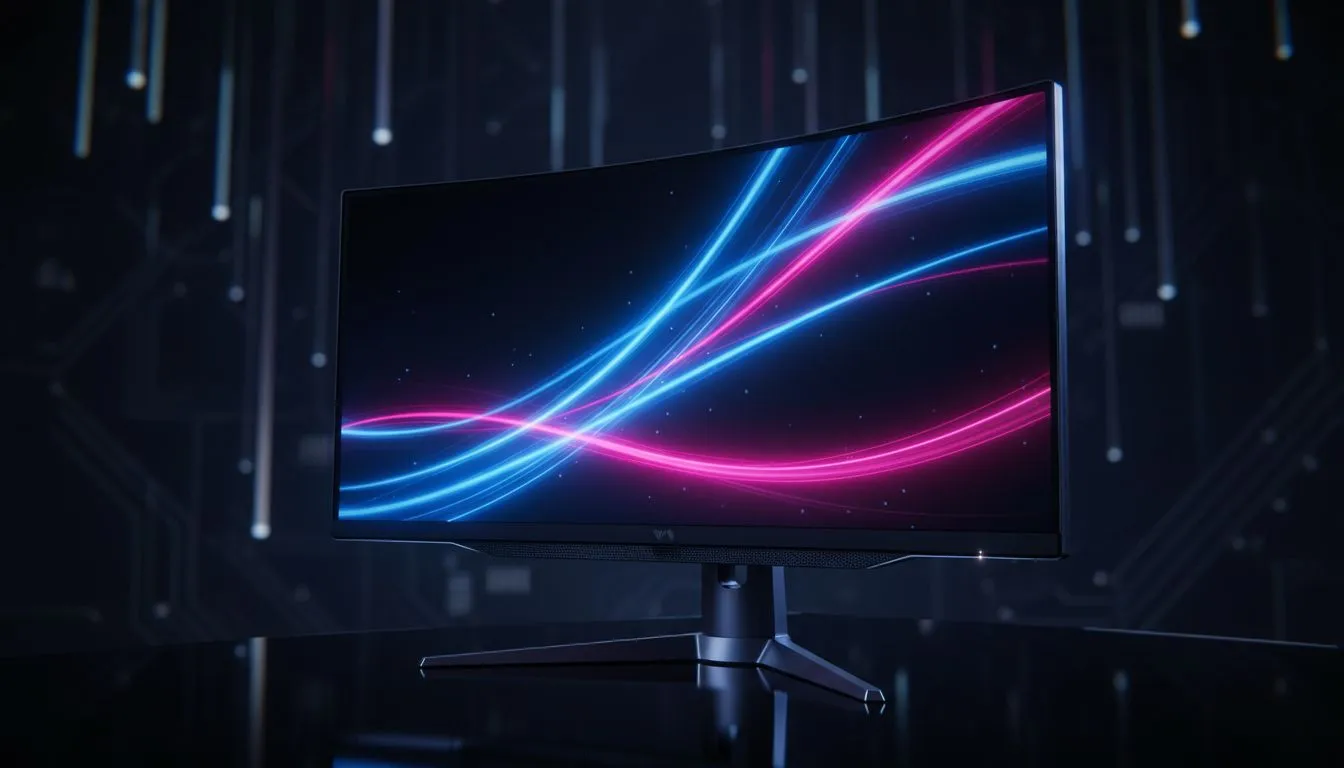
Shopping for a new gaming monitor in South Africa can feel like decoding a secret language. You see "1ms" plastered everywhere, but then you spot two different acronyms: GtG and MPRT. What’s the deal? Choosing the wrong one can be the difference between hitting a crisp headshot and getting frustrated by a blurry, ghosting mess. Let's clear up the confusion so you can pick the right panel for your perfect setup. 🎯
Think of GtG response time as the raw, unfiltered speed of your monitor's pixels. It measures how quickly a single pixel can change from one shade of grey, to another, and back again. This is the most fundamental measure of a panel's performance.
A lower GtG time means faster pixel transitions, which directly combats an effect gamers despise: ghosting. Ghosting is that faint trail you see behind fast-moving objects, and it's caused by pixels not being able to keep up with the action. For competitive gaming, a low GtG is non-negotiable. Most of our wide selection of PC monitors aimed at gamers will feature a GtG of 5ms or less.
If GtG is the engine's raw power, MPRT is like a high-tech traction control system. MPRT doesn't measure how fast pixels change colour; it measures how long a pixel is visible on screen while an image is in motion. The goal of MPRT is to reduce perceived motion blur, making fast action look smoother and clearer. ✨
This is usually achieved through a technique called backlight strobing. The monitor's backlight flashes rapidly in sync with the refresh rate, inserting black frames between the actual image frames. This tricks your eyes into perceiving a much sharper moving image. It's effective, but it has trade-offs:
Many of the top-tier displays in our collection of all our gaming monitors offer these motion blur reduction technologies.
Curious about your current monitor's motion blur? Head over to the Blur Busters UFO Test online. It's a fantastic, free tool that clearly demonstrates ghosting, motion blur, and other artifacts. It's the perfect way to see the difference between a 60Hz office screen and a high-refresh-rate gaming panel.
Here’s the simple truth: A low GtG response time is more important than a low MPRT.
You can't fix a slow panel (high GtG) with backlight strobing (low MPRT). If the pixels can't change colour fast enough, you'll still get ghosting and smearing, even if the backlight is flashing perfectly. A low GtG is the foundation for a clean image.
Think of it this way:
Ultimately, the best spec depends on your needs. For a creator working on one of our stunning 4K monitors, colour accuracy might trump response time. For a LAN warrior who needs a second screen, one of our specialised portable monitors might be the priority. But for gaming, GtG is king. Don't forget to grab the right cables and stands from our range of essential monitor accessories to complete your setup.
Ready to Find Your Perfect Match? Now that you know the difference between MPRT and GtG, you're equipped to make a smarter choice. Stop letting motion blur get in the way of your victory. Explore our best PC monitor deals and find the perfect screen to conquer your world.
MPRT measures perceived motion blur, while GtG measures pixel color transition speed. MPRT affects blur; GtG influences ghosting and overshoot.
For fast-paced gaming, low MPRT reduces motion blur; competitive players also want low GtG to avoid ghosting. Consider game type and priorities.
Lower GtG shortens pixel transition time but doesn't remove motion blur. Use MPRT or blur reduction modes to reduce perceived blur.
MPRT is measured by strobing the backlight and timing perceived pixel visibility; accurate tests use high-speed cameras and motion patterns.
Manufacturers may report ideal MPRT and GtG figures. Independent tests reveal real-world ghosting or overshoot, so check reviews.
Enable motion blur reduction to lower MPRT and tweak overdrive to balance GtG. Avoid extreme overdrive that causes overshoot.
Choose low MPRT for smooth single-player visuals or low GtG for esports crispness; verify with measured tests and user reviews.
Setting Up AIO Liquid 420mm. Tested & verified settings for best FPS and visual quality on SA hardware budgets.
Read more
Intel XTU Download & Setup Guide: Intel CPU. Clear setup instructions with SA-specific considerations, troubleshooting tips & recommended components.
Read more
Cyberpunk 2077 Max Settings on RTX 4090. Tested & verified settings for best FPS and visual quality on SA hardware budgets.
Read more
The Complete Guide to GPU. Everything you need to know with SA pricing, step-by-step instructions & expert recommendations.
Read more
NVCleanstall Download & Setup Guide: NVIDIA. Clear setup instructions with SA-specific considerations, troubleshooting tips & recommended components.
Read more
to Driver Installation for Beginners. Everything you need to know with SA pricing, step-by-step instructions & expert recommendations.
Read more
AMD RX 9050 XT: Rumoured Specs, Price & Release. SA-focused analysis with local pricing data, real-world insights & actionable buying advice.
Can RTX 4080 Super Run AI Workloads for SA Developers Detailed answer with SA data, expert analysis & practical recommendations for local buyers.
Can RTX 4090 Run AI Workloads for SA Developers Detailed answer with SA data, expert analysis & practical recommendations for local buyers.
Top Settings for Intel Arc B580 at Ultrawide 1440p picks evaluated on performance, value & SA availability with current Rand pricing from Evetech.
RTX 4060 CS2 Low Settings at 1080p: FPS Results. Real-world benchmark data, FPS numbers & performance analysis. What SA gamers can actually expect.
Visual Artifacts: Possible GPU Issue Issue #1. Diagnosis steps, proven fixes & when to seek professional help. SA-specific support info included.
Can the RTX 4090 Handle 1440p 144Hz Gaming. Performance testing verdict with real data & practical recommendations for SA buyers.
Top ASUS GPU Under R15000 picks evaluated on performance, value & SA availability with current Rand pricing from Evetech.
GTA 6 Max Settings on RTX 5070. Tested & verified settings for best FPS and visual quality on SA hardware budgets.
Cyberpunk 2077 Max Settings on RTX 5080. Tested & verified settings for best FPS and visual quality on SA hardware budgets.
Starfield Max Settings on RTX 5070 Ti. Tested & verified settings for best FPS and visual quality on SA hardware budgets.
Top RTX 5090 Under R5000 picks evaluated on performance, value & SA availability with current Rand pricing from Evetech.