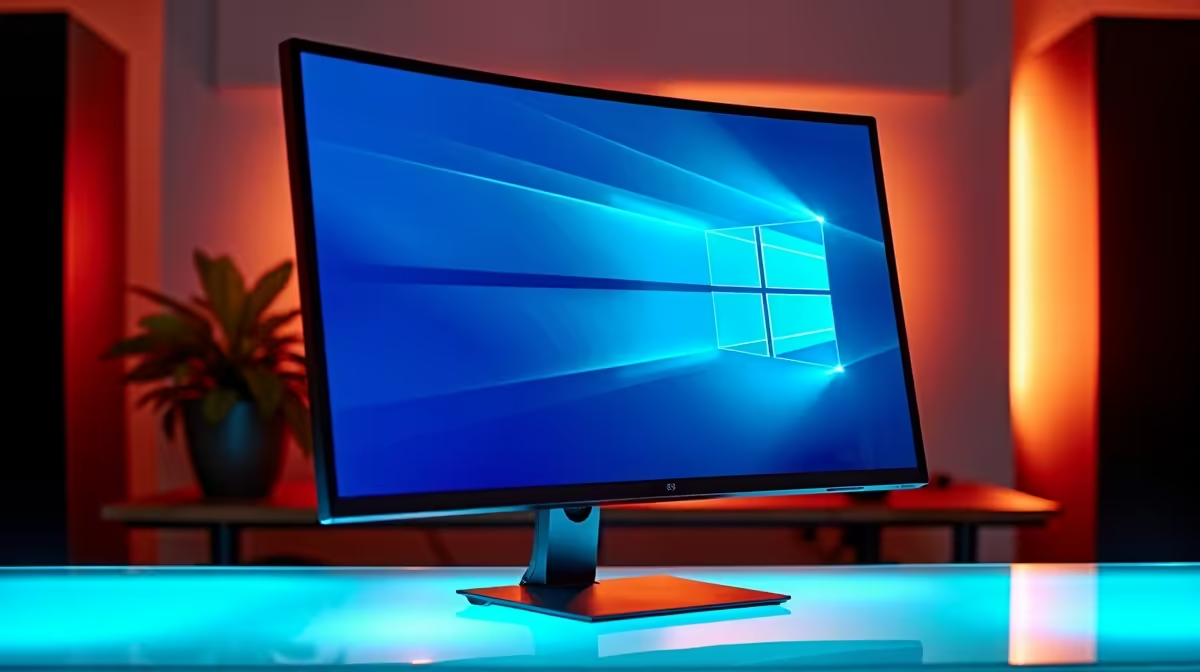
Staring at a design where the colours feel… off? Or maybe that presentation deck looks vibrant on your screen but dull on the projector? The culprit is often your monitor's panel. For South African professionals who live and breathe colour accuracy, the Nano IPS vs IPS debate is crucial. Choosing the right display technology isn't just a spec-sheet battle; it’s about ensuring what you create is exactly what the world sees. Let's dive in. ✨
Understanding the Foundation: What is a Standard IPS Panel?
Before we get to the fancy stuff, let's talk about the original. IPS (In-Plane Switching) panels have been the go-to for colour-conscious users for years. Why? They offer significantly better viewing angles and colour reproduction than older TN panels. This means the image looks consistent even if you're not sitting dead-centre.
For general office tasks, graphic design, and content consumption, a quality IPS display is a fantastic workhorse. You'll find them across a wide range of PC monitors, offering a great balance of performance and price.
The Upgrade: How Nano IPS Changes the Game
So, what makes "Nano" so special? Nano IPS technology, developed by LG, adds a layer of nanoparticles to the screen's backlight. Think of it as a super-advanced filter. This layer absorbs excess, unwanted light wavelengths, particularly certain shades of yellow and orange.
The result? Purer, cleaner, and more intense reds and greens. This allows Nano IPS monitors to display a much wider range of colours. While a good standard IPS monitor covers the sRGB colour space well, a Nano IPS panel can often cover 98% of the DCI-P3 colour space—the standard used in digital cinema. This is a massive leap for video editors and digital artists working with HDR content on stunning 5K and 4K monitors.
Calibration is Key 🔧
matter which panel you choose, true colour accuracy comes from calibration. A hardware calibrator like a SpyderX or Calibrite ColorChecker is a worthwhile investment. These tools measure your screen's output and create a custom colour profile, ensuring perfect colours every time. You can find these and other [essential monitor accessories](https: www.evetech.co.za PC-Components buy-monitor-accessories-368) to complete your professional setup.
Nano IPS vs IPS: The Head-to-Head for Office Colour Accuracy
When choosing the best monitor for office colour accuracy, the decision comes down to your specific needs. Let's break down the core differences.
Colour Gamut & Purity
For professionals who need the most accurate and vibrant colours possible, Nano IPS is the clear winner. The ability to cover the wider DCI-P3 gamut means your work will look brilliant and true-to-life. Standard IPS is excellent for sRGB work (most web content), but for video editing, professional photography, or print design, Nano IPS provides that critical extra range.
Response Time & Gaming
Interestingly, Nano IPS technology also delivers incredibly fast response times without sacrificing colour quality. This has made it a favourite in the gaming world. While not the primary focus for an office monitor, it means a Nano IPS screen can easily pull double duty for after-hours gaming sessions. Many of the tech advancements in all gaming monitors have direct benefits for professional users, too.
Price
Here's where standard IPS often has the edge. Because it's a more established technology, you can find fantastic, colour-accurate standard IPS monitors at very competitive prices in ZAR. Nano IPS panels are premium technology and typically come with a higher price tag. The question is whether your workflow justifies the investment.
So, Which Monitor is Right for Your Mzansi Workspace? 🚀
Ultimately, the Nano IPS vs IPS choice depends entirely on your job.
- Choose Nano IPS if: You are a video editor, photographer, graphic designer, or digital artist. Your work demands the widest possible colour gamut and perfect accuracy. The investment will pay for itself in saved time and better results.
- Choose Standard IPS if: You are a developer, writer, or general office professional. You need good colour and great viewing angles for spreadsheets, documents, and web browsing, but don't work with cinematic colour spaces. A high-quality standard IPS offers incredible value.
Whether you're looking for an ultrawide for multitasking, one of our immersive curved monitors for focus, or even one of the latest versatile portable monitors for working on the go, understanding the panel technology is the first step to a better workflow.
Ready to See True Colour?
Whether you're a creative professional needing perfect accuracy or an office power user wanting a vibrant display, the right monitor panel makes all the difference. Explore our massive range of PC monitor deals and find the perfect screen to bring your work to life.