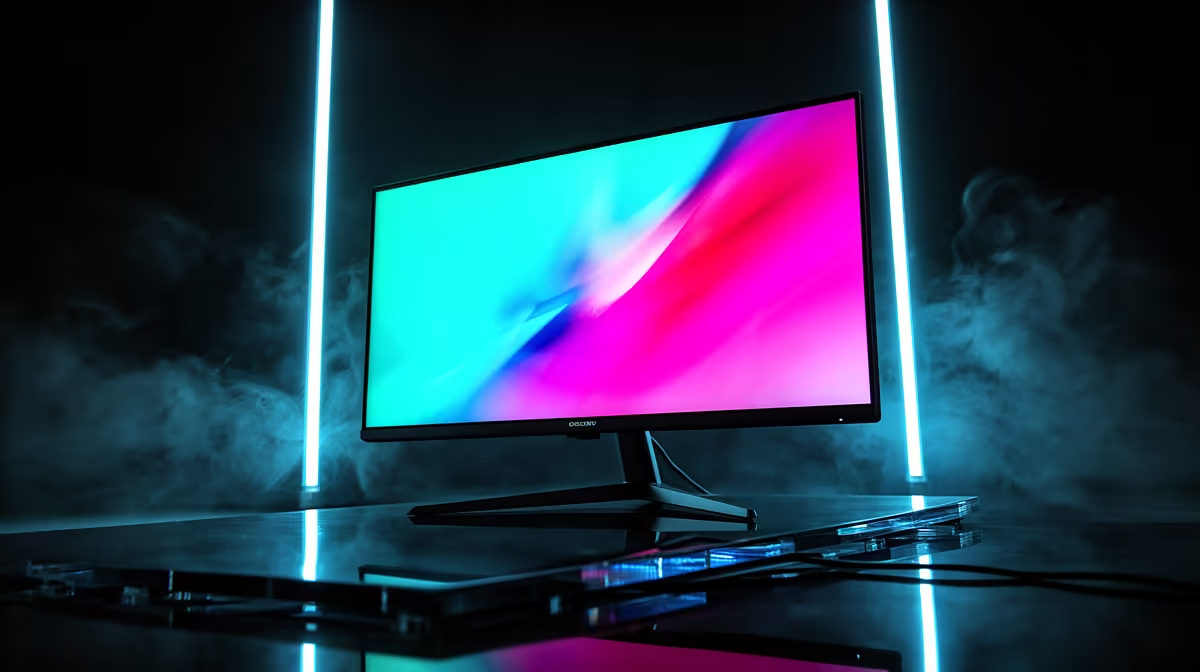
So, you’re eyeing a new OLED monitor, lured by those inky blacks and vibrant colours. But then you hit the specs list: "240Hz" and "0.03ms GtG". What does it all mean for your weekend Warzone sessions or that new single-player epic? In South Africa, getting the best performance for your buck is crucial. Let's break down the two most important specs for gamers: OLED monitor refresh rate and response time. ✨
What is Refresh Rate on an OLED Monitor?
Think of refresh rate as the screen's "frames per second," measured in Hertz (Hz). A 144Hz monitor refreshes the image on screen 144 times every second. A 240Hz monitor does it 240 times. For gamers, a higher refresh rate means a significantly smoother, more fluid picture.
Why does this matter? Imagine you’re peeking around a corner in Valorant. On a high-refresh-rate OLED, you'll see an enemy player's movement sooner and track them more smoothly, giving you a real competitive edge. The motion is less blurry and feels more connected to your mouse movements. While 60Hz was once the standard, today's dedicated gaming monitors often start at 144Hz and go way beyond.
So, How Much Hz Do You Need?
- 120-144Hz: The sweet spot for most gamers. It offers a huge leap in smoothness over 60Hz for both competitive and story-driven games.
- 240Hz+: Primarily for serious competitive players in titles like CS2 or Apex Legends, where every millisecond counts. You'll need a powerful graphics card to push enough frames to take full advantage of it.
Understanding OLED Response Time
If refresh rate is how often the screen updates, response time is how fast it can update. Specifically, it’s the time it takes for a pixel to change from one colour to another, measured in milliseconds (ms). A slow response time leads to "ghosting" or motion blur—that ugly trail you see behind fast-moving objects.
This is where OLED technology truly shines. 🚀 Unlike traditional LCDs that need to physically move liquid crystals, OLED pixels generate their own light and can turn on or off almost instantly. This gives them a near-instantaneous response time, often advertised as 0.03ms (GtG). This incredible speed is a core reason why the OLED monitor response time is considered superior, virtually eliminating motion blur and keeping the image crisp, no matter how chaotic the action gets. You can find some incredible displays among our best PC monitor deals.
Check for Overshoot 🔧
Even with ultra-low response times, some monitors can "overshoot" the target colour, creating a bright, inverse ghosting effect. It's rare on premium OLEDs but always worth checking professional reviews for the specific model you're interested in before you buy. A good review will analyse pixel response across different transitions.
The Perfect Synergy: Refresh Rate & Response Time
A high refresh rate is only as good as the response time that supports it. You can have a 360Hz monitor, but if the pixels can't change colour fast enough to keep up, you'll still get a blurry mess. It’s like having a super-fast engine with bad tyres.
Thankfully, the combination of a high OLED monitor refresh rate and its rapid response time creates the ultimate gaming experience. The screen can draw a new frame (high refresh rate) and the pixels can change to the correct colours for that frame almost instantly (low response time). This synergy delivers the clearest, sharpest, and most responsive motion possible, which is why so many pro gamers are making the switch. You can see this technology across our entire range of PC monitors.
Finding Your Sweet Spot: Resolution vs. Speed
The final piece of the puzzle is balancing these specs with resolution and your budget. Do you prioritise the breathtaking detail of stunning 4K monitors for cinematic games, or do you need the raw speed of a 1440p 240Hz panel for competitive dominance?
Many gamers find a 1440p OLED panel to be the perfect compromise, offering sharp visuals and high refresh rates. For those seeking maximum immersion, ultra-wide curved monitors with OLED tech are incredible. And for the gamer on the go, even some high-performance portable monitors are starting to feature better specs. Ultimately, understanding what refresh rate and response time do allows you to make an informed choice for the games you love to play.
Ready to See the Difference?
Now that you understand the magic behind OLED monitor refresh rate and response time, you're ready to pick the perfect screen. An OLED isn't just an upgrade; it's a new way to experience your games. Explore our incredible OLED monitor deals and find the perfect display to dominate the competition.