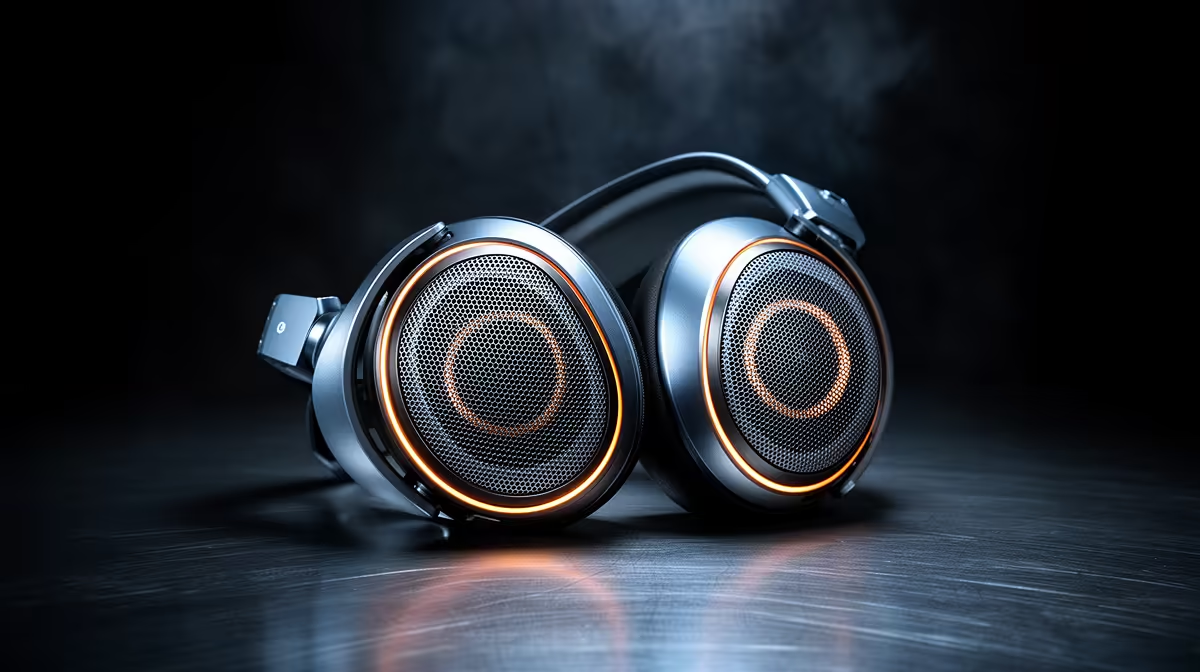
Sit two headphones side by side and the difference is audible in seconds: the open-back pair spreads the music out around your head, while the closed pair pulls it inward and seals the room out. Both are doing exactly what their design intends. Open earcups vent freely, which kills internal reflections and widens the soundstage, but they offer essentially zero isolation and leak audibly to anyone nearby. Closed earcups trap the sound for privacy, isolation and stronger bass. Which one is right depends almost entirely on where and how you listen.
Quick Answer
Open-back headphones give the widest, most natural soundstage and the best spatial detail, but block no outside noise and leak sound to people around you. Closed-back headphones isolate strongly and hit harder in the low end, ideal for shared spaces, commuting and bass-heavy listening. For a quiet room or precise mixing, go open; for offices, travel and privacy, go closed.
How the two designs actually differ
The split comes down to one thing: whether the back of the driver is sealed or vented. A closed earcup traps air behind the driver, which reinforces low frequencies and stops sound escaping. An open earcup lets that air move freely through a grille, so pressure does not build up behind the diaphragm and internal reflections largely disappear. Less reflection means less smearing of the stereo image, which is why open-backs are prized for imaging.
That single design choice cascades into everything else, soundstage, isolation, bass, leakage, and even comfort over long sessions.
Soundstage and imaging
Soundstage is the sense of space and direction in what you hear, where instruments sit and how far away they feel. Open-backs win here clearly. With reflections vented away, the stereo image opens up and sounds appear to come from around you rather than from inside your skull. For acoustic music, orchestral recordings and anything where you want to place each element in space, that openness is genuinely useful.
Closed-backs produce a more intimate, contained image. It is not worse, it is different: the music feels closer and more direct, which some listeners prefer for vocals and electronic genres. But the holographic, wide presentation that open-backs are known for is hard to replicate in a sealed cup.
Isolation and sound leakage
This is the practical deciding factor for most people. Closed-backs block a useful amount of outside noise and keep your audio to yourself. Open-backs do neither. Measurements put open-back leakage at roughly 30dB higher than closed-backs, which means anyone sitting near you will hear what you are playing, and you will hear the room, traffic outside, a flatmate's TV, the lot.
Why that matters in a real SA home
In a quiet study or bedroom set up for listening, open-back leakage is a non-issue and the soundstage payoff is worth it. In a shared res room, an open-plan office, a busy townhouse or anywhere with background noise, open-backs become frustrating fast: the ambient noise floods in and your housemates hear your playlist. For those settings closed-backs are simply the correct tool.
Bass response and tonal balance
Sealed cups build pressure that reinforces sub-bass, so closed-backs generally deliver more low-end weight and impact. Open-backs exchange some of that slam for a cleaner, more even response, bass that is present and accurate rather than punchy. If you want chest-thumping low end for hip-hop, EDM or cinematic gaming, closed leans your way. If you want a neutral, detailed presentation for critical listening, open does.
Comfort over long sessions
Open-back headphones tend to run cooler because air circulates through the cups. Over a two or three-hour listening session that matters: sealed earpads trap heat and can become uncomfortable in a warm South African room, while an open design stays more comfortable. If you edit audio for long stretches or enjoy extended listening, the ventilation advantage of open-backs is a practical reason to choose them even beyond the soundstage argument.
Gaming and mixing
For competitive gaming, open-backs give a real edge: the wide soundstage lets you place footsteps and gunfire by direction with precision, hearing exactly where an opponent is. For immersive, atmosphere-driven games and for playing late without a mic catching your own audio, closed-backs and their stronger bass suit better. For mixing and content production, many engineers reach for open-backs because the accurate imaging and even response reveal spatial detail a sealed cup can mask. You can compare both designs within the headphone and headset range at Evetech to match a pair to your main use.
So which should you pick
Pick open-back if you listen in a quiet space, value soundstage and accuracy, mix or master audio, or want positional precision in competitive games. Pick closed-back if you need isolation, listen in shared or noisy spaces, want stronger bass, or travel with your headphones. Many serious listeners eventually own one of each. If you are deciding on a first proper pair, seeing what other SA buyers currently reach for most is a sensible shortlist to read against your own listening habits.
Frequently Asked Questions
Do open-back headphones really sound better?
For soundstage and imaging, usually yes, in the right environment. The vented design reduces internal reflections, producing a wider, more natural presentation. But they offer no isolation and leak sound, so in a noisy or shared space a closed-back can be the better real-world choice.
Can people hear my open-back headphones?
Yes. Open-backs leak roughly 30dB more sound than closed-backs, so anyone within a metre or two can hear your audio at moderate volume. That makes them poor for offices, public transport or quiet shared rooms.
Are closed-back headphones better for bass?
Generally yes. The sealed cup traps air pressure behind the driver, reinforcing sub-bass for more weight and impact. Open-backs tend toward a cleaner, more neutral low end rather than heavy slam.
Which is better for gaming?
Open-backs excel at competitive positional audio thanks to their wide soundstage, letting you pinpoint footsteps and gunfire. Closed-backs suit immersive single-player games and late-night play, with stronger bass and no leakage into your mic.
Are open-back headphones good for mixing?
Many audio engineers prefer them for mixing because the accurate imaging and even frequency response expose spatial detail and balance issues. The lack of bass reinforcement also gives a more honest tonal picture than a sealed cup.