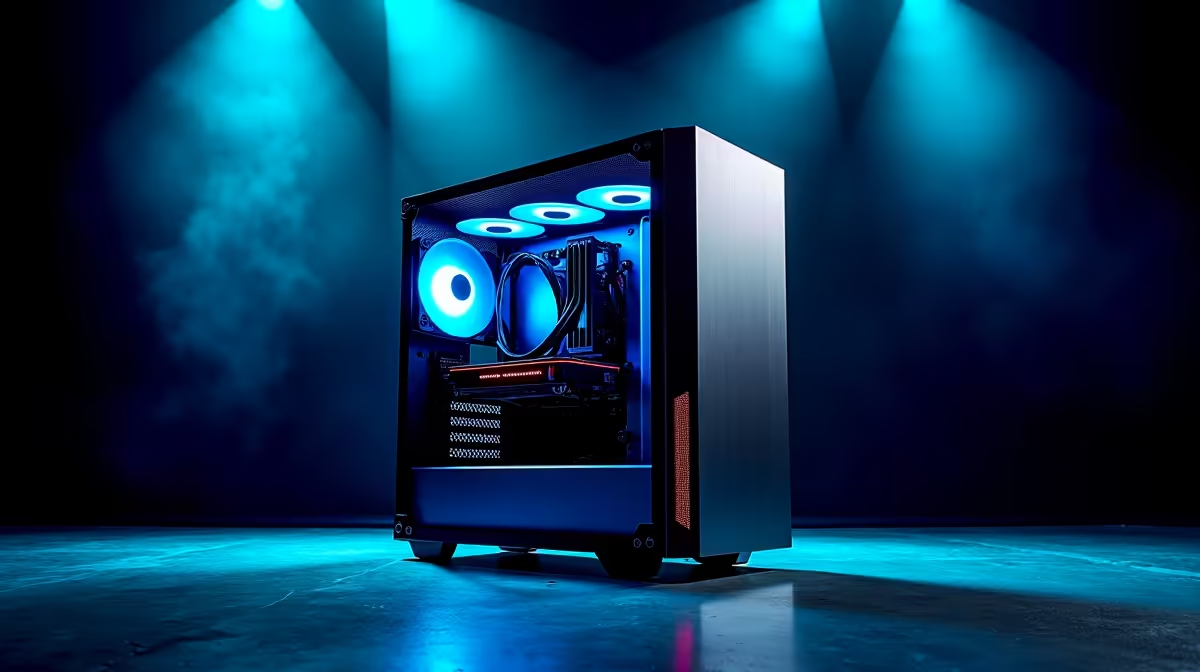
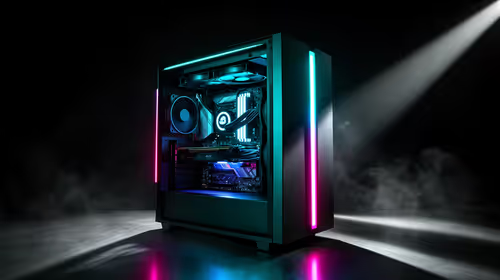
Is your gaming rig secretly costing you a fortune? With Eskom's unpredictable tariffs, understanding your PC power consumption in South Africa is more than just a tech curiosity… it's a wallet-saving necessity. Many gamers unknowingly run power-hungry machines that add hundreds of rands to their monthly electricity bill. But don't worry. You don't have to sacrifice those glorious high frame rates to save some cash. This guide will show you how. ⚡
Understanding Your PC's Energy Footprint
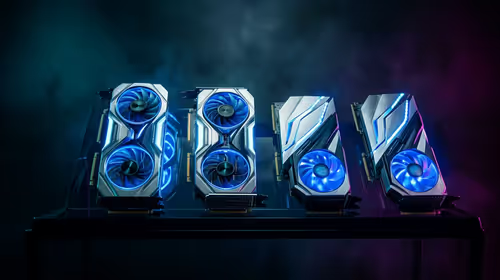
Before we dive into solutions, let's quickly break down where all that energy goes. Your PC isn't a single device; it's a collection of components, each with its own power draw. The two biggest culprits? The graphics card (GPU) and the central processing unit (CPU). During an intense gaming session, these two parts can easily pull over 500 watts combined, which is like leaving five old-school 100W light bulbs running for hours.
Monitoring your PC power consumption can be an eye-opener. While older components were often built with raw power in mind, modern hardware design focuses heavily on performance-per-watt. This means newer components often deliver a much better experience without turning your PC case into a small heater. This focus on efficiency is a core feature of many modern gaming PCs, making them a smart long-term investment.
Hardware Choices for a More Efficient Rig
Building or buying an energy-efficient PC in South Africa starts with choosing the right components. Smart hardware selection is the foundation for lower electricity bills.
The Power Supply Unit (PSU)
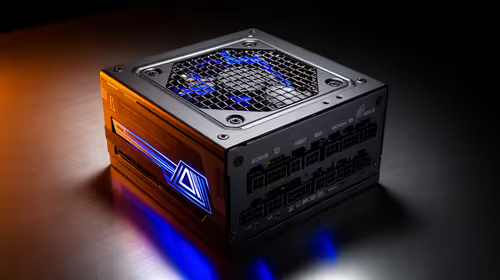
Think of the PSU as the heart of your PC. It takes power from the wall and distributes it to everything else. However, some energy is always lost as heat during this conversion. An efficiency rating, called "80 Plus," tells you how little energy is wasted.
- 80 Plus Bronze: A good starting point. At 50% load, it's at least 85% efficient.
- 80 Plus Gold: A fantastic sweet spot. At 50% load, it's at least 90% efficient.
- 80 Plus Platinum/Titanium: The absolute best, with 92%+ efficiency.
Upgrading from a no-name, unrated PSU to an 80 Plus Gold unit can immediately reduce your PC's energy waste. This is especially true for high-performance systems, where the savings add up. You'll find these quality PSUs in most premium builds above R20k, ensuring stability and efficiency.
CPU and GPU: The Power-Hungry Duo
Thankfully, the latest generations of CPUs and GPUs from Intel, AMD, and NVIDIA have made huge strides in efficiency. For example, an NVIDIA GeForce RTX 4070 can deliver similar or better performance than an older RTX 3080 while using significantly less power.
When choosing your components, don't just look at the peak performance numbers. Look at the TDP (Thermal Design Power), which gives you a rough idea of its power draw under load. Often, you can find excellent options under R20k that balance fantastic 1080p or 1440p performance with modest power requirements.
Check Your PSU's Rating! 🔧
Look for the '80 Plus' logo on your Power Supply Unit (PSU). If it's not there, or if it's an old, unrated model, it could be wasting up to 30% of the power it pulls from the wall as heat. Upgrading to a certified 80 Plus Gold PSU is one of the quickest ways to improve your PC's overall efficiency.
Smart Software Tweaks to Lower Your Bill
Your hardware is only half the story. How you use your PC can have a massive impact on its electricity cost. A few simple software adjustments can lead to significant savings.
Optimise Your Windows Power Plan
Windows has built-in power plans that control how your hardware behaves. For gaming, many people default to "High Performance," but "Balanced" is often the smarter choice. The Balanced plan allows your CPU to scale its speed down when idle, saving power, but instantly ramps up to full speed when you launch a game. You get the performance when you need it, and save energy when you don't.
Cap Your Frame Rate
Does your GPU push 200 frames per second (FPS) in a game when your monitor can only display 144? All those extra frames are wasted energy. Capping your FPS to match your monitor's refresh rate (e.g., 144Hz) using in-game settings or your GPU's control panel is a brilliant way to reduce PC power consumption. Your GPU works less, runs cooler, and uses less electricity, with zero impact on your visual experience. This is a great tip for any rig, including our budget gaming PCs.
Simple Habits, Big Savings ✨
Finally, a few changes in your daily routine can make a real difference to your monthly bill.
- Don't Idle: Don't leave your PC running at full tilt on the desktop overnight. If you're stepping away for more than 15 minutes, put it to sleep.
- Sleep > Screensaver: Modern animated screensavers can still keep your GPU active. Letting your PC go to sleep is far more effective at saving power.
- Shut It Down: If you're done for the day, a full shutdown is best. Modern PCs with SSDs boot up in seconds, so there's little reason to leave them running 24/7.
Combining smart hardware with good habits is the key. If your current machine is an old power-guzzler, upgrading might be the most effective solution. Exploring modern, power-efficient pre-built PC deals can offer a system that's not only faster but also cheaper to run in the long term.
Ready for an Efficient Upgrade?
An old, power-hungry PC hits your wallet hard, especially with rising electricity costs. A modern, energy-efficient rig doesn't just perform better... it saves you money over time. Explore our custom PC builder and design a machine that delivers maximum frames with minimum drain.