R3,000 can improve a PC without buying RAM, but the best move comes from the fault you can prove. A hot CPU wants cleaning and airflow. A full hard drive wants an SSD. A cluttered Windows install wants maintenance. Spending the cap across random upgrades produces a prettier version of the same bottleneck.
Quick Answer
Measure boot time, free storage, CPU and GPU temperature, frame time and network behaviour. Fix the first result outside a healthy range. Under a R3,000 ceiling, a suitable SSD, cooling refresh, clean operating-system setup or targeted peripheral can change daily use. Use a named product and approved July 2026 price whenever you publish an exact rand figure; the budget cap alone is not a market price.
Evetech's gaming PC deals show the balance of current complete systems, while the best-selling PCs help you judge whether an old platform still deserves the small upgrade.
Diagnose Before You Spend
Open Task Manager and a hardware monitor. Record CPU, GPU, memory, drive and network behaviour during the exact slow job.
If memory is full and paging causes the fault, a non-RAM upgrade will not fix capacity. If RAM has headroom, leave it alone and chase the active limit.
Make one change, then repeat the test. That tells you whether the money worked.
Refresh Cooling and Airflow
Dust, a tired fan curve or poor intake can make a healthy processor throttle. Shut down, clean filters and heatsinks, and check fan direction.
Replace failed or noisy case fans with suitable models. Aim for a clear front-to-back path rather than filling every mount. Confirm connector type and motherboard headers.
Replace CPU thermal paste only when temperatures, cooler removal or age justify it. Paste cannot fix a loose mount, broken pump or blocked case front.
Move From a Hard Drive to an SSD
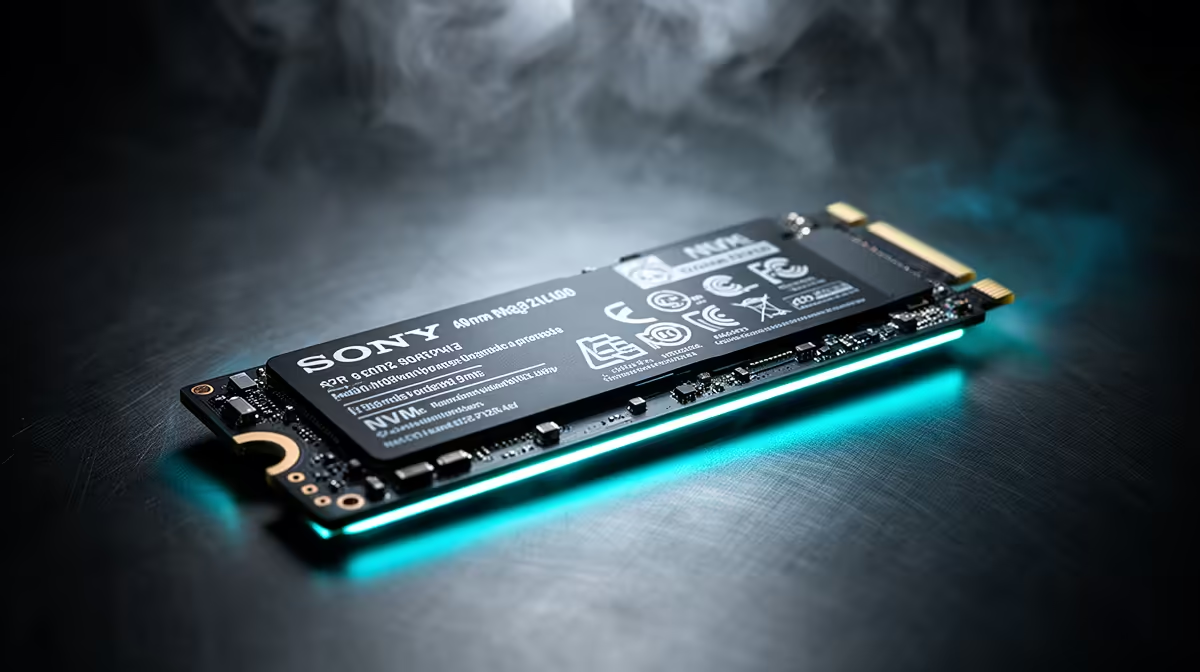
If Windows still runs from a mechanical hard drive, a compatible SSD can transform boot, application launch and updates. That is responsiveness, not extra gaming FPS.
Check SATA or M.2 NVMe support, physical size and available slots. Add the data migration or reinstall plan before you buy.
Keep the old drive as a temporary source copy until the new setup is checked. It is not the only backup.
Expand Storage When the Drive Is Full
A nearly full SSD can make updates and cache behaviour awkward. Remove duplicates and unused games first.
When active files still need more room, add a compatible SSD. Choose capacity and a clear warranty before peak sequential numbers.
Read the motherboard lane table. An M.2 socket can disable a SATA port or alter another slot on some boards.
Give Windows a Clean Baseline
Trim startup applications through Task Manager. Remove software you no longer use and pause background launchers that reopen themselves.
A clean Windows installation helps when years of broken drivers, unwanted services or malware have accumulated. Back up data, record licences and download network drivers first.
Do not reinstall as a ritual. A clean but failing SSD, overheating CPU or weak hardware remains slow.
Fix the Network Path
Online lag often comes from Wi-Fi interference, packet loss or routing rather than the PC's frame rate. Test Ethernet to the router and a stable external target.
A better-positioned access point, suitable network adapter or proper cable can improve consistency when the evidence points there.
Changing DNS does not reduce the physical round trip once a game session is connected. Measure latency, jitter and loss.
Improve the Controls You Touch
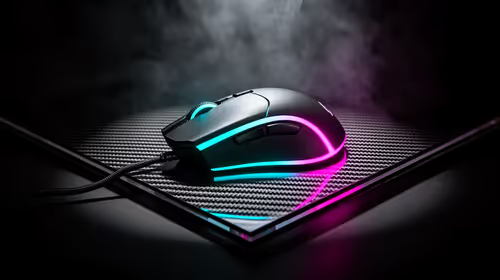
A reliable mouse, comfortable keyboard or clear headset can improve every session, even though it does not raise benchmark numbers.
Replace a peripheral because it misses inputs, hurts to use or lacks the control the game needs. Avoid changing three working devices to consume the budget.
A monitor upgrade can be meaningful, but a good new display may exceed this cap. Save towards the right panel rather than buying a poor stopgap.
Check the Power Delivery
Random shutdowns under GPU load can point to temperature, unstable tuning or a power problem. Return tuning to defaults and inspect event timing.
Do not replace a power supply from wattage guesswork. Identify the model, age, connectors and tested system draw. A quality replacement can be worthwhile, though it may use most of the R3,000 ceiling.
Never open a power supply. Internal capacitors can retain dangerous energy.
Avoid the Cheap GPU Trap
An old graphics card under the cap may be slower than your current GPU, lack modern features or demand more power. Compare exact game results and VRAM behaviour.
Add the power-supply and connector requirements. A used card also needs temperature, artefact and sustained-load testing.
Save for a meaningful tier jump when the available card cannot meet the target.
Use Maintenance to Buy Time
Update stable drivers through official sources. Check SSD firmware and motherboard BIOS notes, applying changes only when they address a need.
Organise backups and create recovery media. These do not make the benchmark faster, but they reduce the cost of a drive or Windows failure.
Good maintenance lets you wait for a real component upgrade without letting the current PC decay.
Choose One Finished Job
Use the budget to complete one change, including the cable, bracket, fitting and test it needs. Two half-funded fixes can leave a new SSD loose in the case and a fan connected through a poor adapter.
Write the before result and the pass condition. A storage upgrade passes when applications load from the new drive and the backup is verified. A cooling change passes when sustained temperatures and clock behaviour improve in the same load.
Know When RAM Still Wins
If the normal workload pushes Available memory near zero and paging arrives with stutter, save for the correct matched kit. Tweaks cannot manufacture capacity.
Do not spend R3,000 around the problem merely because memory prices feel unpleasant. The best upgrade is the one that removes the measured limit.
Check DDR generation, slots and target capacity now so the later purchase is clean.
FAQ
What helps most under R3,000 besides RAM?
An SSD can transform a hard-drive system, while cooling can restore throttled performance. The measurement chooses between them.
Does reinstalling Windows help?
It helps a damaged or cluttered software setup. It does not fix insufficient hardware, heat or a failing drive.
Should I save towards RAM instead?
Yes when memory pressure is the confirmed bottleneck. Use the small budget elsewhere only when another fault limits the PC first.
Measure the slow moment, spend the R3,000 ceiling on the first proven bottleneck and rerun the same test before planning another change.