


AIO Liquid 240mm Setup and Configuration: Complete Tutorial
AIO Liquid 240mm Setup and Configuration. Clear setup instructions with SA-specific considerations, troubleshooting tips & recommended components.
Read morePower bank compatibility checklist: Quickly match USB-C, USB-A, PD and QC to charge phones, laptops and consoles safely. Learn wattage rules, cable tips, and passthrough notes ⚡🔌
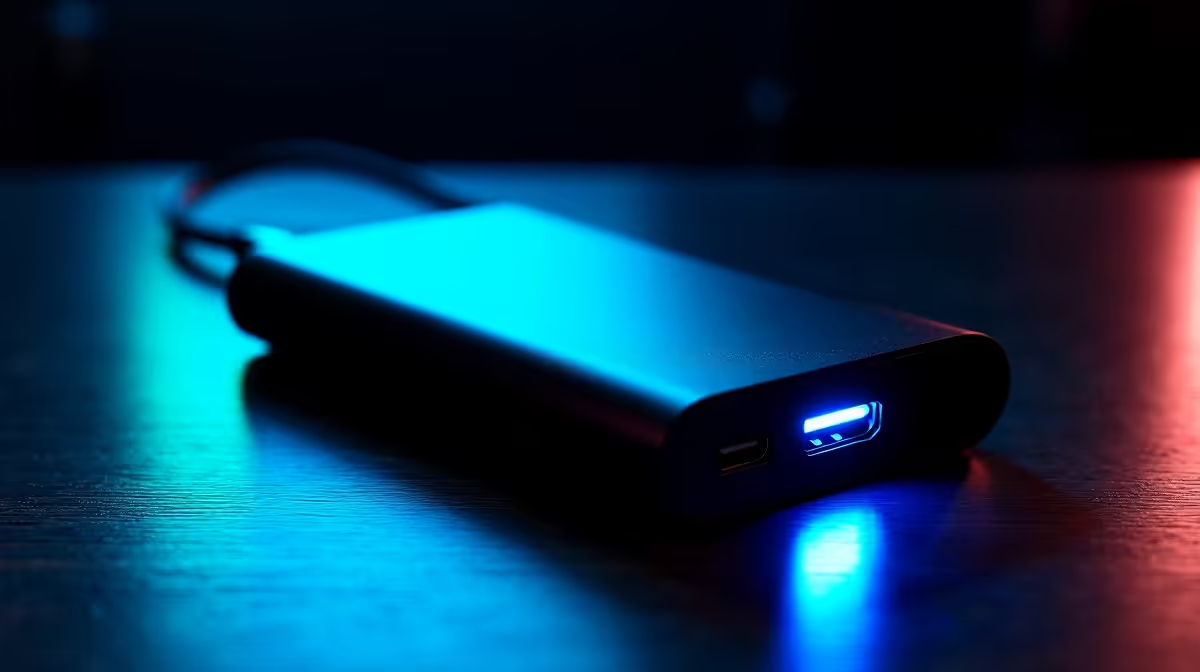
Ever been stranded with a dead phone mid-load shedding, or worse, your gaming handheld dies just as you're about to clutch? 😩 In South Africa, reliable power on the go isn't a luxury; it's a necessity. But with so many options, how do you pick a power bank that actually works with your gear? Forget the guesswork. This guide will help you navigate the jargon, from USB-C to PD and QC, ensuring your next power bank purchase is a perfect match.
Choosing the right power bank can feel like deciphering a secret code. You see terms like "USB-C," "Power Delivery (PD)," and "Quick Charge (QC)" plastered on boxes, but what do they really mean for your devices? The key lies in understanding a comprehensive power bank compatibility checklist. This isn't just about plugging in; it's about ensuring your device charges safely, efficiently, and at its optimal speed. Without this knowledge, you might end up with a power bank that's either too slow, incompatible, or potentially harmful to your gadgets. Let's break down these essential charging technologies.
These three technologies are the pillars of modern fast charging. Understanding their nuances is crucial for any effective power bank compatibility checklist.
USB-C isn't just a reversible port; it's a powerful and versatile connector designed to handle higher power loads and data transfer speeds. Most modern smartphones, laptops, tablets, and even gaming handhelds like the Steam Deck and Nintendo Switch now feature USB-C. Its widespread adoption makes it a primary consideration when evaluating power bank compatibility. A power bank with a USB-C output is almost a non-negotiable these days.
Power Delivery (PD) is an open standard that allows devices to negotiate power levels over a USB-C connection. Think of it as a smart conversation between your power bank and your device, determining the optimal voltage and current for the fastest possible charge. PD can deliver up to 100W (and even higher with newer versions), making it ideal for charging laptops, high-end smartphones, and even some gaming consoles. If you own a modern laptop or a power-hungry device, ensuring your power bank supports PD is vital. This is a critical item on any serious power bank compatibility checklist.
Always use a high-quality USB-C to USB-C cable when charging PD-compatible devices. A cheap, non-PD cable might limit your charging speed, even if both your power bank and device support Power Delivery. It's like having a sports car but driving it on flat tyres!
Quick Charge (QC) is Qualcomm's proprietary fast-charging technology, predominantly found in Android devices sporting Snapdragon processors. While PD is more universal, QC has been around longer and offers impressive charging speeds for compatible phones. Different versions (QC 2.0, 3.0, 4+, 5) offer varying levels of speed and efficiency. If your phone supports QC, look for a power bank that explicitly lists QC support to get the fastest charge possible. Many power banks now offer both PD and QC compatibility, giving you the best of both worlds.
Now that we've demystified the tech, let's put together your personal power bank compatibility checklist.
Consider your usage: are you topping up a phone during load shedding, or powering a laptop on a remote work trip? For those needing more juice without emptying their wallet, check out our range of power banks under R1200, which often include higher capacity and faster charging capabilities.
At Evetech, we understand the unique power needs of South African tech enthusiasts. That's why we stock a curated selection of power banks designed to meet diverse requirements. Brands like Promate are renowned for their quality and compatibility across various devices. Whether you need a compact charger for your smartphone or a high-capacity power bank for your laptop and gaming gear, considering a reputable brand like Promate power banks is always a smart move. Always refer to your device's specifications and the power bank's product page for definitive compatibility information. Don't let a dead battery spoil your day – power up with confidence!
Ready to Find Your Perfect Match? Don't get caught without power again. Understanding the power bank compatibility checklist empowers you to make an informed choice. Explore Evetech's massive range of power banks today and find the perfect portable charging solution for your lifestyle.
Power bank compatibility means matching port types, power delivery (PD)/QC profiles and wattage so your device charges safely and at max supported speed.
Yes if you use a USB-C to USB-A cable or adapter, but check the power bank's USB-C output mode and device wattage requirements for safe charging.
PD (Power Delivery) uses flexible voltage/wattage negotiation via USB-C; QC (Quick Charge) is a fast-charge protocol common on USB-A and some USB-C ports.
Only if the power bank supports sufficient PD wattage (usually 45W+ or 65W) and your laptop accepts USB-C PD input. Check wattage matching.
Passthrough charging lets a power bank charge a device while itself is charging. Use quality PD-capable banks and monitor temps; avoid cheap models.
Yes. Use USB-C PD-rated cables for high-watt PD charging and QC-certified cables for Quick Charge to ensure full speed and safety.
Check your device specs for 'PD' or 'Quick Charge' support, or match recommended charging wattage and supported voltage steps in the manual.
AIO Liquid 240mm Setup and Configuration. Clear setup instructions with SA-specific considerations, troubleshooting tips & recommended components.
Read more
Setting Up DDR5 64GB Kit. Tested & verified settings for best FPS and visual quality on SA hardware budgets.
Read more
Overwatch 2 Setup Guide Gamers. Clear setup instructions with SA-specific considerations, troubleshooting tips & recommended components.
Read more
R and RStudio on Mac: Data Science Setup Guide. Clear setup instructions with SA-specific considerations, troubleshooting tips & recommended components.
Read more
NVIDIA Broadcast Setup with GPU: Streamer Guide. Clear setup instructions with SA-specific considerations, troubleshooting tips & recommended components.
Read more
Core Ultra 7 265K Temperature Guide: Normal Range. Complete product range with SA pricing, key specs & recommendations for different budgets.
Read more
AMD RX 9050 XT: Rumoured Specs, Price & Release. SA-focused analysis with local pricing data, real-world insights & actionable buying advice.
Can RTX 4080 Super Run AI Workloads for SA Developers Detailed answer with SA data, expert analysis & practical recommendations for local buyers.
Can RTX 4090 Run AI Workloads for SA Developers Detailed answer with SA data, expert analysis & practical recommendations for local buyers.
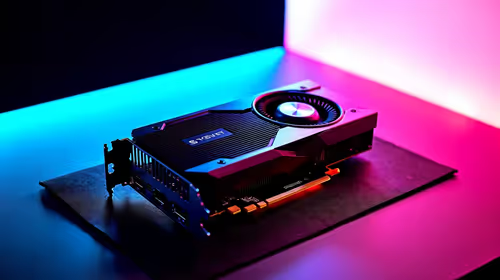
Top Settings for Intel Arc B580 at Ultrawide 1440p picks evaluated on performance, value & SA availability with current Rand pricing from Evetech.

RTX 4060 CS2 Low Settings at 1080p: FPS Results. Real-world benchmark data, FPS numbers & performance analysis. What SA gamers can actually expect.
Visual Artifacts: Possible GPU Issue Issue #1. Diagnosis steps, proven fixes & when to seek professional help. SA-specific support info included.
Can the RTX 4090 Handle 1440p 144Hz Gaming. Performance testing verdict with real data & practical recommendations for SA buyers.
Top ASUS GPU Under R15000 picks evaluated on performance, value & SA availability with current Rand pricing from Evetech.
GTA 6 Max Settings on RTX 5070. Tested & verified settings for best FPS and visual quality on SA hardware budgets.
Cyberpunk 2077 Max Settings on RTX 5080. Tested & verified settings for best FPS and visual quality on SA hardware budgets.
Starfield Max Settings on RTX 5070 Ti. Tested & verified settings for best FPS and visual quality on SA hardware budgets.
Top RTX 5090 Under R5000 picks evaluated on performance, value & SA availability with current Rand pricing from Evetech.