You’re in a 1v3 clutch in Warzone, your aim is crisp, and then… a micro-stutter. Your high-end rig betrays you. You blame the GPU or network lag, but the real culprit could be silent and scorching hot: your NVMe SSD. We’re talking about SSD thermal throttling, the performance killer you didn’t know you had. Let’s dive into how to prevent it and keep your gaming rig running at peak speed. 🚀
Understanding SSD Thermal Throttling
So, what exactly is this performance gremlin? Think of it like a safety switch. Modern NVMe SSDs are incredibly fast, but all that speed generates heat, especially in the controller chip. When temperatures climb too high (often above 70°C), the controller intentionally slows down—or "throttles"—to prevent damage.
The result? Your lightning-fast read/write speeds plummet. This won't just slow down massive file transfers; it can cause stuttering in games that stream assets from the drive, increase application load times, and create frustrating lag spikes. The key to consistent performance is to prevent SSD thermal throttling before it ever starts.
Key Signs Your Drive is Overheating
Because the symptoms can be subtle, SSD overheating is often misdiagnosed. Keep an eye out for these tell-tale signs during intense gaming sessions or heavy workloads:
- Sudden Performance Dips: Your game runs smoothly, then inexplicably stutters for a few seconds before returning to normal.
- Inconsistent File Transfers: A large file transfer starts fast but slows to a crawl halfway through.
- System Freezes: In extreme cases, the system may become unresponsive for short periods.
If this sounds familiar, it’s time to look at your drive’s cooling.
Check Your Temps 🌡️
Download a free utility like CrystalDiskInfo or HWMonitor. These tools show you your SSD's real-time temperature. Run a game or a benchmark and watch the numbers. If you see temps consistently hitting 70°C or higher under load, you've likely found the source of your performance issues and need better NVMe cooling.
Advanced Cooling to Prevent SSD Throttling
Luckily, keeping your SSD cool is straightforward and highly effective. A few simple hardware additions or adjustments can ensure your drive maintains its advertised speeds, no matter how intense the action gets.
The Essential Heatsink
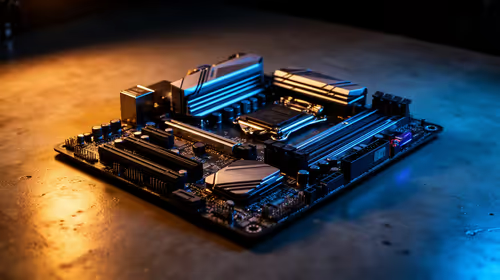
The single most effective tool against throttling is a heatsink. This finned piece of aluminium or copper sits directly on top of your NVMe drive, using a thermal pad to draw heat away from the controller and NAND chips. Many modern motherboards include built-in M.2 heatsinks, but if yours doesn't, or if you want superior performance, an aftermarket one is a brilliant investment.
For a hassle-free solution, many high-performance drives, like the KLEVV CRAS C925G 1TB Gen4 NVMe SSD, come with a sleek, effective heatsink pre-installed, offering excellent thermal performance right out of the box.
Good Old-Fashioned Airflow 💨
Never underestimate the power of a well-ventilated case. An SSD heatsink can’t work effectively if it’s just sitting in a pool of hot, stagnant air. Ensure your case has a clear airflow path from intake fans (usually at the front) to exhaust fans (at the back or top). Tidy cable management doesn't just look good; it removes obstructions and helps keep every component, including your SSD, cooler. When considering an upgrade, it's worth checking out trusted brands like KLEVV in South Africa that engineer their products for thermal efficiency.
Does Every Drive Need Cooling?
Not necessarily, but it’s becoming the standard. A standard SATA SSD generates very little heat and doesn’t require special cooling. Older, slower Gen3 NVMe drives might be fine without a heatsink in a case with great airflow. However, for any modern Gen4 or upcoming Gen5 drive, a heatsink isn't just recommended… it's essential for unlocking the drive's full potential. Investing in cooling is investing in the longevity and performance of your storage. When you're ready to upgrade, you can browse a massive selection of Solid-State Drives to find one that fits your performance needs and budget.
Ready to Stop Throttling and Start Winning?
A cool SSD is a fast SSD. Don't let thermal throttling be the weak link in your gaming rig. Ensure consistent, blazing-fast performance for years to come by choosing the right drive with the right cooling. Explore our wide range of high-performance SSDs and give your PC the speed it deserves.