Ever spent ages editing a photo to perfection, only to have the print come out looking... well, wrong? 🎨 That vibrant sunset looks muddy, and the skin tones are off. It’s a classic, frustrating problem for creators and hobbyists across South Africa. The culprit is often a disconnect between your screen and your printer. Understanding the difference in printer vs monitor calibration is the key to getting what you see to be what you get. It’s not just for pros; it’s for anyone who values colour accuracy.
Why Monitor Calibration Comes First
Before you even think about your printer, you have to trust what you see on your screen. Your monitor is your window to the digital world. If that window is tinted, everything you create will be skewed. This is the foundational step in any colour-managed workflow.
Monitor calibration involves adjusting your display to conform to a known standard, like sRGB or Adobe RGB. This process sets the correct brightness, contrast, and colour temperature, ensuring that a specific RGB value (like pure red: 255, 0, 0) looks the same on your screen as it would on any other calibrated device. Without this baseline, you're essentially guessing. You might be compensating for a screen that's too blue or too bright, which will cause chaos when you send that file to print or share it online. Getting this right starts with a quality display, and there are many great PC monitors available that provide an excellent canvas for calibration.
The Impact on Gaming and Content Creation
For gamers, accurate colour isn't just about pretty visuals. It's a competitive edge. Seeing the correct shadow detail can reveal an opponent hiding in a dark corner. For content creators editing videos or designing stream overlays, colour consistency is paramount for brand identity. Imagine your carefully crafted visuals looking completely different on your viewers' screens. A properly calibrated workflow ensures your creative vision is translated accurately, especially when working on high-resolution projects with crisp 4K and 5K monitors where every detail matters.
Tackling Printer Calibration: The Final Step 🖨️
Once your monitor is showing you true colours, you can move on to the next stage: printer calibration. This process is about teaching your printer how to accurately reproduce the colours your monitor is displaying, using its specific combination of ink and paper.
Each printer, ink set, and paper type has a unique way of rendering colour. A glossy photo paper will reflect light and absorb ink differently than a matte art canvas. Printer calibration, or "profiling," creates a specific ICC (International Color Consortium) profile for that exact combination. This profile is a data file that acts as a translator, converting the RGB colour information from your computer into the correct CMYK (Cyan, Magenta, Yellow, Black) ink values needed to produce the right colours on paper. Trying to do this without a calibrated monitor is like trying to tune a guitar in a room full of noise… you have no reliable reference point.
Check Your Environment!
Your perception of colour is heavily influenced by the light around you. Try to work in a room with neutral, diffused lighting. A bright lamp with a warm or cool colour temperature next to your screen can trick your eyes and undermine even the best calibration efforts.
The Correct Workflow: Monitor First, Then Printer
So, when debating printer vs monitor calibration, it’s not a choice of one over the other. It's a question of sequence. The correct workflow is always:
- Calibrate your Monitor: Establish a reliable and accurate visual reference. This is your ground truth.
- Profile your Printer: Create a specific ICC profile for your printer/ink/paper combination that is referenced against your calibrated monitor's display.
Following this order ensures that you are matching your physical output to a known, accurate digital source. Reversing the order simply doesn't work, as you'd be trying to match your printer's output to an unreliable and potentially incorrect image on your screen.
Does Calibration Matter for Purely Digital Work? ✨
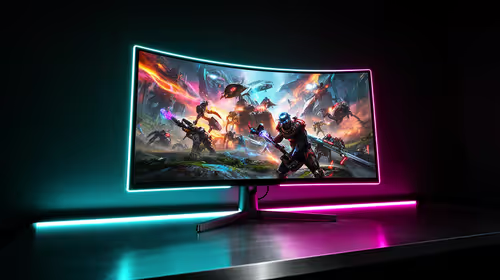
Absolutely. Even if you never print a single thing, monitor calibration is crucial. For gamers, it means experiencing a game's world exactly as the artists intended. The deep, immersive blacks on modern all our gaming monitors are only truly deep if your brightness and contrast are set correctly. The wrap-around view of immersive curved monitors feels even more engaging when the colours are vibrant and true-to-life.
For streamers or anyone working on the go with portable monitors, a consistent colour workflow across devices ensures your content looks professional everywhere. The tools for this, like hardware colorimeters, are more accessible than ever and can be found among other essential monitor accessories. Taking the time to calibrate your setup is one of the single biggest upgrades you can make to your visual experience, whether for work or play.
Ready for Perfect Colour?
A great display is the foundation of colour accuracy. Check out the best monitor deals in South Africa and start seeing your digital world in its true colours.