PTFE Feet vs Standard Mouse Skates for Better Control and Speed: faster, smoother, more consistent aim 🎮
If your mouse feels like it’s “skating on a delay” or your micro-adjustments don’t land, the problem might be under your feet… literally. In South Africa, where we game on everything from budget desks to steel mousepads, tiny friction changes can mean big control differences. PTFE feet are often the upgrade players notice first. But are they worth it compared to standard mouse skates? Let’s break it down clearly, and help you choose what fits your playstyle and budget.
What “PTFE” actually changes under your mouse 🔧
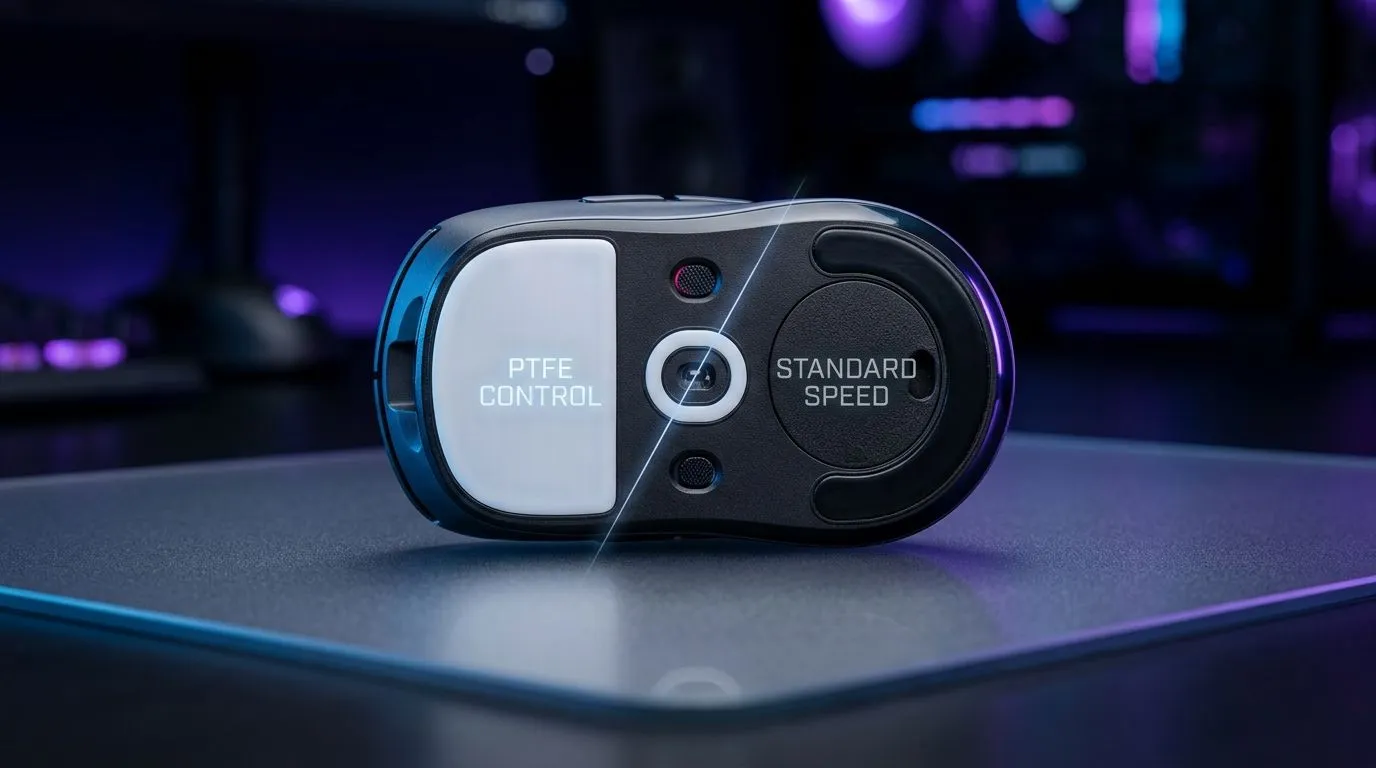
PTFE (polytetrafluoroethylene) is a low-friction material. In normal terms: it reduces drag between the mouse feet and your mousepad. Lower friction usually helps with:
- Smoother glide during flicks
- More predictable stopping power on controlled movements
- Less “grippy” resistance that can mess with tracking feel
Standard mouse skates vary by brand. Some are PTFE-like compounds, some are softer plastics, and some can wear faster depending on surface texture and use. The key point is consistency. If your skates wear unevenly, you’ll feel it as speed changes during the same session.
Testing the difference: control vs speed in real play ⚡
Here’s the practical way to judge PTFE feet vs standard skates:
1) Flicks and stops (the “aim ending” test)
Do 10 quick flicks between two targets, then stop precisely. If the stop overshoots, you likely have higher friction inconsistency. PTFE tends to feel more stable when new and well-maintained.
2) Drag micro-corrections (the “tracking breath” test)
Move slowly in a straight line. If your cursor wobbles or you feel resistance pulses, skates may be uneven or worn.
3) Surface compatibility (steel desk vs cloth pad)
On rough or dusty surfaces, any skate can collect grime. That’s why cleaning matters just as much as the material.
Productivity Pro Tip ✨
Use a clean, lint-free cloth and a small amount of isopropyl alcohol to wipe both your mouse feet and mousepad. Let them dry fully before testing again. You’ll usually feel the difference immediately, especially after a few weeks of dust build-up.
When you should choose PTFE feet for better control
PTFE feet are a smart pick if you want:
- Consistent glide for FPS and rhythm games
- Faster recovery from your own micro-stops
- A smoother feel when you play frequently
It’s also a safe upgrade path because mouse feet replacements are straightforward. If your mouse is already performing well on sensor and shape, feet can be the missing link.
When standard mouse skates might be enough
Standard skates can be fine if:
- You play casually and don’t chase “consistency feel”
- Your mousepad is smooth and well-kept
- You’re comfortable replacing skates as they wear
Still, if you notice speed variability mid-game, PTFE is often the easiest “feel-first” upgrade.
Don’t forget the mouse itself: feet work best with the right model 🚀
Even perfect skates can’t fix a poor fit or inconsistent wireless behaviour. If you’re shopping, consider a mouse that matches your grip and latency needs. Start with what you already play and then build from there.
Browse Evetech options here:
- Wired mouse accessories and related picks: mouse accessories
- If you game on stable latency: wired mouse range
- If you need freedom on the desk: wireless mouse range
- If budget is part of the plan: gaming mouse deals
- For deeper model browsing: gaming mouse components
Your next step: match the glide to your aim 🎯
PTFE feet vs standard mouse skates comes down to one thing: the feel you can reproduce session after session. If you want smoother movement and more consistent control, PTFE is usually the better choice. If you want good value and you keep your setup clean, standard skates can still deliver.
Ready to Find Your Perfect Match? The Mac vs Windows debate is complex, but for maximum power, choice, and value in South Africa, Windows is hard to beat. Explore our massive range of laptop specials and find the perfect machine to conquer your world.