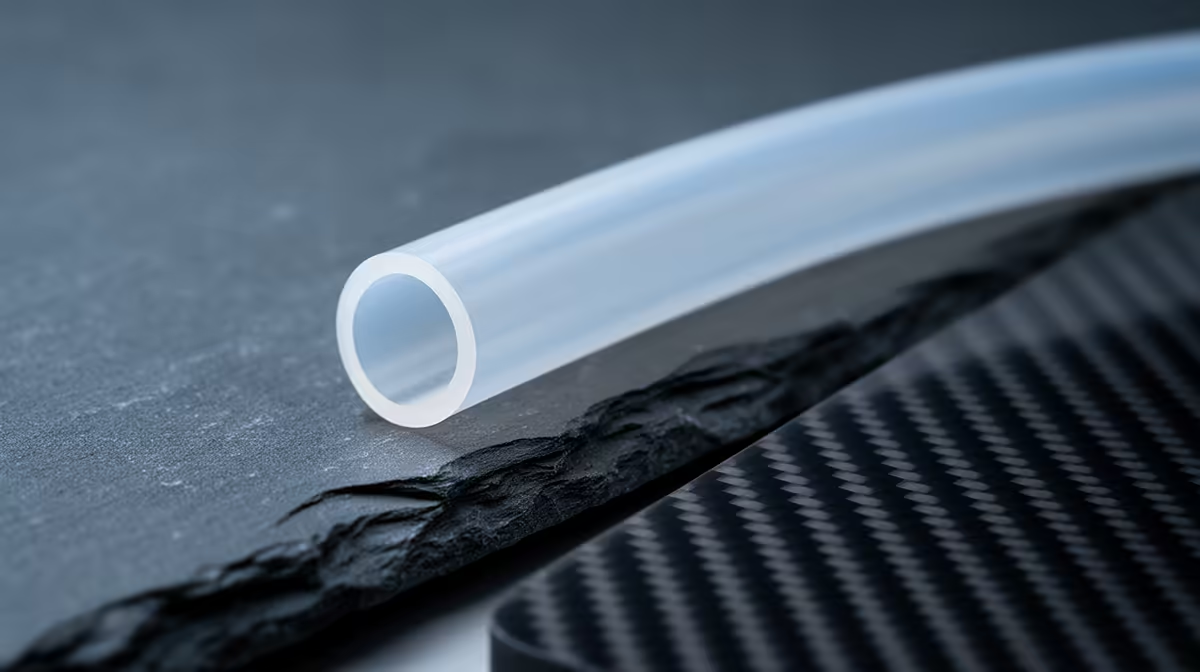
Swap the wrong tube into your hotend and you will chase underextrusion for weeks without realising the cause is sitting inside a clear plastic sleeve. The PTFE vs Capricorn Bowden tube question really comes down to two things, the temperature your filament runs at and how tightly the bore grips the filament, and getting both right is cheaper than a single failed multi-hour print.
Quick Answer
Standard PTFE softens and discolours above roughly 240C and is good for about 10 to 30 hours of life once you push past 270C, while Capricorn XS tubing is rated to around 300C and holds a tighter bore tolerance of about plus or minus 0.02mm. For a hotend running PLA and PETG, standard PTFE is fine; for higher temperatures or flexible filament, Capricorn earns its price.
What actually separates the two tubes
Both tubes are PTFE at heart, so the marketing is not lying when it calls Capricorn a PTFE tube. The difference is in manufacturing precision and construction. Standard tubing typically holds an inner diameter near 2.0mm with a loose tolerance around plus or minus 0.1mm, and a thinner, more variable wall. Capricorn XS uses a precision bore closer to 1.9mm with a tolerance near plus or minus 0.02mm, a thicker 0.8mm wall, and a smoother internal finish.
That tighter bore is the headline feature. With 1.75mm filament, less side-to-side play means the filament does not wander or buckle inside the tube during retraction. The practical result is cleaner retractions, less stringing, and more consistent flow, which matters most on Bowden setups where the extruder motor sits far from the nozzle.
Temperature is where standard PTFE fails
PTFE has a hard ceiling. Run it continuously above roughly 240C to 250C and it begins to soften, expand slightly, and break down. At 270C and above its usable life collapses to somewhere in the 10 to 30 hour range before it discolours and starts to degrade. If you print mostly PLA at 200C to 215C or PETG around 240C, you will likely never see this. If you print ABS, ASA, nylon, or polycarbonate, you are living right at or past that limit.
Capricorn XS is built for exactly that situation. Its double-layered construction with an embedded reinforcement layer pushes the continuous rating to around 300C and stretches life at high temperatures into the 150 hour-plus range. For an all-metal hotend printing engineering filaments, that is the meaningful upgrade, not the bore tolerance.
Where the tube sits matters
On most Bowden machines the tube also lines the hotend throat. That hotend-end section takes the heat and the abrasion, so it degrades first. You do not always need to replace the full run from extruder to nozzle. Often the smart move is to cut a fresh length for the hot section and leave the cooler upstream tube in place.
When to replace your Bowden tube
The clearest signal is colour. Fresh PTFE is bright and translucent; once the hotend end turns brown or amber, it has cooked and the bore near the nozzle has likely deformed. Other tells include creeping underextrusion that tuning will not fix, a tube end that no longer sits flush against the nozzle, and visible scoring inside the bore.
A sensible habit is to inspect the hotend-end cut every few hundred print hours, trim back a few millimetres when it discolours, and ensure the new cut is square so it seats tightly. A ragged or angled cut leaves a gap where molten filament pools and clogs form.
Is Capricorn worth it for a PLA-only printer?
If you only print PLA and the occasional PETG, the honest answer is that standard PTFE will serve you well and the Capricorn premium buys you very little at those temperatures. The tighter bore can tidy up retraction stringing on a long Bowden path, though it is a marginal gain rather than a meaningful fix. Spend the difference on a spare length of standard tube and replace more often instead.
Cutting and fitting correctly
A clean, square cut at 90 degrees is the one step that separates a successful tube swap from a persistent mystery clog. Use a proper tube cutter rather than scissors; scissors compress the bore as they cut and leave an oval end that cannot seat flush against the nozzle. Even a small gap at the nozzle junction is a filament trap that causes jams regardless of tube quality.
When inserting a new length into a push-fit coupler, heat the nozzle first. Pushing the tube home with the hotend at printing temperature lets it seat fully against the nozzle face. Tighten the collet clip and give the tube a firm tug to confirm it is locked. A tube that pulls free at room temperature will definitely pull free mid-print when thermal expansion is working against you.
Tube length and path matters too
On a Bowden printer with a long path between extruder and hotend, even a good tube introduces some flex. Keep the run as short and straight as your frame allows. Excessive tube length adds compression distance, which exaggerates any retraction delay and worsens stringing. On delta printers with very long Bowden paths, the tighter bore of Capricorn makes a more noticeable practical difference than on shorter runs.
How to choose for your setup
Match the tube to your hottest regular filament. PLA and PETG only, standard PTFE is the practical pick and you replace the hotend end when it browns. Frequent ABS, ASA, nylon, or flexible filament, go Capricorn for the temperature headroom and the retraction consistency. Either way, keep a metre of spare on hand, because a degraded tube is the cheapest part to swap and the most common cause of mystery flow problems. The 3D printer range at Evetech shows which machines run Bowden setups versus direct drive, and consumables worth keeping on hand are listed on the Evetech accessories page.
Frequently Asked Questions
Does Capricorn tubing actually fit my standard printer?
Yes, Capricorn XS is made for 1.75mm filament with a 4mm outer diameter, the same outer dimension as the common standard tube, so it slots into the usual push-fit couplers. Confirm your printer uses 4mm OD tube before ordering, since a few machines use 6mm OD.
Why does my new tube cause underextrusion right after fitting?
The most common cause is a cut that is not square or a tube end that does not seat flush against the nozzle, leaving a gap where filament pools. Recut the end cleanly at 90 degrees and push it fully home with the nozzle hot so it seats tight.
How often should I replace the hotend-end section?
Inspect it every few hundred print hours and trim or replace once it discolours to brown or amber. Printers that run high-temperature filament often will need this far sooner than a PLA-only machine.
Can I run standard PTFE all the way to the nozzle on a 250C hotend?
You can, but you are at the edge of its rating, so expect faster degradation and more frequent trimming. If 250C is your normal working temperature, the temperature headroom of Capricorn is the more sensible choice.
Does a tighter bore help with flexible filament?
Yes, less internal play stops soft TPU from buckling and folding inside the tube during retraction, which is a frequent cause of jams on Bowden flex prints. The tighter Capricorn bore noticeably improves flexible-filament reliability.
Should I replace both ends of the tube at once?
Not necessarily. The hotend-end section degrades fastest because it sits closest to the heat. Trimming or replacing just the lower metre saves material without sacrificing any performance benefit. Replace the full run when the cooler upstream section also shows discolouration or scoring, or whenever you do a significant hotend rebuild.
Printing engineering filaments or running a long Bowden path? Match your hotend to the right machine first. Compare current builds in the 3D printer range at Evetech and keep spare tube and tools in your kit.