The cheapest hub is expensive when its host cannot use the display path or its ports sit idle. Rand-conscious USB-C hub value comes from matching each function to repeated work, then comparing Rands only among options that pass compatibility and workload tests.
Quick Answer
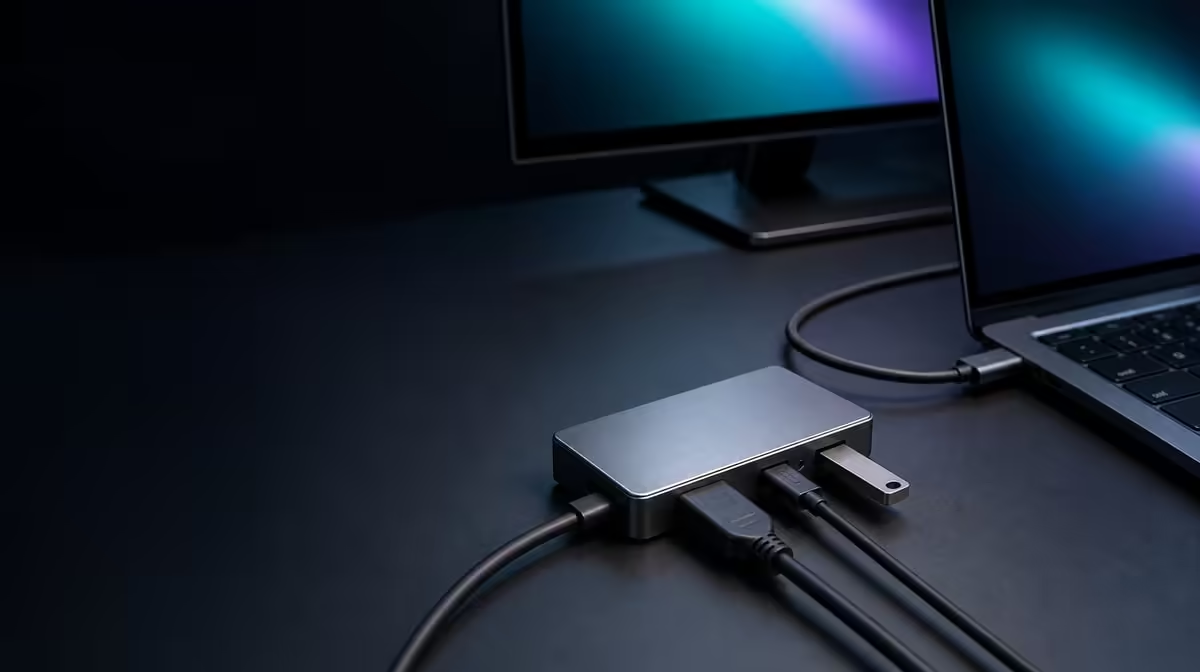
Confirm host video and charging support, then value only the display, network, card, and USB roles used regularly. The R399 UPERFECT UExtend links a 4K-capable display path and 60W passthrough with Gigabit Ethernet, an SD reader, and two data-device connections on compatible systems.
💰 Give every function a frequency
Mark each role as daily, weekly, occasional, or unused. A wired network used every morning deserves more weight than an SD reader never opened; another buyer may reverse that ranking.
Compare current USB hubs with the same frequency sheet. The R399 figure is meaningful only beside tasks.
🔍 Protect compatibility before price
The host must provide display output for 4K video, while charger, cable, and laptop negotiation shape the 60W path. Test these separately before awarding value.
🌐 Measure saved friction
Gigabit Ethernet, SD, and two USB data connections can replace separate reconnection steps. Time the ordinary setup and record which adapters disappear.
Evetech's docking stations provide a useful fixed-desk comparison when another connection or power level is essential.
📊 Use a replacement test
Remove one UExtend function at a time on paper and state what breaks. Features with no consequence should not justify spending; those that stop repeated work earn priority.
Include peripherals from Evetech's gaming-accessories range in the two-port count. The best Rand result is the compatible setup that is rebuilt often and without improvisation. Check current availability when buying.
Run a one-week forecast. Count days when 4K, charging, Ethernet, SD, and each USB port would be used. This exposes a long but idle feature list and gives the R399 reference a practical denominator.
Begin value with the source device
Write the laptop's exact USB-C modes at the top of the scorecard. If the port lacks display output, remove 4K from the value case. If the laptop's normal demand exceeds the 60W path, treat charging as a partial or unsuitable role rather than awarding full points.
Repeat this for every host expected to share the hub. A home laptop and a work machine may use different display sockets, accept different power, or restore different monitor arrangements. Compatibility is not transferable by assumption.
Convert ports into avoided actions
Count how often the user currently reconnects a monitor, changes from Wi-Fi to a separate Ethernet adapter, inserts a card reader, or swaps USB peripherals. The UExtend can consolidate several of those steps. The minutes and interruptions avoided are part of Rand value.
Do not award equal points to all eight functions. If an SD reader prevents a daily adapter search, it may outweigh an occasional 4K presentation. If wired network access stabilises a critical task, it can carry more value than an unused second data port.
Test the combined cost of ownership
Include any suitable display, network, and power cables required by the setup. These are not reasons to reject the hub; they are part of the honest complete kit. Also consider bag space, desk placement, and whether a separate adapter remains necessary for an uncovered job.
Rehearse the whole setup from a closed bag or disconnected desk. Time it, then pack down with safe eject. A low-priced hub that takes too long to rebuild may still be the wrong tool for a highly mobile user.
Score reliability and recovery
Run the monitor, network, charging, card, and USB devices separately before combining them. Record whether each function returns after sleep, restart, and reconnection. A feature that needs frequent manual rescue should receive less value than one that works consistently.
If a failure occurs, use the last known-good state. This reduces diagnosis time and protects the value calculation from one unexplained event. Random reconnection can make a setup appear more troublesome than a clear recovery routine would.
Decide when another option earns more
A different hub or docking station can be better value if it solves a named essential gap, even at a higher price. Write the gap and its consequence beside the premium. Avoid using a larger feature list as the explanation.
After the scorecard is complete, compare the R399 price with days of expected use over a year. The result is not a precise financial return; it is a disciplined check that frequently used functions dominate the decision.
Compare consolidation with specialisation
A multiport hub can replace several small adapters, while a specialised device may perform one role with a simpler route. List the adapters currently carried and mark which ones the UExtend removes. Do not count an adapter that the user does not own or need.
Then note any specialist route that must remain. The hub can still be good value even if one uncommon task uses another device, provided that exception does not disrupt every session.
Protect value during future changes
When a laptop, monitor, or network changes, rerun only the affected compatibility branch. A new host requires video and power checks; a new monitor requires display-path confirmation; a new storage device needs a transfer and eject baseline.
This avoids discarding a working hub because one surrounding component changed, while also avoiding the assumption that past success guarantees the new route.
Make the final Rand case readable
Write a short conclusion with the R399 price, the three most-used functions, and the most important compatibility condition. If the sentence becomes a long recitation of idle ports, the value argument needs another pass.
Check current availability at purchase time and preserve the scorecard. The future buyer or owner can see exactly why the hub was selected and what would justify replacing it.
Use a threshold for acceptable friction
Decide how many cable swaps, manual recoveries, or missing-device events are acceptable in a week. Test the UExtend against that limit. A feature can work yet still create too much repeated intervention for this owner.
If the setup stays below the threshold, its low price and consolidation strengthen each other. If it exceeds it, identify which connection causes the friction and compare another route around that point.
Keep the score free of resale or speculative claims
Value here is the fit between R399 and the current compatible workload. Do not rely on an assumed future price, lifespan, or resale outcome. Those facts are not needed to decide whether the hub removes today's adapter and reconnection work.
The conclusion should remain useful even if the live selection changes: host fit, repeated tasks, recovery, and safe physical use are durable criteria.
Before closing the value review, compare the hub's primary role with the price of continued inconvenience. Do not invent a monetary amount for time; simply count repeated adapter changes, lost connections, and recovery steps. The comparison shows whether consolidation is solving something frequent enough to matter.
Frequently Asked Questions
What creates value before port count?
Host compatibility and a clear recurring job for each connection.
Is 4K automatically valuable?
No. The source and monitor must support it, and the display task must matter.
How should 60W be scored?
Against the laptop's accepted power and behaviour during the real workload.
Can 1000Mbps guarantee broadband performance?
No. It states the Ethernet-port rating, not the complete internet route.
Why exclude an exact USB speed?
Test the two USB ports with your usual devices and representative files.
Ready to make Rands follow real hub use?
Compare Evetech's USB hubs with a frequency score for display, charging, network, cards, and attached devices.