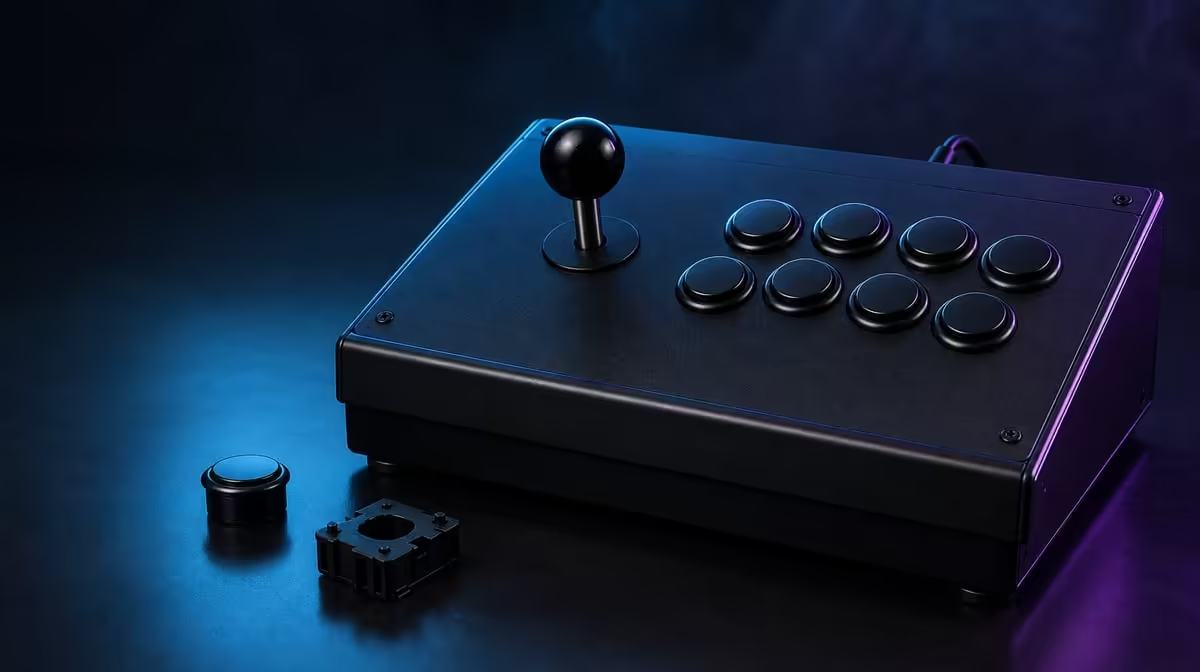
An upgrade earns money only when it solves an observed problem. That principle protects rand-conscious fightstick upgrades from becoming a pile of incompatible parts, especially when the R1,799 GameSir C2 already begins with Sanwa Denshi controls and a customisable faceplate.
Quick Answer
Upgrade a C2 only after a repeated test identifies a specific comfort, input or artwork need, and confirm exact fit before purchasing hardware. The R1,799 standard model already combines Sanwa Denshi parts with direction configuration, Key Lock and custom artwork support, so replacement requires a clearer reason than novelty.
📋 Build a fault-and-cost record
Start with the symptom, not a shopping list. Note the platform, game, direction mode and precise input that is difficult. Run ten controlled attempts and record the misses. Repeat on another day so one poor session does not become an expensive diagnosis.
Classify the result. A moving enclosure is a placement problem. An error that follows one hand direction may be technique. A command that changes with the toggle suggests mode. A single physical input that remains absent across supported screens deserves closer hardware attention.
Assign a budget only after that classification. The comparison is between the cost of a compatible change and the value of the problem it fixes, not between a plain and colourful parts basket.
Put a time cost beside the rand cost. Measuring, opening, testing and potentially reversing a modification all require attention. A change that saves no errors and reduces practice time has a hidden price even if the component itself is inexpensive.
🕹️ Learn the standard Sanwa baseline
The C2 confirms Sanwa Denshi arcade controls. Spend enough time with the standard buttons and lever to understand their consistency, spacing and effect on posture. Press each control independently, then use real combinations at normal speed.
Named parts do not reveal every model, dimension, connector or restrictor. Open-hardware assumptions can waste rand even when the brand looks right. Establish the exact installed component and appropriate guidance before ordering a replacement.
Compare the suspected control with its neighbours. One button behaving differently suggests a narrower issue than every button feeling unfamiliar. A lever problem tied to one direction also deserves a different plan from broad discomfort with the layout.
Evetech's gaming controller selection provides complete-layout alternatives. Compare the cost of a modification with the possibility that another supported enclosure suits the player better from the start.
🎨 Put artwork on a separate budget
The C2's customisable faceplate makes visual work a confirmed option. Obtain the correct template or dimensions, create a paper proof and inspect the design beneath the control positions. That inexpensive sequence catches scale and crop errors before final printing.
Artwork does not change button response, direction mode or platform support. Keep cosmetic satisfaction separate from an input-fix budget so the finished project can be judged honestly.
Design for the object rather than for a flat screen. The lever opening, button caps and hands interrupt the art, and strong contrast near those areas can affect readability. A paper mock-up on the assembled face is an inexpensive truth test.
If a faceplate has to be removed, follow proper guidance and document the starting arrangement. Protect small fasteners, avoid liquids and make sure no wire is pinched during reassembly. A reversible job preserves the R1,799 controller's functioning baseline.
🔧 Change one compatible item
One-at-a-time work is financially useful. If the result is worse, the last action is clear and the original part can be restored. Replacing an entire control set at once removes that reference and makes a problem harder to locate.
Prepare the workspace before disassembly. Use containers for small fittings, clear a soft place for the faceplate and keep a written sequence. Stop when construction differs from the expected guidance instead of improvising around electronics.
After each modification, test enclosure fit before connecting the fightstick. Then check recognition on a named PS4 or Xbox One setup, every button, cardinals and diagonals. Finish with the game command from the original fault record.
Use Evetech's gaming accessory category for surrounding setup needs, while reserving internal purchases for exact, compatible part information.
Review the result per rand
Compare clean-input rate, comfort and maintenance effort before and after the change. A small inexpensive adjustment used every session can be excellent value. A dramatic modification that produces no repeatable benefit is still wasted spend.
Keep all original parts and record the final configuration. The note should include the component identity, date, test result and any switch position that mattered. This protects future troubleshooting and helps prevent the same purchase from being repeated.
Evetech's accessories best sellers offer another view of current availability around a gaming setup. Do not let popularity replace the fit check that internal arcade work requires.
At R1,799, the unmodified C2 is the baseline every rand-conscious plan must beat. If practice, placement and configuration solve the problem, spending nothing more is a successful outcome.
Recheck the decision a month later. A modification that remains comfortable, reliable and easy to maintain has earned its cost. If the original part returns because the change offered no durable benefit, keep that lesson in the record before purchasing again.
Share the record with anyone who uses the fightstick. A second player may reveal that the new arrangement helps one hand size but hinders another. That does not invalidate the work; it clarifies whether the modification belongs to a personal controller or a shared station.
Set a spending pause after every successful change. Use the revised C2 for several normal sessions before buying the next item. A pause exposes interactions between comfort, mapping and maintenance that a quick bench test may miss, and it protects the budget from momentum.
Count reversibility as value. A compatible component that can be restored cleanly is easier to evaluate than a change that permanently alters the working reference. Store removed parts in labelled packaging with the date and reason for the modification.
Review the whole project against the original fault statement. If the note began with one missed direction, the finished work should show whether that direction improved. New artwork, different sound or a novel feel may be enjoyable, but they do not answer the starting problem.
Finally, include zero-spend options in the ledger. A more stable surface, revised hand position or documented direction mode can outperform a part purchase. Rand-conscious ownership rewards the least costly action that produces repeatable evidence.
Frequently Asked Questions
Which upgrade should happen first?
The first change should target the most repeatable, clearly diagnosed problem. If no such problem exists, keep practising on the standard controls.
Does the C2 confirm exact replacement dimensions?
No. It names Sanwa Denshi controls but does not establish all models, measurements, connectors or mounting details here.
Why photograph the original arrangement?
Photos preserve wire routes, fastener locations and the known working state. They make one change easier to reverse.
Is custom artwork a performance upgrade?
It changes the appearance, not controller response. Budget it as a creative choice rather than an input fix.
How should a completed change be judged?
Repeat the original test and compare accuracy, comfort and effort. The result should solve the named problem without creating a new one.
What base price should the budget use?
Use R1,799 for the GameSir C2 before optional work. Every extra rand should answer a specific need.
Ready to make the next rand solve a real problem?
Start with Evetech's controller choices, document the standard layout and approve only compatible changes that beat the original test.