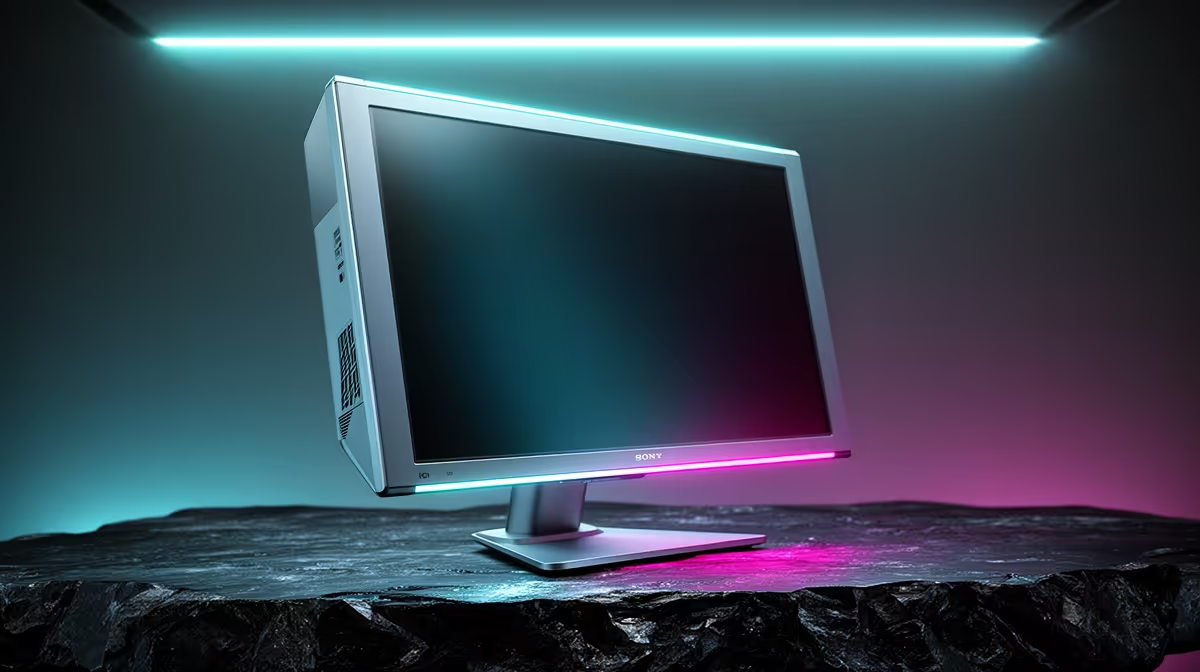
When a build is aimed at fast-paced shooters and MOBAs where reaction time wins rounds, the gap between WOLED and QD-OLED shows up in specific places rather than across the board.
Quick Answer
For competitive esports, QD-OLED already covers what you need, and QD-OLED renders punchier, more saturated colour volume. Step up to WOLED only if your build is high-end or you want headroom; expect to pay in the R10,000 to R28,000 band depending on tier.
Real-world feel during competitive esports
In day-to-day fast-paced shooters and MOBAs where reaction time wins rounds, the difference between WOLED and QD-OLED is felt in the lowest possible input-to-photon delay. If you cannot notice it side by side on your own panel, you do not need to pay for it yet.
Future headroom and upgrade runway
WOLED buys you more time before the next upgrade, which suits a fresh platform you plan to keep for years. QD-OLED is the pragmatic pick if you upgrade in smaller, more frequent steps.
What WOLED actually changes for competitive esports
WOLED panels reach high peak brightness in small windows. For fast-paced shooters and MOBAs where reaction time wins rounds, that translates into the lowest possible input-to-photon delay when the rest of the system can keep up. The win is real but narrow: it shows in edge cases, not in every minute of play.
FAQ
Does WOLED run hotter or need extra cooling?
It can draw a little more, so check your board and airflow first. In a well-ventilated SA build it is manageable, but a cramped case can claw back the advantage.
What price should I budget for WOLED parts?
Plan for roughly the R10,000 to R28,000 range depending on brand and tier. Watch for the moment the WOLED option costs only a little more than QD-OLED, because that is when it makes sense.
Which one helps competitive esports most on a tight budget?
QD-OLED. QD-OLED renders punchier, more saturated colour volume, leaving more of your budget for the parts that visibly improve fast-paced shooters and MOBAs where reaction time wins rounds.
Match the spec to how you actually play
Confirm your motherboard supports the panel type you want before checkout, then size the part to your competitive esports budget.