




IPS vs VA for Strategy and Sim Games in SA
IPS vs VA for strategy and sim games should be judged by fit, not a single winner. Compare compatibility, latency, capacity, upgrade path, cost planning, and South African setup needs.
Read more- Target "ROG Ally overheating" - Expand long-tail clusters - Confirm informational intent - Build on-page SEO Fix heat on handhelds like ASUS ROG Ally X with airflow tweaks, fan curves, undervolting, and smart power profiles to reduce temps and prevent throttling. 🔧🔥

So, you grabbed an ASUS ROG Ally, ready to dominate Helldivers 2 from the couch, only to feel it running hotter than a Durban summer day? You're not alone. The ROG Ally is a beast of a handheld, but its immense power comes with a thermal challenge. This guide dives into the notorious ROG Ally overheating issue, gives you practical tips for heat management, and looks ahead to how the new Ally X plans to cool things down. 🔥
The original ROG Ally packed a desktop-grade AMD Z1 Extreme chip into a tiny chassis. While this delivered incredible performance, it also generated significant heat. The most talked-about symptom of this ROG Ally overheating problem was the failing microSD card reader, which was unfortunately placed right next to a major heat vent. This design flaw could lead to slow card speeds or even permanent damage.
For many South African gamers, this wasn't just a minor annoyance; it was a serious concern for a premium device. The core issue is simple physics: powerful components create heat, and in a compact handheld, there's very little space for that heat to escape. Effective handheld heat management is crucial for both performance and the lifespan of the device.
While you can't redesign the hardware, you can take control of your Ally's thermals. A few software tweaks can make a massive difference, helping you find the sweet spot between power and temperature. Don't let ROG Ally heat issues ruin your gaming sessions... fight back with these tips. 🔧
ASUS's Armoury Crate software is your command centre. Instead of relying on the default "Performance" or "Turbo" modes, create a manual profile. By setting more aggressive fan curves, you can force the fans to spin up earlier and faster, pulling heat away from the components before it becomes a problem. It might get a bit louder, but it's a small price to pay for stability.
The TDP dictates how much power the processor can draw, which directly impacts performance and heat output. While the 25W Turbo mode is great for pushing frames, dropping down to a custom 18W or 20W profile can significantly lower temperatures with only a minor hit to performance in many games. Experiment to find what works best for your favourite titles.
In Armoury Crate SE, navigate to Settings > Operating Mode > Manual Mode. Here, you can adjust both the SPL (Sustained Power Limit) and SPPT (Short Power Boost) sliders. For a balanced and cooler experience, try setting SPL to 18W and SPPT to 22W. This gives you a solid performance floor while preventing the extreme temperature spikes of the full 30W Turbo boost.
ASUS has clearly been listening to feedback. The upcoming ROG Ally X isn't just a minor refresh; it's a direct response to the thermal challenges of its predecessor. Leaks and official teasers point to a complete internal redesign focused squarely on better cooling.
The Ally X is expected to feature:
This focus on fixing the ROG Ally overheating problem shows a commitment to learning from the first generation. For those who held off, the Ally X might just be the perfected handheld they were waiting for.
The handheld PC market is heating up in more ways than one, and every manufacturer is tackling thermals differently. While the current lineup of ASUS handhelds pushed the performance envelope, competitors are finding their own solutions. The Lenovo Legion Go, for example, uses a slightly larger body to allow for more robust cooling from the start.
Newcomers like the MSI Claw are also entering the fray, bringing different chip architectures that present unique thermal challenges and solutions. As the technology evolves, we're seeing smarter and more efficient designs across all major handheld gaming consoles. It's a fantastic time to be a portable PC gamer in South Africa. 🚀
Ready for Next-Gen Portable Power? Whether you're optimising your current device or eyeing the next big thing, having the right handheld is key. Explore South Africa's top range of handheld gaming consoles and find the perfect rig for your on-the-go battles.
Use Armoury Crate to set a manual fan curve, cap TDP, and optimize a power profile; clean vents and use an external cooler to cut temps.
The APU may spike near 95C briefly; aim for 70–85C sustained. If you see thermal throttling, raise the fan curve or lower TDP/performance mode.
Yes—an undervolt can drop temps 5–10C if stable. Test gradually, monitor crashes, and pair with a balanced power profile and tuned fan curve.
Switch to Balanced or Silent, set a steeper fan curve, cap FPS to 60, and limit TDP. These often cut heat without big FPS loss.
High-quality paste is safer; liquid metal can shave a few °C but risks corrosion and warranty issues. If unsure, use premium paste and proper pads.
Clip-on USB-C fans, rear cooling docks, and angled stands improve airflow. Combine with a lower TDP for the best handheld gaming heat management.
Power or skin temp limits can trigger throttling. Lower TDP, reduce resolution, improve airflow, and refine the ROG Ally X fan curve to stabilize.
IPS vs VA for strategy and sim games should be judged by fit, not a single winner. Compare compatibility, latency, capacity, upgrade path, cost planning, and South African setup needs.
Read more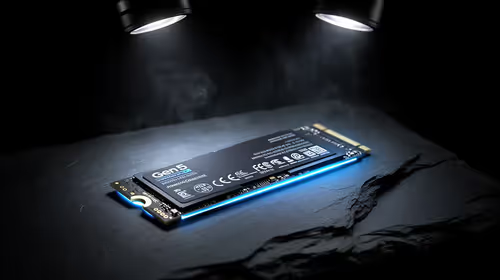
Gen 5 NVMe SSD guide for Bloemfontein gamers should be shortlisted around the job it must do. South African buyers should compare capacity, speed, thermals, and motherboard support, warranty path, and upgrade room before treating any pick as best.
Read more
Skip the RTX 5070 if your first-time builder budget needs better balance. Better SA picks can free room for the right CPU, PSU, case, monitor, storage, and cooling while still giving a strong first gaming PC experience this year in South Africa.
Read more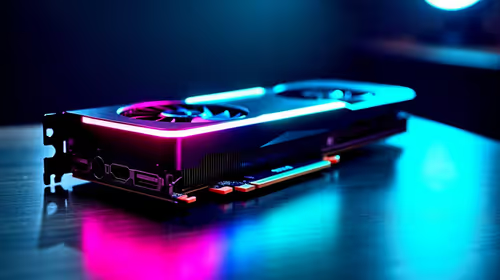
RTX 5080: weighing the pros and cons for SA should be shortlisted around the job it must do. South African buyers should compare GPU tier, VRAM, cooling, and PSU headroom, warranty path, and upgrade room before treating any pick as best.
Read more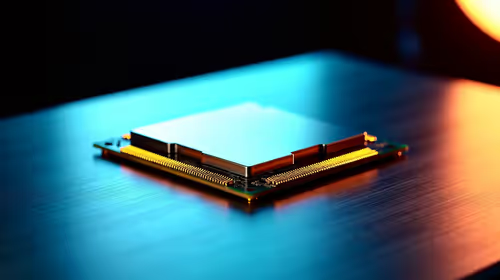
Core i5-13400F gives South African PC builders a capable mid-range CPU choice with clear limits. Check its gaming fit, discrete GPU requirement, LGA1700 platform costs, and upgrade path before locking in your parts list.
Read more
Pros and cons of the Wi-Fi 7 routers for SA should be shortlisted around the job it must do. South African buyers should compare WiFi standard, coverage, latency, and device support, warranty path, and upgrade room before treating any pick as best.
Read more
Steam content servers unreachable needs a download-path check, not an immediate reinstall of every game. Restart the client, inspect download settings and compare another connection when practical. Clearing the download cache is separate from deleting installed games.
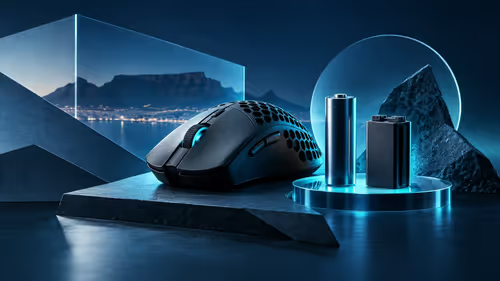
Keychron G6 HE has built-in and swappable battery versions with different weights. The product brief lists 42g and 46g respectively, each with a 3g tolerance. Choose by grip and battery preference before treating one headline weight as universal.

Corsair HS80 v2 MAX supports 2.4GHz wireless and Bluetooth. Its maximum battery figures use RGB-off conditions and differ by connection. Check microphone routing, comfort and the exact device support before assuming every wireless mode behaves alike.

Windows taskbar notification badges can be shown or hidden in Taskbar behaviours. This changes the small app indicators, not the underlying messages. Choose a calmer desktop while keeping a deliberate routine for checking important conversations and app updates.
Windows taskbar notification badges can be shown or hidden in Taskbar behaviours. This changes the small app indicators, not the underlying messages. Choose a calmer desktop while keeping a deliberate routine for checking important conversations and app updates.

Windows USB device in use can mean a program still has the drive open. Finish transfers and close files before retrying ejection. Better performance caching requires safe removal; a replacement drive is not the first fix for an open-file warning.

Windows Nearby Sharing not working starts with feature, Bluetooth and visibility checks on both PCs. My devices only depends on matching Microsoft accounts. Test a small harmless file before buying networking hardware or changing your home router.
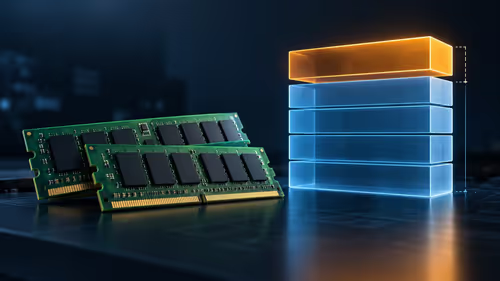
Windows hardware reserved RAM is different from memory used by applications. Compare installed memory with firmware detection and the usable amount before buying modules. Reservations and reporting limits vary by system; no universal setting restores every byte.

Windows title bar window shake can minimise other open windows when you shake the active window by its title bar. Inspect the Multitasking setting and switch it off if that gesture interrupts your work. The preference costs R0 and does not require new hardware.

Windows Print Screen opens Snipping Tool when its keyboard preference is enabled. Change the option under Accessibility, Keyboard to choose another workflow. Test whether you need a clipboard image or a saved file.

Windows desktop icons missing may be a visibility setting. Right-click the desktop, choose View and inspect Show desktop icons. If only system icons are absent, use Desktop icon settings. Check the Desktop folder before assuming files were deleted.

Windows set time zone automatically greyed out calls for a location and device-policy check. Automatic time-zone selection relies on location services. A manual time-zone choice is separate from synchronising the clock; check both before replacing hardware.