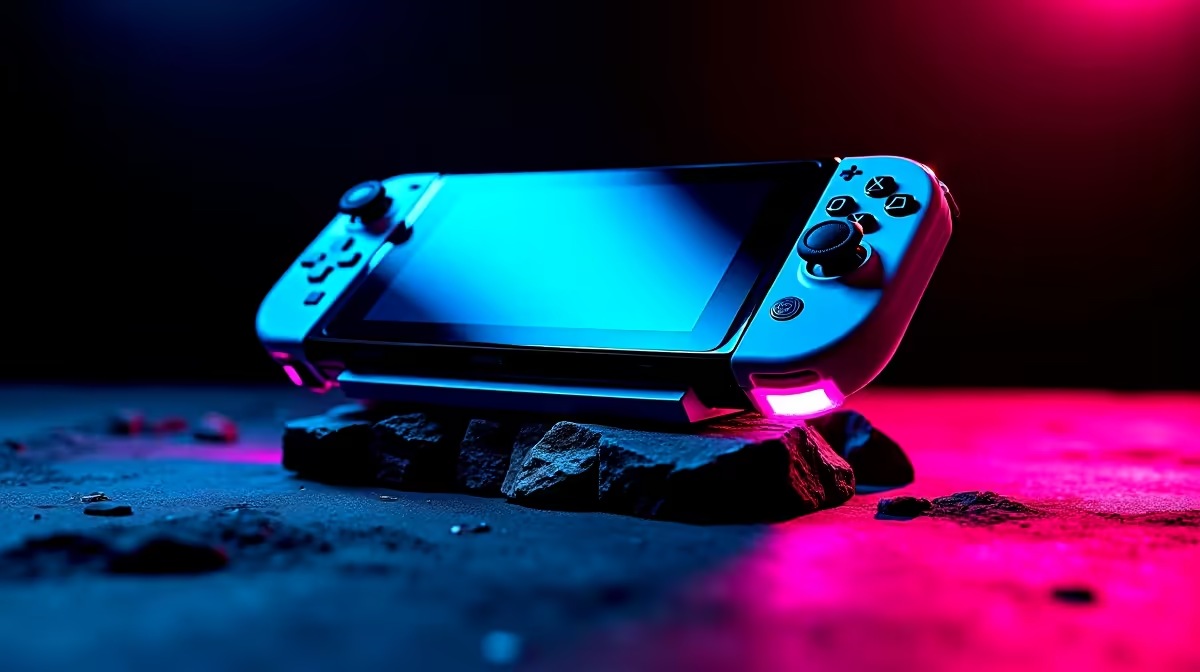
A handheld the size of a paperback, plugged into an external graphics card, outrunning a PS5? It sounds far-fetched, but the ROG Ally X plus eGPU combination genuinely can, when it is docked and wired to a monitor. The catch is right there in that sentence: this is a desk setup, not a handheld one. Understand the distinction and the comparison becomes a lot more interesting than the marketing suggests.
Quick Answer
Docked and driving an external RTX 4070, an ROG Ally X can target around 1440p at up to 120fps or 4K Ultra near 60fps, which exceeds the usual PS5 and Xbox targets. But those figures only apply when it is wired to a monitor through a dock and eGPU. Unplugged, in your hands, it performs nothing like a console.
How the Docked Setup Beats a Console
A console is a fixed box of hardware. The ROG Ally X is a full Windows PC in handheld form, so when you connect it to an external GPU enclosure holding a desktop-class card like the RTX 4070, the heavy lifting moves to that card. At that point you are effectively running a desktop GPU, and a desktop RTX 4070 is more capable than the graphics silicon inside current consoles.
That is why the docked numbers land where they do. With the 4070 doing the rendering, hitting 1440p at high frame rates or 4K at console-style 60fps targets is realistic. The handheld becomes the brain and the eGPU becomes the muscle.
The Catch: This Is Not Handheld Performance
None of this travels with you. The eGPU is a sizeable box that needs its own power, sat on your desk, connected by cable to a monitor. The moment you unplug the Ally X to play in your hands, you are back to its built-in chip, which is good for a handheld but nowhere near console-beating. Anyone imagining a pocket device that outguns a PS5 on the couch has the wrong picture entirely.
What You Actually Need to Build It
Three pieces have to come together, and each adds cost:
- The ROG Ally X handheld as the core device.
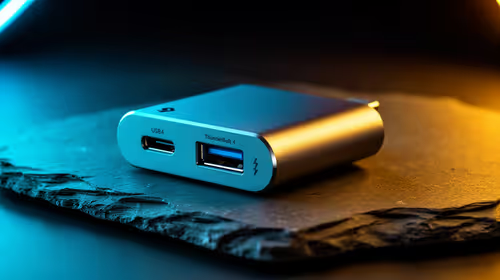
- An eGPU enclosure to house the graphics card and connect it to the handheld.
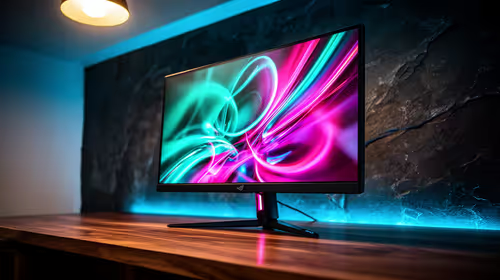
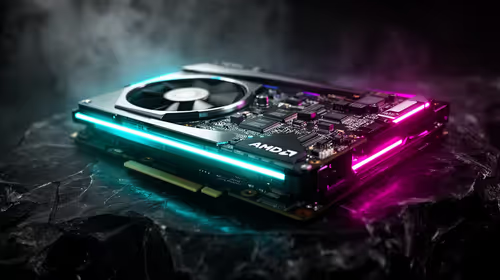
- A capable GPU such as an RTX 4070 to do the rendering, plus a monitor to output to.
The connection between handheld and enclosure is critical, since it determines how much of the GPU's power actually reaches the games. A solid dock or enclosure with the right high-bandwidth link is what makes the setup perform rather than bottleneck. It is worth comparing options in the docking and connectivity range before you commit, because a weak link undoes the whole point.
Is It Worth It Over Just Buying a Console?
This is the honest question. By the time you add a handheld, an enclosure, a desktop GPU, and a monitor, you have spent well beyond the price of a console. So the eGPU route makes sense for a particular person, not everyone.
When the eGPU Route Makes Sense
It suits someone who wants one device that does two jobs: a genuine handheld for portable play, and a desktop-class gaming rig when docked at home. If you value that flexibility, owning a PC you can take anywhere and then push to desktop-class power at home has real appeal, and the eGPU is what unlocks the desk half.
When a Console Is the Smarter Buy
If all you want is the best gaming-per-Rand on a TV with zero fuss, a console wins comfortably. It is cheaper, simpler, and needs no docks, enclosures, or driver management. The eGPU setup is for flexibility and tinkering, not for value or convenience.
For a sense of which graphics cards people are actually pairing with eGPU builds, the most popular GPU picks are a useful gauge before you settle on the card that goes in the enclosure.
The Bottleneck You Need to Understand
The single biggest variable in whether this setup lives up to its promise is the connection between the handheld and the eGPU enclosure. An external GPU never delivers quite the same performance as the same card sitting in a desktop, because the link between handheld and enclosure has less bandwidth than a direct internal slot. How much you lose depends entirely on which connection standard the enclosure and handheld use.
A high-bandwidth, low-overhead link keeps most of the GPU's power intact, which is how you reach those console-beating numbers. A weaker or older connection throttles the card, and you end up with a setup that cost more than a console yet performs no better. This is why the dock or enclosure is not an afterthought, it is the component that decides whether the whole exercise succeeds. Read the connection spec carefully before buying, because a cheap enclosure with a slow link quietly wastes an expensive GPU.
Resolution Changes the Maths
A bottleneck hurts most at lower resolutions and high frame rates, where the GPU is fed instructions rapidly and the connection has to keep up. Push to 4K and the GPU spends longer rendering each frame, so the connection has more breathing room and the performance loss from the external link shrinks. In practice this means the eGPU setup looks its best aimed at high-resolution, console-style targets like 4K at 60fps, exactly the territory where it most convincingly outdoes a console. If you are chasing very high frame rates at lower resolutions instead, the connection limits bite harder and the value case weakens.
Frequently Asked Questions
Can the ROG Ally X beat a PS5 while handheld?
No. The console-beating figures only apply docked and wired to a monitor through an eGPU. In your hands, on its own chip, the Ally X performs like a strong handheld, not like a console.
What GPU is needed to exceed console targets?
A desktop-class card such as an RTX 4070 in the eGPU enclosure is what gets you to 1440p high-frame-rate or 4K 60fps targets. The handheld's own graphics cannot reach those numbers.
Does the dock or enclosure connection matter that much?
Yes. The link between the handheld and the eGPU determines how much of the GPU's power actually reaches the games. A weak or low-bandwidth connection bottlenecks the card and undercuts the entire setup.
Is the eGPU setup cheaper than a console?
No. Adding a handheld, an enclosure, a desktop GPU, and a monitor costs well above a console. You pay for flexibility, one device that is both portable and a desk-bound gaming rig, not for value.
Who should actually consider this build?
Someone who genuinely wants both a handheld and a desktop-class gaming experience from one device, and who does not mind the desk setup and tinkering. For pure plug-and-play TV gaming on a budget, a console is the better call.
A docked handheld can punch well above its size with the right gear behind it. Start with a solid dock or enclosure from the Evetech docking range and build the flexible, two-in-one setup that a console simply cannot offer.