

Christmas GPU Buying Guide for SA 2026
Christmas GPU Buying Guide. Hand-picked gift ideas at every budget tier. SA pricing & Evetech availability included.
Read moreExplore which GPU reigns supreme in late-cycle gaming: RTX 3070 Ti vs RX 6800 XT showdown 🚀 Maximize performance & value today 🔍
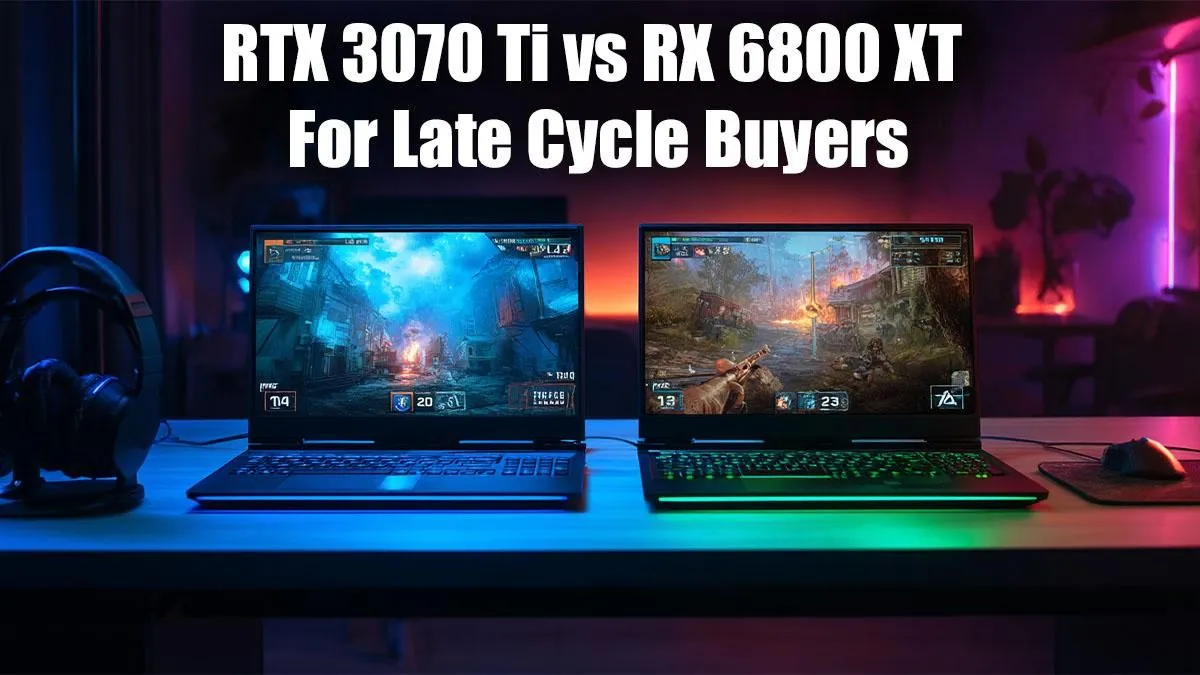
Navigating the GPU market in South Africa can feel like a boss battle, especially when you're looking for the best bang for your buck in a late hardware cycle. With new generations on the horizon, choosing between two titans like the NVIDIA GeForce RTX 3070 Ti and the AMD Radeon RX 6800 XT becomes a critical decision for serious gamers and tech enthusiasts. Both offer formidable performance, but which one truly earns its spot in your rig as the best choice for late cycle gaming? Let's dive deep into this crucial comparison.
When we talk raw gaming power, both NVIDIA's 3070 Ti and AMD's 6800 XT are exceptional performers, especially at 1440p resolution, which remains the sweet spot for many South African gamers. In rasterisation, which is the traditional way games render graphics, the AMD Radeon RX 6800 XT often edges out the NVIDIA GeForce RTX 3070 Ti. Benchmarks across various demanding titles like Cyberpunk 2077, Assassin's Creed Valhalla, and Forza Horizon 5 consistently show the 6800 XT delivering a few extra frames per second. This slight lead makes AMD's offering a compelling choice for those prioritising raw FPS in standard gaming scenarios.
However, the narrative shifts when ray tracing enters the arena. NVIDIA's second-generation RT Cores in the 3070 Ti give it a noticeable advantage in games heavily utilising ray tracing effects. While both cards can run ray-traced titles, the 3070 Ti generally offers a smoother experience with fewer performance compromises. This is a key factor if you want to experience the most visually immersive games with all the bells and whistles. Remember, the best gaming experience often comes down to the entire system, so consider our range of best gaming laptop deals if you're looking for an all-in-one solution.
Beyond raw frame rates, the ecosystems surrounding these cards offer distinct advantages. NVIDIA's DLSS (Deep Learning Super Sampling) is a powerful AI-driven upscaling technology that provides a significant performance boost in supported games without a major hit to image quality. For the 3070 Ti, DLSS can often bridge the performance gap with the 6800 XT, especially when ray tracing is enabled, making games feel much more fluid.
AMD counters with FSR (FidelityFX Super Resolution), which is an open-source alternative that works on a wider range of GPUs, including older generations and even NVIDIA cards. While FSR 2.0 and FSR 3.0 have made huge strides, many still consider DLSS to have a slight edge in image quality at lower resolutions. The AMD ecosystem also boasts features like Smart Access Memory (SAM), which can offer a modest performance uplift when paired with a compatible AMD Ryzen CPU on an AMD laptop on special. This synergy can be a deciding factor for some builders.
Consider your monitor's refresh rate. If you have a 144Hz screen, ensure your chosen GPU can consistently hit those frames in your favourite games. Don't overspend on a card if your monitor can't display the extra FPS!
A critical distinction between the 3070 Ti and the 6800 XT lies in their VRAM. NVIDIA's 3070 Ti comes with 8GB of GDDR6 memory, while AMD's 6800 XT boasts a more generous 16GB of GDDR6. In the current gaming landscape, 8GB is generally sufficient for 1440p gaming, but as game textures become more detailed and resolutions climb, 16GB offers a significant buffer for future titles. This makes AMD's offering potentially more "future-proof" for those planning to keep their card for several years.
Power consumption is another area where these cards differ. The 3070 Ti has a TGP (Total Graphics Power) of 290W, compared to the 6800 XT's 300W. This means NVIDIA's card runs a little cooler and draws slightly less power, which can be a consideration for electricity costs in South Africa or for those with smaller power supplies. Ensure your PSU can handle the load; a good 750W power supply is recommended for either card.
For those considering a complete system upgrade, rather than just a GPU, Evetech offers fantastic laptop specials for sale in South Africa, providing excellent value across various configurations.
So, which card is the best choice for late cycle gaming in your setup?
Ultimately, the decision between the RTX 3070 Ti vs RX 6800 XT boils down to your personal priorities and the games you play. Both offer phenomenal gaming experiences. Whether you lean towards NVIDIA's ray tracing prowess or AMD's raw rasterisation and VRAM generosity, you're investing in a powerful graphics card that will handle current and upcoming titles with ease. Don't forget to check out our wide array of Intel laptops on special if you prefer that platform for your gaming rig.
Upgrade Your Rig Today! Ready to experience gaming at its peak? Explore the latest graphics cards and gaming systems at Evetech to find the perfect match for your playstyle and budget. Shop now at Evetech for performance that leaves lag in the dust.
Yes! The RX 6800 XT excels at 1440p gaming 🎮 with strong features like FSR support.
Both last years, but NVIDIA's ray tracing 🌟 & DLSS 3 may extend game longevity
3070 Ti’s triple Exhale system OUTPERFORMS rivals ⚡ while maintaining silence
Yes—opt for RTX 3060 or custom RX 6750 GRE builds 🧠 for better 1080p value
16GB GDDR6X (3070 Ti) future-proofs BEST 📈 against next-gen titles' demands
6800 XT dominates 102 MH/s unlocked ⛏️ vs 3070 Ti’s capped 65 MH/s LHR
3070 Ti’s triple HDMI 2.1a & DisplayPort 1.4a wins for next-gen console 🎯 multiscreen setups
Christmas GPU Buying Guide. Hand-picked gift ideas at every budget tier. SA pricing & Evetech availability included.
Read more
Minecraft Max Settings on RTX 4080. Tested & verified settings for best FPS and visual quality on SA hardware budgets.
Read more
GPU Cooling: Complete Guide. Everything you need to know with SA pricing, step-by-step instructions & expert recommendations.
Read more
Starfield Max Settings on RTX 4090. Tested & verified settings for best FPS and visual quality on SA hardware budgets.
Read more
Starfield Max Settings on RTX 4080. Tested & verified settings for best FPS and visual quality on SA hardware budgets.
Read more
GPU Driver Installation. Everything you need to know with SA pricing, step-by-step instructions & expert recommendations.
Read more
Snapdragon X2 NPU Explained: How 80 TOPS Changes. Plain-English explanation of what it means, why it matters & how it affects your buying decisions in SA.

HBM? High Bandwidth Memory Used in GPUs and AI. Plain-English explanation of what it means, why it matters & how it affects your buying decisions in SA.
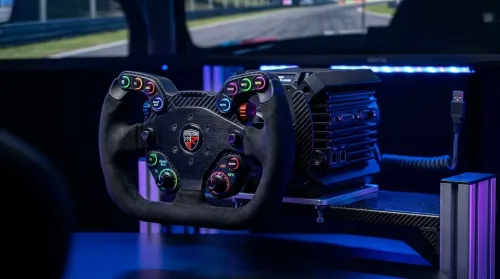
How much should you spend on sim racing accessories in South Africa for a realistic setup? We break down budgets by quality tiers, so you buy smart gear and avoid overspending 🎮💸

G-Sync and FreeSync? Variable Refresh Rate. Plain-English explanation of what it means, why it matters & how it affects your buying decisions in SA.

AMD Laptop: Value. SA-focused analysis with local pricing data, real-world insights & actionable buying advice.

How MacBook Neo Handles 30+ Chrome Tabs with Only. SA-focused analysis with local pricing data, real-world insights & actionable buying advice.

Why Apple Put 8GB RAM in MacBook Neo: The A18 Pro. SA-focused analysis with local pricing data, real-world insights & actionable buying advice.
Upgrade your work laptop with a New Motherboard. Step-by-step instructions with SA-specific tips, common pitfalls to avoid & expert recommendations.
Glorious Keyboard Switches Explained: Which. Plain-English explanation of what it means, why it matters & how it affects your buying decisions in SA.
Winter Keyboard Buying Guide. Everything you need to know with SA pricing, step-by-step instructions & expert recommendations.

Keyboard Buying Guide. Everything you need to know with SA pricing, step-by-step instructions & expert recommendations.

LGBTQ+ Gamers Keyboard Guide: January Edition. Everything you need to know with SA pricing, step-by-step instructions & expert recommendations.