

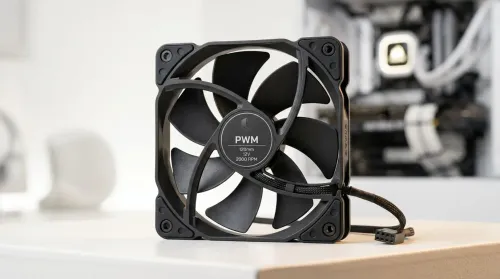
Smart PWM CPU Fan Control for Quiet Cooling
Learn how to balance noise vs cooling performance with smart PWM CPU fans—set curves, reduce buzz, and maintain safe temps. Get cooler, quieter builds in minutes 🧊🔇
Read moreAMD RX 6800 XT and Nvidia RTX 4070: 🔍 Which GPU dominates power efficiency? Discover performance-per-watt insights and unlock energy savings 💸 | Evetech
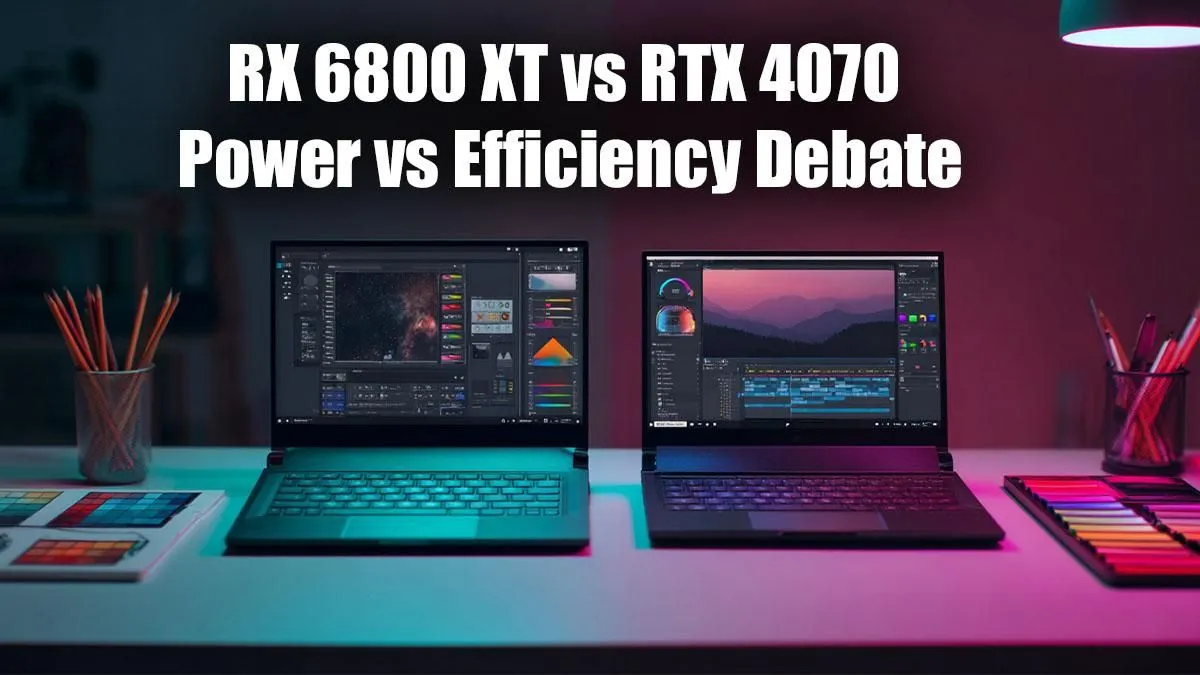
Struggling to pick your next gaming GPU, South Africa? The choice between raw power and smart efficiency is real, especially with our rising electricity costs. Today, we're putting two heavyweights head-to-head: the AMD Radeon RX 6800 XT and NVIDIA's GeForce RTX 4070. It's an RX 6800 XT vs RTX 4070 power efficiency face-off to see which card gives you the best bang for your buck without breaking the bank on your power bill. Let's dive in! ⚡
Beyond raw frames per second, a GPU's power consumption plays a crucial role in your overall gaming experience and wallet. In South Africa, where electricity tariffs are a constant concern, understanding your graphics card's appetite for watts isn't just a technical detail—it's an economic one. High power draw means bigger electricity bills, more heat generated inside your PC, and potentially a beefier (and pricier) power supply unit (PSU). Optimising for efficiency means a cooler, quieter rig and more cash for actual games or future upgrades. Even if you’re considering a new portable powerhouse, understanding these GPU dynamics helps when looking at the latest laptop specials for sale in South Africa.
The AMD Radeon RX 6800 XT, built on the RDNA 2 architecture, has long been a favourite for its impressive rasterisation performance at its price point. With 16GB of GDDR6 VRAM, it's a formidable card for high-resolution gaming. However, when we talk about power, the RX 6800 XT typically has a Total Board Power (TBP) of around 300W. This figure, widely reported across tech review sites, means it demands a solid 750W PSU as a minimum recommendation for most systems. While it delivers excellent frames, its power draw is something to factor into your long-term running costs. For those who appreciate AMD's ecosystem, there are fantastic AMD laptops on special that leverage similar architectural benefits.
Stepping into the ring from NVIDIA's corner is the GeForce RTX 4070, powered by the advanced Ada Lovelace architecture. This card is often praised for its remarkable efficiency, a hallmark of the 40-series generation. The RTX 4070 typically boasts a Total Graphics Power (TGP) of around 200W, a significant reduction compared to its AMD rival, while often delivering comparable or superior performance, especially with features like DLSS 3. This lower power draw translates directly into less heat, quieter operation, and the ability to run on a less powerful (and cheaper) PSU, often a 600W unit. Its efficiency makes it a strong contender for those prioritising a balance of performance and running costs. If you're eyeing the latest tech, check out Evetech's best gaming laptop deals which often feature these power-optimised GPUs.
When we pit the RX 6800 XT vs RTX 4070 power efficiency, the NVIDIA card generally takes the lead. While the RX 6800 XT offers competitive rasterisation performance, the RTX 4070's Ada Lovelace architecture provides a superior performance-per-watt ratio. This means the RTX 4070 delivers more frames for every watt of electricity it consumes. For the average South African gamer, this could translate into tangible savings on their monthly electricity bill, especially over years of gaming. Consider a scenario where Eskom's tariffs are R2.50 per kWh: if you game for 4 hours a day, the 100W difference could add up to a noticeable amount annually.
Lower your GPU's power limit by 5-10% in software like MSI Afterburner. You might shave off 20-30W with a negligible FPS hit, making your rig quieter and cooler without sacrificing much performance.
Moreover, the RTX 4070's lower power demand means less strain on your PSU and cooler internal temperatures, potentially extending the lifespan of your components. It’s a win-win for longevity and running costs. Many high-performance systems, including those built around Intel CPUs, benefit from this kind of efficient design. Explore some powerful Intel laptops on special that often pair these efficient GPUs with robust processors.
While our primary focus is the RX 6800 XT vs RTX 4070 power efficiency, it’s important to acknowledge other factors. The RTX 4070 boasts superior Ray Tracing performance and the game-changing DLSS 3 (Frame Generation), which can significantly boost frame rates in supported titles. The RX 6800 XT, with its larger 16GB VRAM, might offer an advantage in some future-proofing scenarios or specific VRAM-heavy workloads, and its FSR (FidelityFX Super Resolution) is a strong open-source alternative to DLSS. Your choice ultimately depends on your gaming priorities, preferred features, and budget. Both are excellent cards, but for sheer energy efficiency and advanced feature sets, the RTX 4070 often edges out its rival.
Upgrade Your Rig with Evetech Ready to experience cutting-edge performance and smart power efficiency? Evetech offers a wide range of GPUs, PCs, and gaming laptops to suit every gamer's needs and budget. Shop now at Evetech for performance that leaves lag in the dust.
The RTX 4070 claims lower power consumption, making it more energy-efficient overall in most workloads.
While powerful, RX 6800 XT has higher TDP, which may impact efficiency in graphics-rich tasks.
RX 6800 XT averages 300W+, while RTX 4070 sits around 200-250W depending on usage.
Yes, RTX 4070 excels in performance-per-watt efficiency compared to RX 6800 XT in modern games.
RX 6800 XT generally draws 50W-100W more, especially during heavy gaming or rendering.
Its raw performance in non-Ray Tracing workloads and cost-effectiveness makes it appealing for specific gamers.
RTX 4070 users can expect ~20%-30% lower electricity bills due to its superior efficiency.
Lower power draw reduces thermal stress, potentially extending your GPU’s lifespan over time.
Learn how to balance noise vs cooling performance with smart PWM CPU fans—set curves, reduce buzz, and maintain safe temps. Get cooler, quieter builds in minutes 🧊🔇
Read more
Wondering if a “48 hour” wireless gaming headset battery truly lasts? In daily use, your hours vary by settings and volume 🎧🔋. Here’s how long it lasts, what drains it fastest, and how to extend it.
Read more
Learn how to choose gaming headset audio quality in South Africa—plus mic clarity and comfort—so you hear every footstep and sound clear in-game 🎧🎙️. Use this buyer guide to match your budget and play style.
Read more
Dial in the best gaming headset setup for clear voice chat in South Africa. Fix mic issues, reduce background noise, and improve call clarity with practical settings and wireless stability 🎧🇿🇦
Read more
Choosing the best gaming headset features for Xbox and PC? Here’s what to look for in South Africa—comfort, mic quality, wireless range, and low-latency audio 🎧🇿🇦
Read more
Gaming headset price in South Africa, from entry to premium in ZAR. Compare sound, mic, and comfort before you buy. ✅🎧 Save money with the right headset tier.
Read more
Snapdragon X2 NPU Explained: How 80 TOPS Changes. Plain-English explanation of what it means, why it matters & how it affects your buying decisions in SA.
HBM? High Bandwidth Memory Used in GPUs and AI. Plain-English explanation of what it means, why it matters & how it affects your buying decisions in SA.
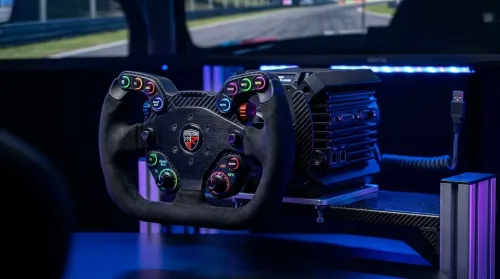
How much should you spend on sim racing accessories in South Africa for a realistic setup? We break down budgets by quality tiers, so you buy smart gear and avoid overspending 🎮💸
G-Sync and FreeSync? Variable Refresh Rate. Plain-English explanation of what it means, why it matters & how it affects your buying decisions in SA.

AMD Laptop: Value. SA-focused analysis with local pricing data, real-world insights & actionable buying advice.
How MacBook Neo Handles 30+ Chrome Tabs with Only. SA-focused analysis with local pricing data, real-world insights & actionable buying advice.

Why Apple Put 8GB RAM in MacBook Neo: The A18 Pro. SA-focused analysis with local pricing data, real-world insights & actionable buying advice.
Upgrade your work laptop with a New Motherboard. Step-by-step instructions with SA-specific tips, common pitfalls to avoid & expert recommendations.

MacBook Pro 16-Inch M5 Max: Complete Specs,. Everything you need to know with SA pricing, step-by-step instructions & expert recommendations.

Travelling With a MacBook: Travellers. Everything you need to know with SA pricing, step-by-step instructions & expert recommendations.
Back-to-School Parent Guide: Laptops. Everything you need to know with SA pricing, step-by-step instructions & expert recommendations.

MacBook Air 13-Inch M5: Complete Specs, Features. Everything you need to know with SA pricing, step-by-step instructions & expert recommendations.