Quick Answer
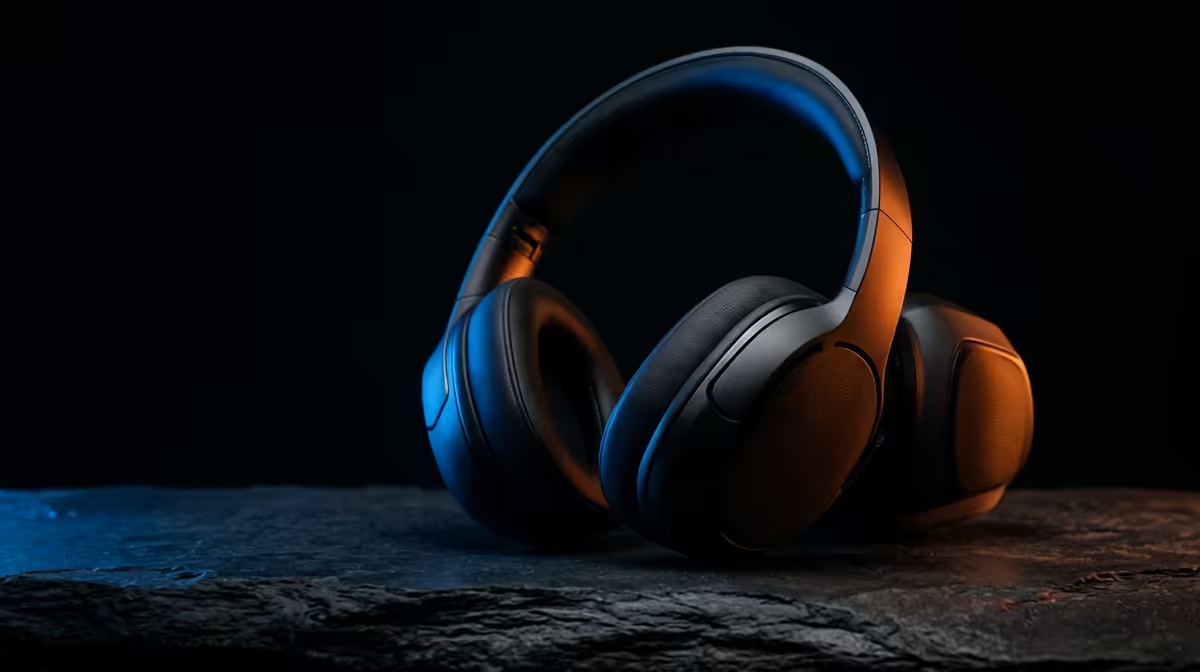
For everyday use that includes serious PC gaming, choose 2.4GHz wireless. For everyday use centred on mobile, music, and casual gaming, Bluetooth is more convenient. For most South African gamers who do both, a dual-wireless headset is the correct answer because you stop compromising on either use case.
2.4GHz Wireless: When It Is the Right Call 🖥️
The 2.4GHz protocol delivers latency of 12 to 20 ms, below human audio perception thresholds for competitive gaming. It also transmits at a higher audio quality ceiling than Bluetooth HFP and does not compress stereo audio the way Bluetooth SBC does in simultaneous input and output mode. If your primary use is PC gaming with Discord, a 2.4GHz headset gives you full 48 kHz stereo playback and clean microphone capture without codec penalties. Headsets like the Razer BlackShark V2 Pro and SteelSeries Arctis Nova Pro Wireless operate on 2.4GHz plus optional 3.5mm and represent the best audio quality at a given price point for PC gaming.
Bluetooth: Strengths and Genuine Limitations 📱
Bluetooth 5.3 excels at device flexibility: it pairs to phones, tablets, laptops, and smart TVs without a dongle. For a South African student who commutes and uses their headset for podcasts, music, and calls throughout the day before gaming in the evening, Bluetooth's universal compatibility is a real advantage. The limitation is that Bluetooth SBC adds 100 to 150 ms of audio latency and drops to HFP mono mode when using the microphone simultaneously, degrading voice quality in Discord. aptX Low Latency and LC3 codecs improve this if both devices support them, but support is inconsistent across devices in the local market.
Making the Dual-Wireless Case for Everyday SA Use 🔄
The strongest argument for dual-wireless is it eliminates daily friction. On a typical day in South Africa, you might use a headset for morning WhatsApp calls (Bluetooth), daytime work-from-home Teams calls (2.4GHz on PC), and an evening gaming session. A headset like the Razer Barracuda Pro handles all of that without re-pairing or swapping devices. Priced at around R3,000 to R3,500 at Evetech, it replaces both a dedicated gaming headset and a Bluetooth commuter headset in a single purchase.
Match the Protocol to the Platform ⚡
Always use 2.4GHz when your PC dongle is within reach and switch to Bluetooth for everything else. Configure your headset so Bluetooth auto-connects to your phone at power-on while the 2.4GHz dongle is plug-and-play on your PC. This requires zero manual switching for the vast majority of daily tasks.
FAQ
Can a Bluetooth headset keep up with competitive FPS gaming?
With aptX Low Latency or LC3 codec, latency drops to 30 to 40 ms, acceptable for casual play. For competitive ranked matches in CS2 or Valorant, 2.4GHz at 12 to 20 ms remains the better choice. The difference is most noticeable when grenades or off-screen footsteps provide split-second positional information.
Is Bluetooth 5.3 significantly better than Bluetooth 5.0 for gaming?
Bluetooth 5.3 adds improved interference handling and slightly better stability compared to 5.0, but the underlying SBC codec latency remains the same. The bigger latency gain comes from using a headset that supports LC3 or aptX Low Latency rather than upgrading Bluetooth version alone.
Do 2.4GHz headsets interfere with each other in the same room?
Modern gaming headsets use frequency hopping spread spectrum, which automatically shifts channels to avoid interference. Two 2.4GHz headsets used simultaneously in the same room will not cause audible interference under normal conditions. Issues arise only in extremely radio-dense environments like large LAN events.
Not sure whether 2.4GHz or Bluetooth suits your daily setup?
Browse Evetech's full wireless headset range with detailed specs and find the protocol combination that covers your gaming and mobile needs.