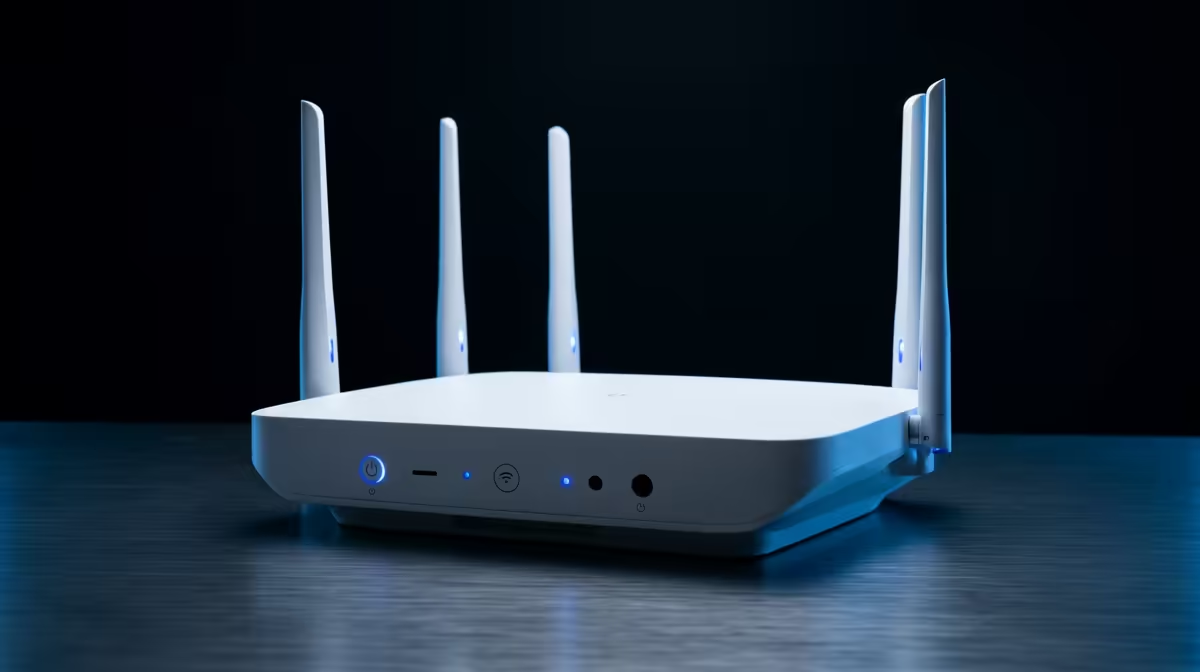
A salesperson telling you to hold off on a router because something better is coming is, in this case, giving you bad advice. Wi-Fi 8 is real and under active development, but its certification programme is years out, no certified product exists for you to buy today, and the standard it succeeds, Wi-Fi 7, is mature, fast and on shelves right now. For an SA shopper upgrading a router or a laptop, waiting means sitting on aging gear for years to chase a standard you cannot yet purchase.
Quick Answer
Do not wait for Wi-Fi 8. The Wi-Fi Alliance certification programme is currently tracking to roughly early 2028, with the standard expected to finalise around 2028, so no certified Wi-Fi 8 products are available in 2026. Wi-Fi 7 is the standard to buy now, and it will stay current for several years. A solid Wi-Fi 7 router in South Africa lands in roughly the R3,000 to R12,000 range depending on tier.
What Wi-Fi 8 actually is
Wi-Fi 8 is the marketing name the Wi-Fi Alliance gives to the IEEE 802.11bn standard. Its internal label, Ultra High Reliability or UHR, is the real clue to its purpose. Unlike previous generations that chased ever-higher headline speeds, 802.11bn is aimed primarily at making wireless connections more reliable: steadier throughput, better performance at the edge of coverage, and smoother behaviour in crowded radio environments rather than a bigger top-line number.
That focus matters because it changes who actually benefits. If your complaint about Wi-Fi is a flaky signal in the back bedroom or stutters when the whole house is online, reliability gains are appealing. But those gains are still a development-stage promise, not something you can plug in.
Where the timeline really sits
Here is the part that settles the decision. The IEEE standard for 802.11bn is expected to be finalised around 2028, and the Wi-Fi Alliance is anticipated to launch its Wi-Fi 8 certification programme in early 2028. As happened with previous generations, a handful of early routers built on draft specifications may surface before then, and concept hardware has already been shown at trade events. But draft-spec devices carry real risk: no certification guarantee, uncertain interoperability with future kit, and firmware that may need to chase a moving target. Widespread, certified, trustworthy Wi-Fi 8 gear is not expected until late 2027 into 2028.
Why Wi-Fi 7 is the right buy in 2026
Wi-Fi 7 is everything Wi-Fi 8 is not yet: certified, mature, widely available and well supported across routers, laptops and phones. The hardware has been on the market long enough that drivers are stable and prices have settled into sensible tiers.
The features you get today
Wi-Fi 7 brings genuinely useful improvements that are live now, not promised. It can use very wide channels for high throughput, operates across the 2.4, 5 and 6 GHz bands, and introduces multi-link operation (MLO), a feature that bonds multiple bands simultaneously so a single device gets both higher throughput and steadier latency in one connection. For a busy household streaming, gaming and video-calling at the same time, that is a real-world upgrade you feel immediately rather than in two years.
Crucially, buying Wi-Fi 7 now does not leave you stranded. The standard will remain current for several years, well past the point where Wi-Fi 8 first appears, and Wi-Fi generations are backward compatible, so a Wi-Fi 7 router happily serves your existing Wi-Fi 6, 6E and older devices too.
What it costs in South Africa
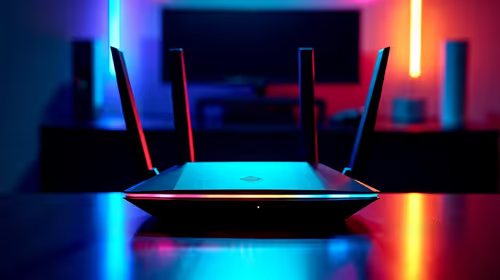
Wi-Fi 7 routers cover a wide span. Entry-level single-unit routers start in the low thousands of Rand, capable mid-range units sit around the R5,000 to R8,000 mark, and high-end gaming or mesh systems climb toward and past R12,000. That spread means you can match the spend to your home rather than overbuying. It is worth browsing the Wi-Fi 7 routers in the Evetech networking range to see where each tier lands before deciding how much router your space actually needs.
How to decide for your home
The honest answer depends on what you are replacing and what your home demands.
If your current Wi-Fi is struggling
Upgrade now to Wi-Fi 7. Two more years of weak signal, dropped video calls and slow transfers is a poor trade for a standard you cannot buy and may not benefit from as much as you expect. A current Wi-Fi 7 router solves today's problems today.
If you are buying a new laptop
Take the Wi-Fi 7 radio without hesitation. It is the current standard in new machines, it pairs with any router, and it will stay relevant across the laptop's useful life. There is no Wi-Fi 8 laptop to wait for, so holding off achieves nothing.
If your setup is genuinely fine
Then you do not need to spend at all, on either standard. The case for waiting is never about the gear you already have working well; it is about not buying draft-spec Wi-Fi 8 the moment it appears. Let the standard certify and mature first.
The practical hardware around the router matters as well, from mounting to cabling for a wired backhaul, and the top-selling networking accessories at Evetech include the cables, switches, and extenders that round out a tidy home network install.
The bottom line for SA shoppers
Wi-Fi 8 is a worthwhile future standard built around reliability rather than raw speed, but its timeline puts certified products into the 2027 to 2028 window, not 2026. There is nothing to buy today, draft-spec hardware is a gamble, and Wi-Fi 7 is the mature, certified, fully available standard that will serve you well for years. Spend on Wi-Fi 7 now if you need it, skip the spend entirely if your network is healthy, but do not park an upgrade on a standard you cannot yet purchase.
Frequently Asked Questions
When will Wi-Fi 8 actually be available to buy?
Certified consumer Wi-Fi 8 products are not expected in volume until late 2027 into 2028, with the Wi-Fi Alliance certification programme tracking to roughly early 2028 and the standard finalising around then. A few draft-spec routers may appear earlier, but they carry interoperability risk.
Is it worth buying a draft-spec Wi-Fi 8 router early?
For most people, no. Pre-certification hardware has no interoperability guarantee, may need firmware to chase the final standard, and commands a premium. Mature, certified Wi-Fi 7 is the safer and better-value choice in 2026.
Will a Wi-Fi 7 router still work once Wi-Fi 8 arrives?
Yes. Wi-Fi generations are backward and forward compatible, so a Wi-Fi 7 router keeps serving all your devices, and future Wi-Fi 8 devices will still connect to it, just at Wi-Fi 7 speeds.
What is the real difference between Wi-Fi 7 and Wi-Fi 8?
Wi-Fi 7 pushes throughput with wide channels and multi-link operation across three bands. Wi-Fi 8 (802.11bn, Ultra High Reliability) focuses less on peak speed and more on steadier, more reliable connections, especially at the edge of coverage and in congested areas.
How much should I budget for a good Wi-Fi 7 router in South Africa?
Plan for roughly R3,000 to R12,000. Entry-level units sit in the low thousands, capable mid-range routers around R5,000 to R8,000, and premium gaming or mesh systems above R12,000. Match the tier to your home size and how many devices you run at once.
Stop waiting on a standard you cannot buy yet. Explore the Wi-Fi 7 routers in the Evetech networking range and upgrade to gear that is fast, certified and available today.