Load-shedding hits, and suddenly your power bank is your best friend... until it can't charge your laptop and phone efficiently. Sound familiar? Finding the right smart chargers for off-grid living isn't just about plugging things in; it's about compatibility and survival. A mismatched charger can mean slow speeds or, even worse, no power when you need it most. Let's get your gear sorted for true energy independence. ⚡
Why a Smart Charger is Essential for Your Off-Grid Setup
Before we dive into compatibility, what even makes a charger "smart"? Unlike the basic plug that came with your old phone, a smart charger intelligently communicates with your device. It identifies the connected gadget... whether it's a smartphone, a Nintendo Switch, or a laptop... and delivers the optimal amount of power.
This tech protects your battery's long-term health by preventing overcharging and optimises charging speed. Modern GaN (Gallium Nitride) chargers take this even further, packing massive power into a tiny, cool-running brick that's perfect for a go-bag. Having a versatile and intelligent power solution is key, which is why it's worth browsing the full range of modern chargers to see what's possible.
Decoding Charger Compatibility for Off-Grid Living
Getting your devices powered up efficiently when you're off-grid boils down to a few key factors. Getting this right is the difference between a full battery in 30 minutes and one that's still crawling to 50% after two hours.
Wattage, Ports, and Protocols
- Wattage (W): This is the total power output. It’s calculated by multiplying Volts (V) by Amps (A). A phone might only need 20W, but a laptop could require 65W or more to charge properly. Your charger's wattage must meet or exceed your device's needs.
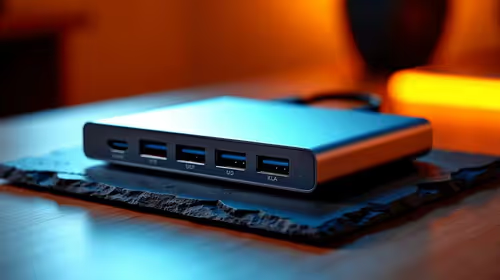
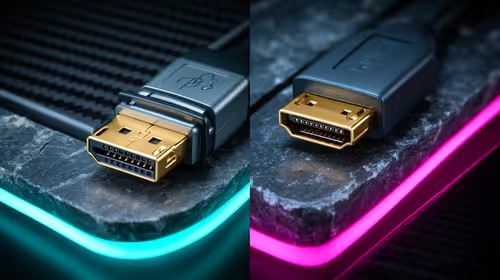
- Ports: USB-C is the new king, thanks to its reversible design and support for high-speed protocols like Power Delivery (PD). Many smart chargers now offer multiple ports (a mix of USB-C and older USB-A) to power several devices at once.
- Protocols: Power Delivery (PD) and Quick Charge (QC) are the languages chargers use to talk to devices for fast charging. If your phone is QC compatible, using a PD-only charger will work, but it will charge at a much slower, standard speed. Always match the protocol for the best results!
Even powerful and versatile chargers under R500 now come with these smart features, making them an accessible upgrade.
Check Your Power Bank's Output 🔋
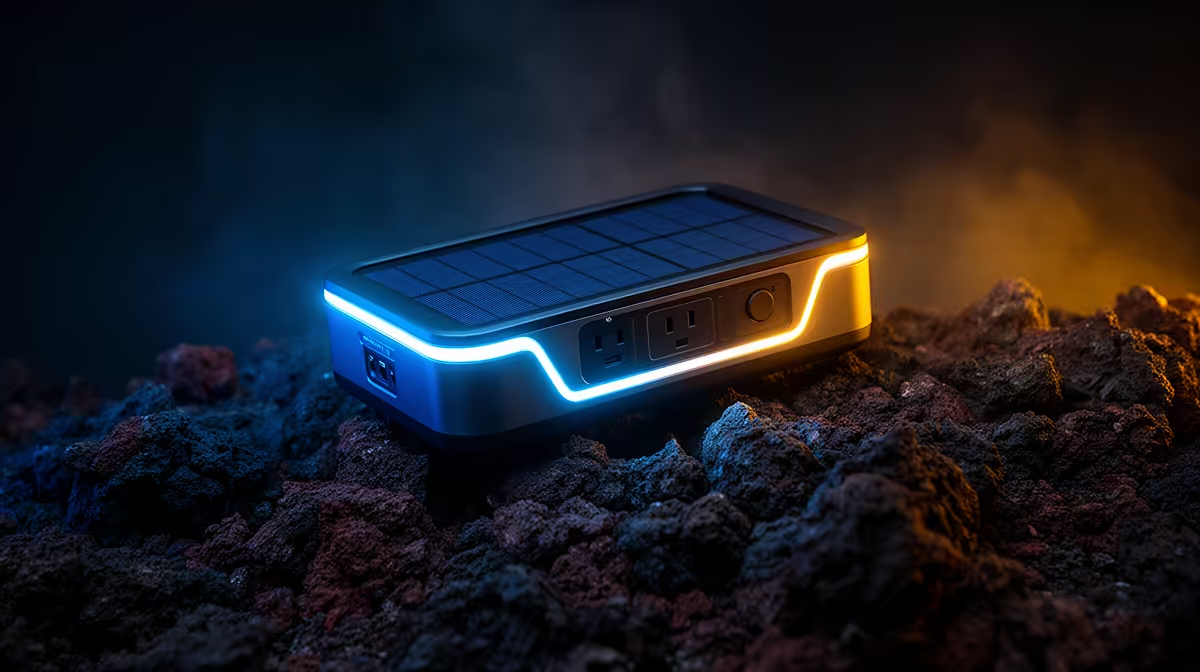
Your new 65W smart charger is useless if your power bank can only output 15W. Always check the 'Output' spec on your power bank or solar panel. It should match or exceed the wattage of the charger and the device you want to power for optimal performance.
Pairing Your Smart Charger with Power Banks and Solar
An effective off-grid charging solution is a balanced ecosystem. Your smart charger is the brain, but it needs a capable power source to work its magic.
When connected to a solar panel, a good smart charger manages the fluctuating power input to provide a stable charge to your devices, protecting them from power spikes or dips. For power banks, it ensures you're drawing power as efficiently as possible, getting the most out of every milliamp-hour (mAh). Brands that focus on mobility, like Promate, often design their chargers with these rugged, real-world scenarios in mind. A solid pairing ensures your gear is ready for anything, from a Stage 6 marathon to a weekend in the Cederberg.
Finding the right smart chargers for off-grid living means you're not just buying a plug; you're investing in reliability and freedom from the wall socket. ✨
Ready to Power Up Your Independence?
Don't let load-shedding dictate your digital life. Find the perfect smart charger for your setup with our excellent selection of top-tier chargers under R1000 at Evetech and stay connected, no matter what.