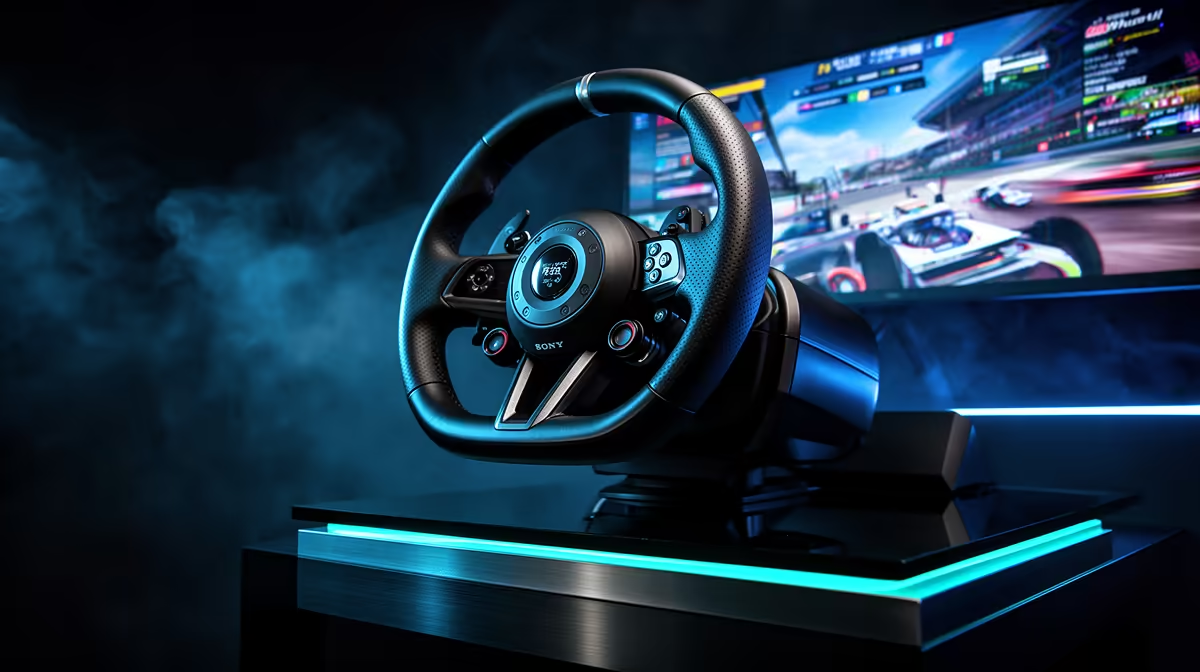
A smart racing wheel choice within the stated budget should be based on driving-simulator compatibility, mounting and control feel; OBS merely captures the session. The wheel will not improve encoding quality, and streaming accessories will not fix unsupported force feedback or poor pedal placement.
Validate driving and capture as two systems
List the simulator titles, platform, available desk or cockpit space and required controls. Test steering, pedals and button mapping while OBS captures a demanding lap. Inspect frame pacing, audio sync and input reliability, then check whether the desk remains stable under steering force.
No racing wheel with verified pricing appears in the product facts. For the broadcast side, the NearStream 4K AI webcam at R678 and USB/XLR microphone at R676 are confirmed references. They do not establish wheel compatibility or a complete setup. Verify any wheel model for supported platforms and games, force-feedback system, clamp dimensions, pedal set, driver support, returns and warranty.
Secure the mount before driving, keep pedals from sliding and route cables away from feet. Install control software from trusted channels. Save OBS scenes, profiles and simulator mappings in independent backups before major driver changes.
Spend only after a wheel passes the game and furniture checks. Reserve enough of the ceiling for a safe mount, while fixing capture settings separately through measured OBS tests.
Building a simulator stream? > Compare Evetech webcams, microphones and PC hardware while validating the wheel separately.