

AIO Liquid 240mm Setup and Configuration: Complete Tutorial
AIO Liquid 240mm Setup and Configuration. Clear setup instructions with SA-specific considerations, troubleshooting tips & recommended components.
Read more🎉 Say goodbye to lip-sync issues and achieve smooth streaming sound with these easy fixes. ✔️ Expert tips for lag-free audio quality.
There's nothing more jarring than when your audio betrays you. You land the perfect headshot, but the sound arrives a second late. Your witty commentary on stream is ruined by frustrating lip-sync problems, making you look like you're in a badly dubbed movie. It kills the immersion for you and your audience. But don't stress... getting smooth streaming sound is totally achievable. Let's dive into the most common causes and the fixes that actually work. 🔧
Before you can fix the problem, you need to know what's causing it. More often than not, audio desync isn't one single issue but a combination of factors. The delay, known as latency, is the time it takes for the audio signal to travel from your PC to your ears. For South African gamers and streamers, finding the bottleneck is the first step towards a fix.
The most common culprits include:
Ready to get your audio back in line? Start with these practical, high-impact solutions. We'll work from the simplest software tweaks to potential hardware upgrades, helping you find that perfect sync.
First, let's tackle the low-hanging fruit.
Advanced Audio Properties and look for the Sync Offset setting. If your voice (mic) is ahead of the game audio, add a positive delay (e.g., 200ms) to your mic source until it matches up.If you're using a wireless headset with a USB dongle, plug it directly into a motherboard USB port, preferably on the back of your PC. Avoid front-panel ports or USB hubs, as they can share bandwidth and introduce interference, leading to audio dropouts and lag.
If software tweaks don't provide a complete fix for your lip-sync problems, it's time to look at your gear. While wired headphones offer zero latency, today's wireless tech has come a long way.
For serious gaming and streaming, a dedicated wireless gaming headset that uses a 2.4GHz USB dongle is your best bet. This connection is far faster and more stable than traditional Bluetooth, specifically engineered for low-latency performance.
For on-the-go convenience, many are turning to True Wireless Stereo (TWS) earbuds. While great for music, ensure you pick a pair with a dedicated "Game Mode," which reduces latency for a much better reactive audio experience.
Sometimes, the problem isn't your headphones at all. If you're a content creator who uses desktop speakers for monitoring or editing, poor quality or a bad connection can also introduce delay. Upgrading to a set of quality 2.0 or 2.1 speakers can provide a richer, more reliable audio experience, ensuring what you hear is perfectly in time with what you see. ✨
Ready for Flawless Audio? Stop letting audio lag ruin your experience. Equip yourself with gear designed for split-second response and crystal-clear sound. Shop our range of low-latency wireless headsets at Evetech and hear the difference for yourself.
Update audio drivers and use a wired connection for more stable streaming sound performance.
Encoding/decoding delays between audio and video streams often cause sync issues during streaming.
Utilize tools like OBS Studio to adjust audio buffering and align streams precisely.
Set a stable bitrate and prioritize audio in your streaming software settings.
Yes, network latency can cause noticeable delays in audio during live streaming.
Invest in a quality USB microphone and dedicated audio interface for smoother sound.
Tweak encoder settings and minimize background processes to avoid streaming audio problems.
AIO Liquid 240mm Setup and Configuration. Clear setup instructions with SA-specific considerations, troubleshooting tips & recommended components.
Read more
Setting Up DDR5 64GB Kit. Tested & verified settings for best FPS and visual quality on SA hardware budgets.
Read more
Overwatch 2 Setup Guide Gamers. Clear setup instructions with SA-specific considerations, troubleshooting tips & recommended components.
Read more
R and RStudio on Mac: Data Science Setup Guide. Clear setup instructions with SA-specific considerations, troubleshooting tips & recommended components.
Read more
NVIDIA Broadcast Setup with GPU: Streamer Guide. Clear setup instructions with SA-specific considerations, troubleshooting tips & recommended components.
Read more
Core Ultra 7 265K Temperature Guide: Normal Range. Complete product range with SA pricing, key specs & recommendations for different budgets.
Read more
AMD RX 9050 XT: Rumoured Specs, Price & Release. SA-focused analysis with local pricing data, real-world insights & actionable buying advice.
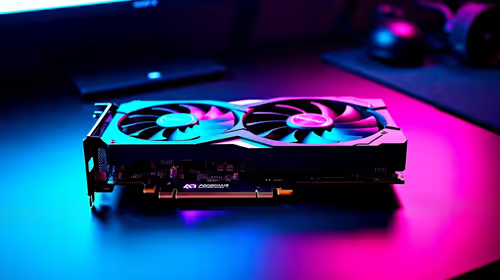
Can RTX 4080 Super Run AI Workloads for SA Developers Detailed answer with SA data, expert analysis & practical recommendations for local buyers.
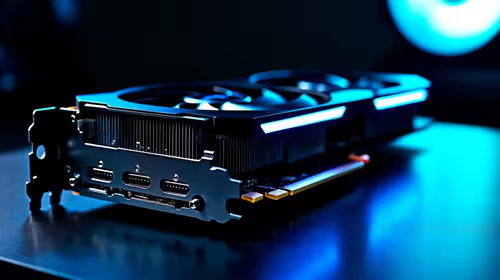
Can RTX 4090 Run AI Workloads for SA Developers Detailed answer with SA data, expert analysis & practical recommendations for local buyers.
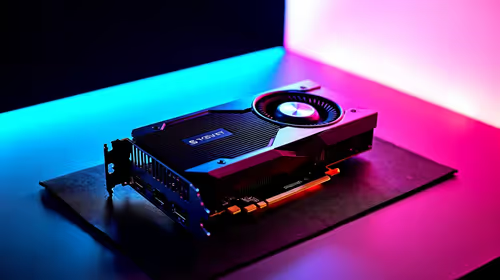
Top Settings for Intel Arc B580 at Ultrawide 1440p picks evaluated on performance, value & SA availability with current Rand pricing from Evetech.
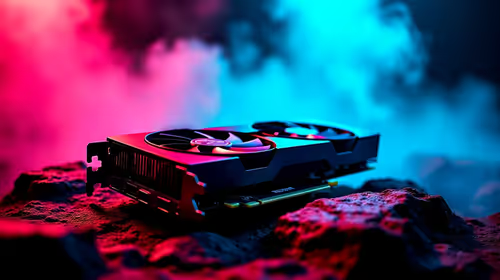
RTX 4060 CS2 Low Settings at 1080p: FPS Results. Real-world benchmark data, FPS numbers & performance analysis. What SA gamers can actually expect.
Visual Artifacts: Possible GPU Issue Issue #1. Diagnosis steps, proven fixes & when to seek professional help. SA-specific support info included.
Can the RTX 4090 Handle 1440p 144Hz Gaming. Performance testing verdict with real data & practical recommendations for SA buyers.
Top ASUS GPU Under R15000 picks evaluated on performance, value & SA availability with current Rand pricing from Evetech.
GTA 6 Max Settings on RTX 5070. Tested & verified settings for best FPS and visual quality on SA hardware budgets.
Cyberpunk 2077 Max Settings on RTX 5080. Tested & verified settings for best FPS and visual quality on SA hardware budgets.
Starfield Max Settings on RTX 5070 Ti. Tested & verified settings for best FPS and visual quality on SA hardware budgets.
Top RTX 5090 Under R5000 picks evaluated on performance, value & SA availability with current Rand pricing from Evetech.