Quick Answer
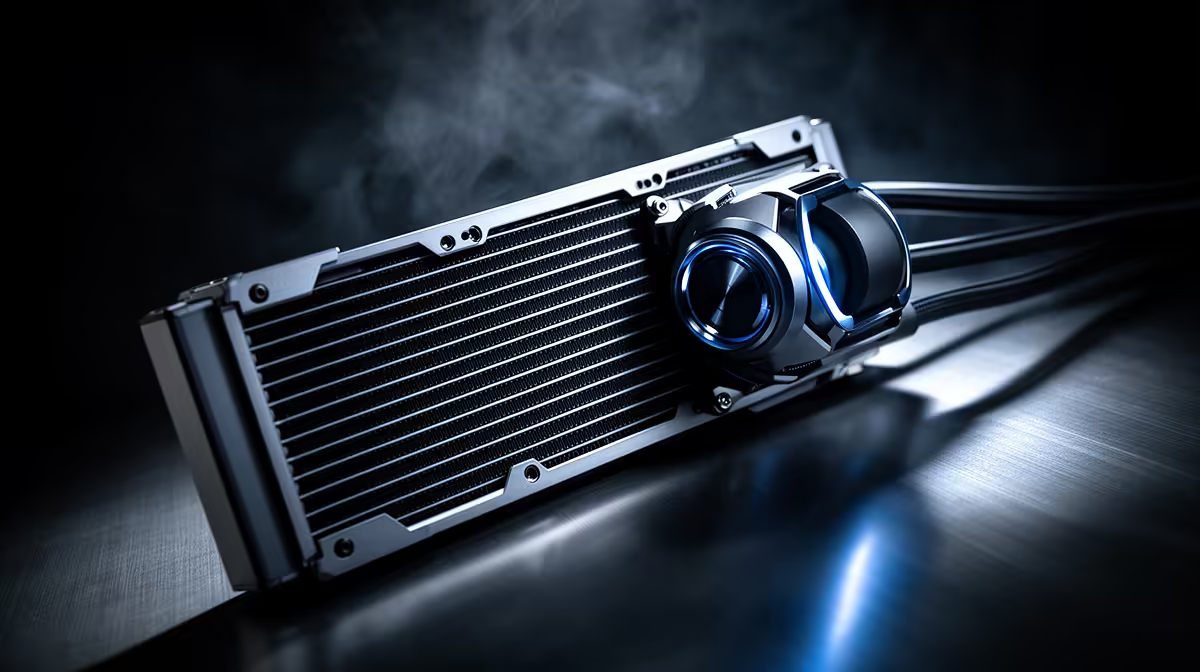
For hotter South African rooms, choose a 360mm AIO with a radiator at least 30mm thick, high-static-pressure fans rated above 2.5mm H2O, and a pump that runs at Performance or Extreme speed. These specs maintain adequate thermal headroom even when ambient room temperatures sit above 30 degrees Celsius, which is a realistic condition in many SA homes during summer.
Why Ambient Temperature Is the Hidden Variable 🌡️
Every CPU cooling calculation starts with ambient temperature. A cooler that keeps a Ryzen 7 9700X at 68 degrees in a 22-degree room will push that same chip to 78 to 80 degrees in a 32-degree room, all else being equal. South African builders in Gauteng, KwaZulu-Natal, and Limpopo face some of the most challenging ambient conditions for PC thermals in any major market. In rooms without air conditioning, indoor temperatures during December and January can sit at 30 to 34 degrees Celsius for extended periods. Choosing a cooler with this ambient reality as the baseline, rather than treating a 20-degree test bench as the norm, fundamentally changes which spec tier makes sense.
Radiator and Fan Specs That Hold Up in Warm Conditions 🔧
In warm ambient conditions, radiator thickness is the most critical specification. A 30mm to 38mm radiator has more internal volume for coolant and more fin surface area for heat exchange, which keeps coolant temperature lower when the delta between coolant and room air is narrowed by high ambient temps. Thin 25mm radiators work adequately in cool environments but lose effectiveness quickly as ambient climbs. For fans, static pressure ratings above 2.5mm H2O ensure air moves effectively through dense fin stacks even at lower RPMs, allowing you to keep fans quiet while still rejecting enough heat. Pair this with a triple-fan configuration (standard on 360mm units) for maximum coverage.
Case Selection and Airflow as Part of the Cooling System 💨
A 360mm AIO in a poorly ventilated case underperforms a 240mm AIO in a case with strong airflow. For hot-room SA builds, prioritise cases with mesh front panels and at least two 120mm intake fans drawing cool air from outside. Radiator placement matters too: mounting the 360mm radiator as a top exhaust removes the hottest air from the case most directly, and this position consistently outperforms front-mount-as-intake in high ambient environments. If your case only supports a front 360mm mount, ensure the intake side draws air from a well-ventilated section of your desk or floor, not from a recessed corner where heat pools.
Check Coolant Temp in Summer Specifically ⚡
Log your AIO coolant temperature during the hottest part of a summer day, not just in mild weather. If coolant temp exceeds 42 to 45 degrees Celsius at load during summer, your room ambient is too high for your current setup and improved case ventilation or a room fan can recover 5 to 8 degrees.
FAQ
Does the AIO's pump speed setting matter in a hot room?
Yes. In Performance or Extreme pump speed mode, coolant circulates faster, which improves heat transfer from the CPU cold plate to the radiator. In hot ambient conditions, running the pump at its highest stable speed is advisable, even if it adds a slight hum.
Will a 360mm AIO alone solve high temps in a 35-degree room?
Not fully. At 35 degrees ambient, even a top-tier AIO will struggle to keep a high-TDP CPU below safe thresholds without good case airflow. The AIO and case airflow system work together, and improving both delivers the best results.
Can I add an external fan to the room to help my PC temps?
Yes. A floor or desk fan drawing cooler air toward the PC intake vents can drop effective ambient temperature by 3 to 5 degrees. For builders in hot regions like Limpopo or the Northern Cape where summer temps are extreme, this is a practical and cost-effective supplement.
Building in a hot room and want to get thermals right?
Browse the full 360mm AIO cooler range at Evetech and find a unit designed to handle SA conditions.