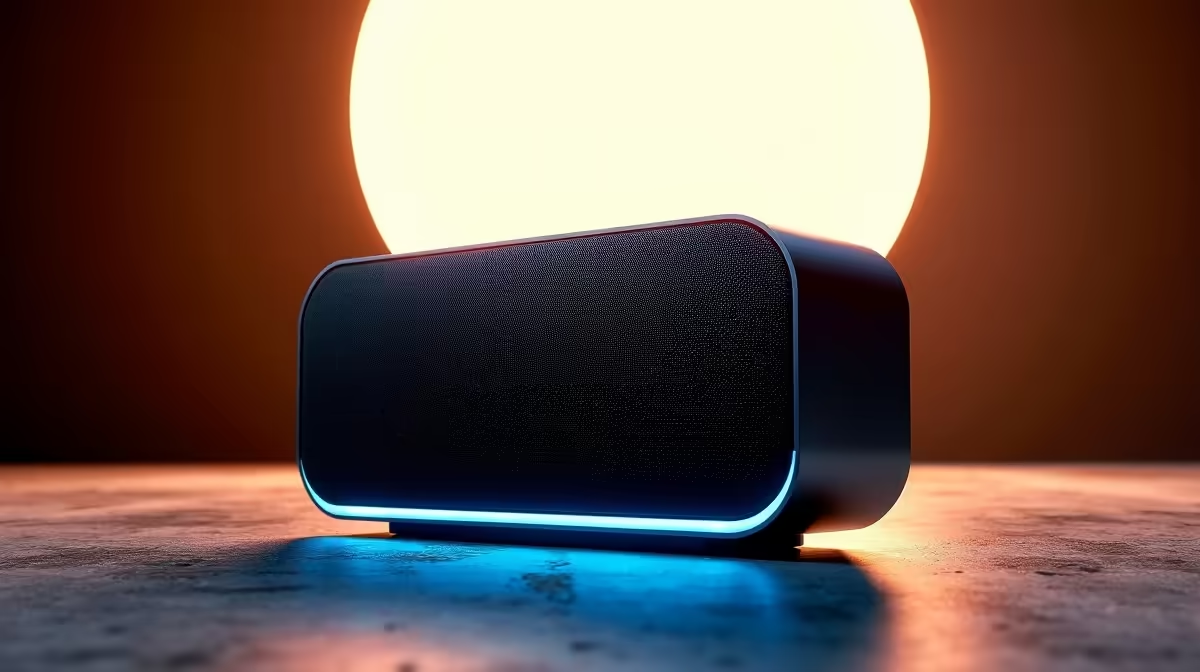
You’ve seen it plastered across speaker boxes at the local tech shop: 1000W PMPO! It sounds impressive, right? But does that massive number actually translate to deafening, crystal-clear audio for your gaming rig? 🤔 Often, it’s just marketing noise. Let's cut through the jargon and decode what speaker wattage specs really mean, so you can get the sound you pay for and build a truly epic setup.
Understanding the Wattage War: RMS vs. PMPO
When you're looking at speaker wattage specs, you'll encounter two main terms: RMS and PMPO. Knowing the difference is crucial.
PMPO (Peak Music Power Output): This is the marketing number. It represents a theoretical maximum power the speaker can handle for a tiny fraction of a second before it... well, dies. It’s not a useful measure of real-world performance. Think of it as a car's top speed if you drove it off a cliff—technically achievable, but not sustainable or practical.
RMS (Root Mean Square): This is the number that matters. RMS wattage measures the continuous, real-world power a speaker can handle without distortion. It’s a reliable, standardised rating that tells you what to expect during a long gaming session or movie marathon. A speaker with 20W RMS will always be more powerful and clearer than one with "1000W PMPO" and no listed RMS.
When building a balanced system, you don't need to break the bank on speakers, just as you can find some of the best PC monitor deals if you know what to look for.
How Many Watts Do You Actually Need?
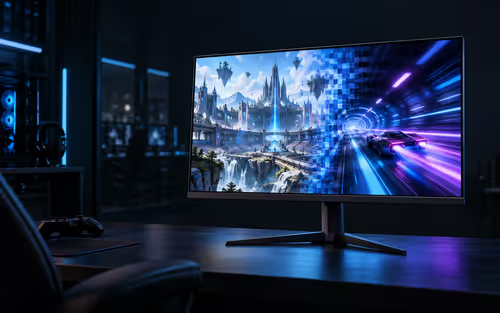
Here’s the big secret: more watts doesn't automatically mean better or louder sound. The ideal speaker wattage for you depends on a few key factors, not just chasing the biggest number. Your audio needs are tied directly to your visual setup; a compact desk with one of our excellent PC monitors requires a very different sound solution than a massive home theatre.
Consider these points:
- Room Size: A small bedroom or dorm room setup only needs about 10-20W RMS per speaker for loud, clear audio. A large lounge might require 50W RMS or more.
- Speaker Sensitivity: This spec (measured in decibels, dB) tells you how efficiently a speaker converts power into sound. A high-sensitivity speaker needs less power to get loud.
- Listening Distance: If you're sitting a metre from your speakers at your desk, you need far less power than if you're on the couch across the room.
For an immersive experience that matches the visual quality of our huge range of all gaming monitors, getting this balance right is key. You want audio that's clean and free from distortion.
Pro Audio Tip ⚡
Always aim to match your amplifier's RMS output to your speaker's RMS handling. A little extra power from the amp (headroom) is good—it prevents clipping and distortion at high volumes. Underpowering your speakers is just as bad as overpowering them!
Beyond Wattage: What Really Creates Great Sound
Focusing only on speaker wattage specs is like judging a graphics card by its size. The true quality of your audio experience comes from a combination of factors. Think about the immersion you get from stunning curved monitors; your sound should wrap around you in the same powerful way.
If you've invested in the incredible detail of high-resolution displays like 5K and 4K monitors, pairing them with subpar audio is a crime against your senses. Look for speakers with a wide frequency response (e.g., 50Hz-20kHz) for deep bass and crisp highs.
Even if you're rocking a compact setup with portable monitors for those weekend LAN parties, a small, quality 2.1 speaker set will beat tinny built-in audio every single time. Once your core components are sorted, don't forget the little things that complete your battle station, from a solid headset to quality monitor accessories that optimise your space. ✅
The bottom line? Ignore the flashy PMPO numbers. Look for the RMS rating, consider your room and setup, and you'll choose speakers that deliver amazing, immersive sound without the marketing fiction.
Hear Every Detail
Stop guessing and start hearing. Upgrade to an audio system that delivers the clear, powerful sound your games deserve. Shop our range of PC speakers at Evetech for performance that brings your world to life.