

Complete Guide: Setting Up AIO Liquid 420mm
Setting Up AIO Liquid 420mm. Tested & verified settings for best FPS and visual quality on SA hardware budgets.
Read more🚀 Upgrading your SSD? Discover the pros and cons of internal vs external solutions! Boost speed and storage today! 💡 Read the full breakdown →
Is your gaming rig starting to feel sluggish? You’re not alone. With game install sizes ballooning and Windows updates feeling heavier than ever, that old hard drive just isn’t cutting it. The fix is an SSD, but the big question looms: do you get an internal or external one? Choosing the right SSD upgrade, internal vs external, can feel tricky, but it’s the key to unlocking next-level performance and ending frustrating load times for good. ⚡
When raw speed is what you're after, an internal SSD upgrade is the undisputed champion. By installing a drive directly inside your PC or laptop, you connect it straight to the motherboard, eliminating any potential bottlenecks. This is especially true for NVMe (Non-Volatile Memory Express) SSDs, which use the PCIe interface to deliver speeds that leave older SATA drives in the dust.
An internal SSD upgrade is the ideal solution for your operating system and your most-played games. Imagine Windows booting up before your monitor fully wakes, or loading into a Warzone match seconds before your mates. It’s a seamless, clean setup with no extra cables cluttering your desk. Many modern Intel laptops on special already come equipped with these zippy drives, setting a high standard for performance.
So, if internal is fastest, why consider an external SSD? Simplicity and portability. An external SSD upgrade is a straightforward plug-and-play solution. There’s no need to open up your PC case or fiddle with tiny screws. This makes it a fantastic choice for console gamers looking to expand their storage for PS5 or Xbox Series X/S games, or for creatives who need to move massive project files between a work PC and a laptop.
They’re also brilliant for creating a portable game library you can take anywhere. Heading to a friend's place for a LAN party? Just grab your external SSD and you’re good to go. Many of the latest AMD laptops on special feature high-speed USB ports that can take full advantage of a speedy external drive, making it a powerful and flexible combination. 🚀
To get the best performance from an external SSD, plug it into the fastest USB port you have. Look for USB 3.2 Gen 2 or Thunderbolt ports (often marked with a lightning bolt symbol). Using an older USB 2.0 port will severely limit your drive's speed.
Still on the fence? Let's break down the core differences in the SSD upgrade internal vs external debate to help you decide.
Winner: Internal. An internal NVMe SSD offers the fastest possible data transfer speeds, making it the ultimate choice for your OS and core applications. An external SSD is still incredibly fast, but it's limited by the speed of its USB or Thunderbolt connection.
Winner: External. You can’t beat the grab-and-go nature of an external drive. It’s a simple, universal solution that works across multiple devices without any tools.
Winner: External. It’s as easy as plugging in a cable. An internal SSD upgrade requires a bit more confidence, as you’ll need to open your device. It’s a rewarding DIY project, but not for everyone.
Deciding on an internal vs external SSD upgrade ultimately comes down to your primary need. For a blazingly fast main drive that makes your entire system feel brand new, internal is the way. For flexible, portable storage to augment your setup, external is your best bet. If you're starting fresh, it's worth checking out the wide range of laptop specials for sale in South Africa that already balance both perfectly.
Ready to Banish Load Screens? Whether you need a lightning-fast internal drive or a versatile external one, the right SSD will transform your experience. Check out our best gaming laptop deals for machines already optimised for pure speed.
Internal SSDs typically offer lower latency for gaming performance. Check PCIe 4.0 drives for top speeds.
External SSDs expand storage but internal solutions better suit OS/boot drives. Consider hybrid setups for flexibility.
Yes! Internal SSD upgrades maximize system responsiveness for frequent users and power applications.
DIY installation costs from R1,500 for SATA SSDs. Premium PCIe drives require professional setup at tech stores.
Look for Thunderbolt 3/USB4 compatible SSDs with macOS optimization, like Samsung T7 Shield or Crucial X8.
Internal SSDs drastically boost editing workflows. 1TB+ NVMe drives recommended for 4K+ workflows.
Evetech.co.za offers tested SSD solutions – both M.2 internal upgrades and shock-resistant portable SSDs for every use case.
Setting Up AIO Liquid 420mm. Tested & verified settings for best FPS and visual quality on SA hardware budgets.
Read more
Intel XTU Download & Setup Guide: Intel CPU. Clear setup instructions with SA-specific considerations, troubleshooting tips & recommended components.
Read more
Cyberpunk 2077 Max Settings on RTX 4090. Tested & verified settings for best FPS and visual quality on SA hardware budgets.
Read more
The Complete Guide to GPU. Everything you need to know with SA pricing, step-by-step instructions & expert recommendations.
Read more
NVCleanstall Download & Setup Guide: NVIDIA. Clear setup instructions with SA-specific considerations, troubleshooting tips & recommended components.
Read more
to Driver Installation for Beginners. Everything you need to know with SA pricing, step-by-step instructions & expert recommendations.
Read more
AMD RX 9050 XT: Rumoured Specs, Price & Release. SA-focused analysis with local pricing data, real-world insights & actionable buying advice.
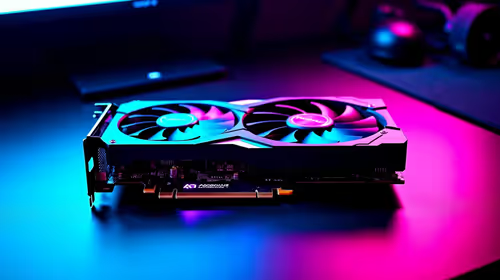
Can RTX 4080 Super Run AI Workloads for SA Developers Detailed answer with SA data, expert analysis & practical recommendations for local buyers.
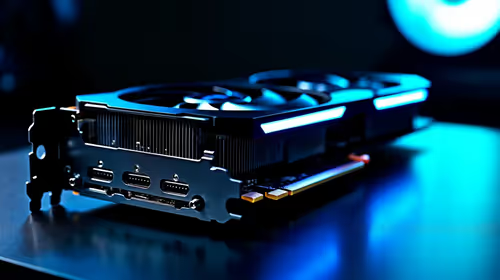
Can RTX 4090 Run AI Workloads for SA Developers Detailed answer with SA data, expert analysis & practical recommendations for local buyers.
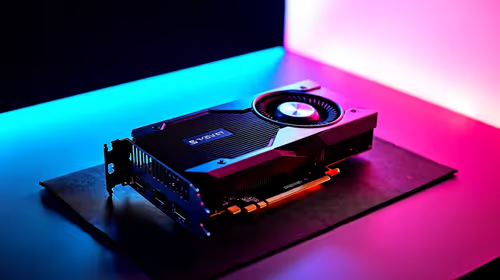
Top Settings for Intel Arc B580 at Ultrawide 1440p picks evaluated on performance, value & SA availability with current Rand pricing from Evetech.
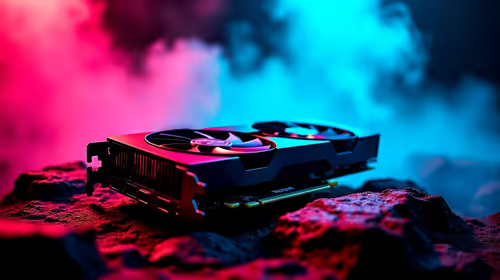
RTX 4060 CS2 Low Settings at 1080p: FPS Results. Real-world benchmark data, FPS numbers & performance analysis. What SA gamers can actually expect.

Visual Artifacts: Possible GPU Issue Issue #1. Diagnosis steps, proven fixes & when to seek professional help. SA-specific support info included.
Can the RTX 4090 Handle 1440p 144Hz Gaming. Performance testing verdict with real data & practical recommendations for SA buyers.

Top ASUS GPU Under R15000 picks evaluated on performance, value & SA availability with current Rand pricing from Evetech.
GTA 6 Max Settings on RTX 5070. Tested & verified settings for best FPS and visual quality on SA hardware budgets.
Cyberpunk 2077 Max Settings on RTX 5080. Tested & verified settings for best FPS and visual quality on SA hardware budgets.
Starfield Max Settings on RTX 5070 Ti. Tested & verified settings for best FPS and visual quality on SA hardware budgets.
Top RTX 5090 Under R5000 picks evaluated on performance, value & SA availability with current Rand pricing from Evetech.