Pull a freshly printed batch off the wrong plate and you learn the difference fast: a part welded to bare smooth PEI, or a glossy bottom you wanted on a matte surface. The choice between textured PEI vs smooth PEI build plates is not about which is better overall, it is about matching the finish to the filament and the look you are after. Get it right and PLA and PETG release on their own as the bed cools. Get it wrong and you are scraping, gouging, or buying a replacement spring steel sheet.
Quick Answer
Use textured PEI for everyday PLA and PETG: it grips without glue and pops parts off cleanly once cool, leaving a matte stippled base. Use smooth PEI only when you want a glossy mirror-finish bottom, and add a thin release layer (a glue stick or liquid release) for PETG so it does not fuse into the coating and tear it.
How the Two Surfaces Actually Differ
Both plates are polyetherimide bonded to a flexible spring steel sheet, so both flex to release a print and both stick to a magnetic heatbed. The difference is the surface texture, and that texture changes three things at once: how strongly the first layer keys in, how the part bottom looks, and how easily it lets go afterward.
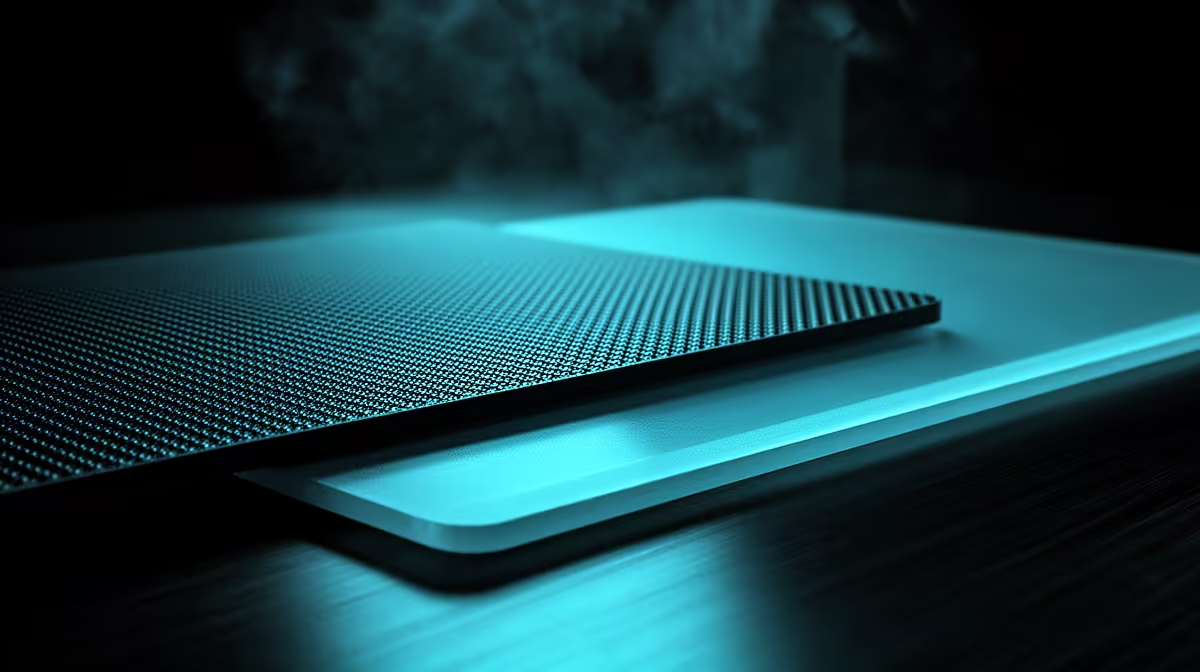
Textured PEI has a fine powder-coated stipple. That microscopic roughness gives the molten plastic more surface area to bite into, so adhesion is strong even without any adhesive. When the bed drops below roughly 40C, PLA and PETG contract slightly and release on their own. Smooth PEI is flat and glossy. It transfers that gloss directly to the first layer, which is why model makers love it for display pieces, but the flat surface offers less mechanical grip.
Which Filament Belongs on Which Plate
PLA
PLA is the easy case. It behaves well on both surfaces. On textured PEI it sticks reliably with no prep and releases cleanly, which makes it the default for functional parts, brackets, jigs, and anything where you never see the bottom. On smooth PEI, PLA gives a clean glossy base that looks great on figurines and signage. The catch with smooth PEI and PLA is the opposite problem to weak adhesion: a very clean, very hot smooth plate can grip PLA so hard that the part chips the coating on removal. Let it cool fully before you flex the sheet.
PETG
PETG is where the plate choice gets expensive if you ignore it. PETG chemically bonds to bare PEI, especially smooth PEI. Print it directly on a clean smooth plate and the part can fuse so hard that pulling it off rips a chunk of the PEI coating away with it, permanently scarring the sheet. The fix is a barrier layer. A thin film of glue stick or a dedicated release agent stops PETG touching the PEI directly, so it lifts away instead of welding on. On textured PEI, PETG is far more forgiving because the stipple reduces the contact area, but a light glue layer is still cheap insurance.
ABS and ASA
These two materials warp badly on surfaces that cannot hold them at elevated bed temperatures, typically 90C to 110C. Textured PEI handles both better than smooth PEI at these temperatures because the rougher contact provides more mechanical grip as the material contracts. An enclosure helps more than either surface alone, since warping is driven by the temperature difference between the warm lower layers and a cooler room above, not purely by what the first layer is sitting on.
Matching Finish to the Job
Think about where the printed surface ends up facing. A phone stand, a wall bracket, a cable clip: the bottom is hidden or sits against a surface, so the matte texture of a textured plate is irrelevant and the easy release wins. A coaster, a nameplate, a model base you want to look manufactured: smooth PEI gives that injection-moulded gloss you cannot fake with sanding. Many SA hobbyists keep both sheets and swap them in seconds because they are magnetic, running functional PLA and PETG on textured and saving the smooth plate for show pieces.
If you want a single all-rounder, textured PEI is the safer default. It handles the widest range of materials with the least fuss and the least risk of an expensive plate-damaging weld. The 3D printer range at Evetech shows which machines include textured plates as standard equipment and what each model ships with.
Keeping Either Plate Working
Adhesion problems are usually a dirty plate, not a worn one. Skin oils from handling kill grip on both surfaces. Wipe the plate with isopropyl alcohol before a print and avoid touching the print area. For stubborn first-layer issues, a slightly higher bed temperature for the first few layers helps more than any glue. When a plate finally does wear, you replace just the spring steel sheet rather than the whole printer, and spare sheets and other add-ons turn up regularly among the top-selling accessories at Evetech.
When Bed Temperature Settings Change the Result
Both surfaces behave differently depending on how hot the bed runs, and knowing the sweet spots avoids wasted prints. On textured PEI, PETG runs well with a bed between 65C and 75C; the reduced contact area of the stipple means the bond stays manageable without a barrier. Let it cool below 40C before removal and the part pops free without drama. On smooth PEI, the same PETG at the same temperature can grip hard enough to lift the coating. The rule is simple: textured plates are more forgiving across a wider temperature range, and smooth plates reward tight control of both temperature and first-layer height.
Frequently Asked Questions
Do I need glue on textured PEI?
For PLA, no. For PETG, a thin glue or release layer is optional on textured PEI but recommended, because it stops any chance of the part bonding too hard and makes removal effortless.
Why did my PETG tear the coating off my smooth plate?
PETG chemically bonds to bare PEI. Printed straight onto a clean smooth plate with no release layer, it can fuse permanently and rip the coating when removed. Always use a barrier layer with PETG on smooth PEI.
Will a textured bottom ruin the look of display models?
It gives a fine matte stipple rather than a gloss. For functional parts that is invisible, but for show pieces where you want a mirror base, smooth PEI is the better surface.
Can I use the same plate for both PLA and PETG?
Yes. Textured PEI handles both. Just adjust your approach per material: bare for PLA, with a light release layer for PETG.
How do I fix sudden weak adhesion on a plate that used to work?
Clean it. Isopropyl alcohol removes the skin oils and residue that build up over time and are the most common cause of a plate that has stopped gripping.
Picking the right printer and plate from the start saves a lot of wasted filament. See what is in stock and what each model ships with on the 3D printer range at Evetech, then sort your spare sheets and tools at the same time.