Quick Answer
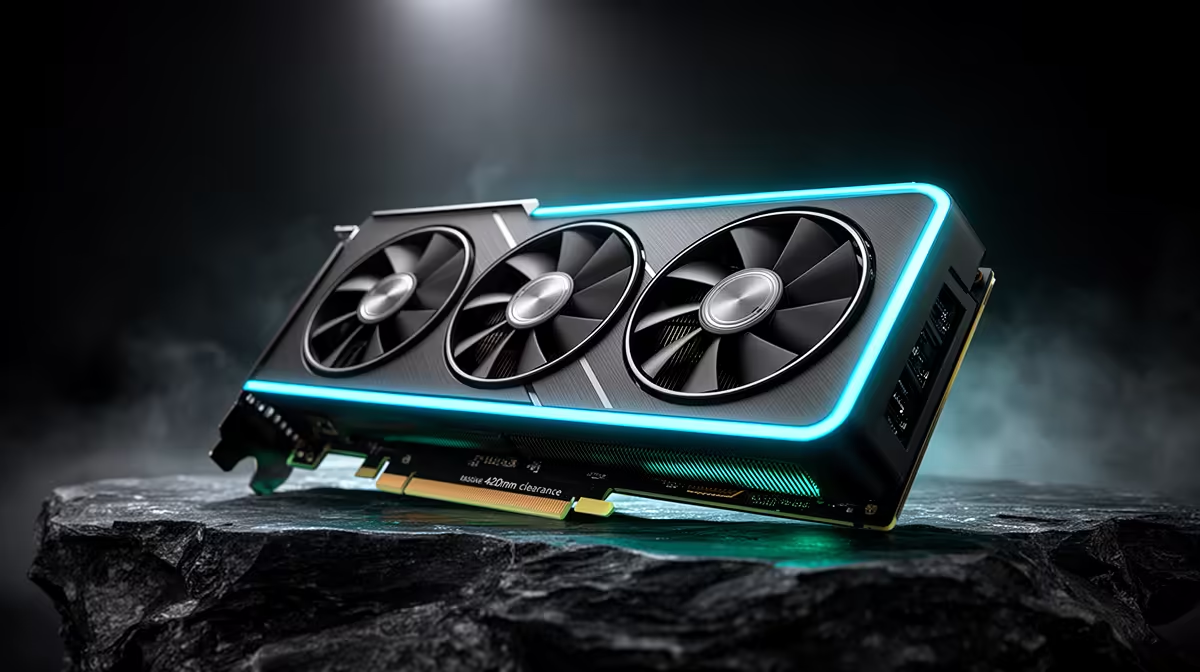
420 mm GPU clearance is the upper tier of what compact gaming cases offer, and it is sufficient for every current consumer GPU including the RTX 5090 Founders Edition at approximately 336 mm and enthusiast third-party cards that stretch to 410 mm. Cases with 420 mm clearance exist but are not common in the mATX segment; most are mid-tower ATX designs.
What 420mm GPU Clearance Actually Means in Practice 🖥️
Manufacturers measure GPU clearance from the inside face of the front panel (or front fan cage) to the face of the GPU bracket slot. This figure assumes no drive cage blocking the path. Many compact cases include a removable 2.5-inch or 3.5-inch drive bracket that, when installed, reduces usable GPU length by 15 mm to 40 mm. A case rated for 420 mm clearance with the drive cage removed may only fit a 380 mm GPU with the cage in place. Before relying on the 420 mm figure, check the manufacturer's secondary measurement that specifies clearance with the cage installed. For South African builders ordering high-end cards like the RTX 5090 or ASUS ROG Strix RTX 5080 OC (approximately 357 mm), a genuine 420 mm clearance provides comfortable margin.
Which Current-Gen GPUs Actually Need 380mm or More? 🎮
Most RTX 5070 and RX 9070 reference cards land at 310 mm to 336 mm, making them compatible with a wide range of compact cases. The cards that genuinely push past 360 mm are triple-fan high-end and triple-fan flagship designs: some ASUS ROG Strix and Gigabyte AORUS variants of the RTX 5080 and RTX 5090 reach 340 mm to 410 mm. If you are targeting one of these specific AIB variants, a case with a published clearance figure of 420 mm (with cage removed) or 380 mm (with cage installed) is the safe choice. These cases tend to be mid-tower rather than compact mATX, measuring 440 mm to 480 mm tall.
Airflow and Structural Considerations at Maximum GPU Length 💨
A GPU that fills 90 percent of the front-to-back internal dimension leaves very little room between the card's intake fans and the front panel. If the front panel is solid or tempered glass with minimal perforation, the GPU will recirculate its own hot exhaust, pushing junction temperatures up by five to fifteen degrees Celsius. Cases rated for 420 mm clearance almost always use a mesh or heavily perforated front panel to compensate. Cable routing also tightens with longer GPUs: PCIe 16-pin connectors on RTX 5090 cards have a 180-degree minimum bend radius that requires clearance behind the GPU power connector, so plan cable runs before finalising the case choice.
Check Cage-Removed vs Cage-Installed Clearance ⚡
The headline GPU clearance figure on a case spec sheet is almost always measured without drive cages. If you plan to keep a 3.5-inch HDD installed for extra game storage, look for the secondary clearance figure with cages fitted. Evetech product pages include both figures for most stocked cases. Contact support if only one figure appears.
FAQ
Is 420mm GPU clearance necessary for an RTX 5080 build?
Not for most RTX 5080 cards. Reference and most AIB models land between 336 mm and 360 mm. A case with 380 mm clearance covers nearly every RTX 5080 variant. 420 mm is relevant mainly for the largest ASUS ROG Strix or Gigabyte AORUS triple-fan RTX 5090 designs.
Do compact mATX cases offer 420mm GPU clearance?
Rarely. Most compact mATX cases cap out at 320 mm to 380 mm. Genuine 420 mm clearance typically requires a mid-tower ATX footprint of 440 mm tall or more.
What happens if my GPU is 5mm too long for the case?
The GPU shroud will press against the front fan cage or panel, preventing the side panel from closing. There is no safe workaround; you need either a shorter GPU variant or a different case. Always verify measurements before ordering both case and GPU.
Shopping for a case that fits your high-end GPU?
Evetech's PC case range includes product pages with full internal dimension specs so you can match GPU length before buying, with local delivery across South Africa.