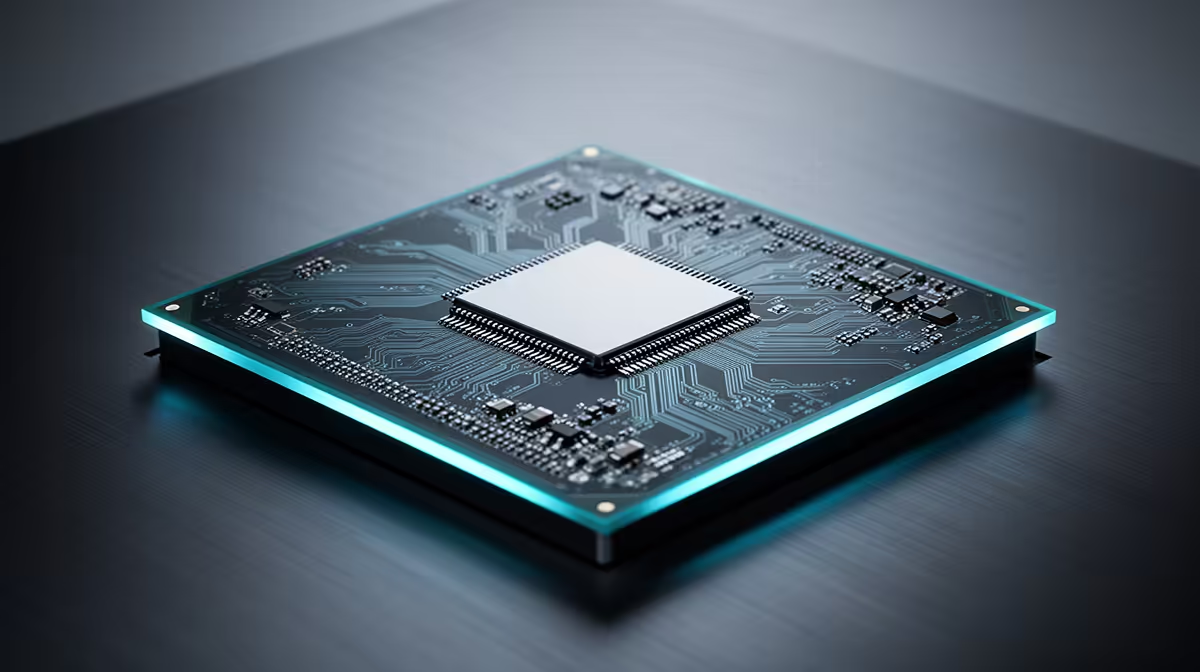
A processor with sixteen cores used to belong exclusively in workstation towers, not machines built primarily for gaming. That has changed, and the chip anchoring the GR70 is a good example of why the line between a gaming rig and a genuine creative workstation has mostly disappeared. Understanding what a gaming mini pc actually gets from a chip like this means looking past the core count headline and at how that power gets used session to session.
Quick Answer
The Ryzen 9 9955HX is a sixteen-core processor built into the R66,399 GR70 alongside the RTX 5070 (8GB), 32 gigs of fast DDR5 and a full terabyte of solid-state storage. It delivers strong gaming frame rates on its own while also comfortably handling video encoding, streaming and multitasking that would bog down a smaller chip, suited to gaming and content creation running together rather than one at the expense of the other.
🧩 Core Count Versus What Games Actually Use
Most current games are optimised to use somewhere between four and eight cores efficiently, meaning a sixteen-core chip has considerable headroom left over during gameplay itself. That unused capacity is not wasted, though, since it becomes available the moment anything else runs alongside the game, Discord, a browser, streaming software or a background download.
This is the practical argument for a high core count chip in a gaming-focused build. It is less about raw frame rate gains from the game itself and more about protecting that frame rate from being disrupted by everything else competing for processor time during a typical session.
Per-Core Performance Still Drives Frame Rates
Core count alone does not determine gaming performance. Individual thread speed, how quickly each core executes the specific instructions a game relies on, matters just as much for smooth frame times. This chip is built as a high-performance part rather than one that trades single-thread speed for sheer core quantity, which is why it performs well in games despite the higher core count typically associated with workstation-oriented processors.
🎬 Where the Extra Cores Genuinely Pay Off
Content creation workloads are where a sixteen-core chip separates itself clearly from a gaming-only processor. Video encoding, whether for streaming or exporting edited footage, scales directly with available cores, meaning tasks that would take noticeably longer on a four or six-core chip complete faster here. Running a live stream while gaming, a workload demanding both real-time game rendering and simultaneous video encoding, is exactly the scenario this core count was built to absorb without one task degrading the other.
Background rendering tasks, proxy generation during video editing, and batch processing all benefit from the same headroom. For anyone splitting time between gaming and content creation on the same machine, this is the difference that shows up in daily use rather than in a single benchmark number.
Multitasking Beyond Gaming and Streaming
Even outside gaming and creative work specifically, everyday multitasking benefits from spare processing headroom. Running several demanding applications simultaneously, updating software in the background, or having a virtual machine open alongside your main tasks all draw on that extra capacity without needing to close anything else first.
🧠 How Memory and Storage Support the Processor
A powerful processor still needs enough memory and fast storage behind it to avoid becoming bottlenecked elsewhere. Thirty-two gigabytes of DDR5 gives this chip enough working memory to run multiple demanding applications simultaneously without needing to constantly swap data, which matters for exactly the multitasking scenarios the processor is built to handle. The included terabyte of NVMe storage keeps file access fast enough that loading game assets, project files or video footage does not introduce its own delay while the processor is already working through several tasks at once.
Where the RTX 5070 Fits Into the Picture
Processor and GPU balance matters as much as raw processor power alone. The 8GB RTX 5070 paired with this chip is matched closely enough that neither component is left waiting on the other during typical gaming or creative sessions, which is what actually determines the frame rates and render times you experience rather than either component's specifications in isolation.
✅ Practical Scenarios Where This Processor Shines
Streamers running a game and encoding software together, students juggling coursework applications alongside gaming sessions, and hobbyist video editors handling both footage editing and gameplay recording on one machine are all realistic use cases where the core count translates into a smoother day-to-day experience rather than sitting idle. For anyone whose sessions rarely involve just a single application running in isolation, that headroom is the actual value proposition behind the number on the spec sheet.
Thermal Behaviour Under Sustained Load
Sixteen cores working simultaneously generate real heat, and how a compact chassis manages that determines whether the chip sustains its top clock speeds or throttles back during long sessions. The GR70's cooling is designed around exactly this workload, so extended rendering or streaming sessions should not see performance drop off the way an undersized cooler in a generic small-form machine might allow.
Before deciding whether this processor suits your workload, it is worth reviewing the complete GR70 specification at R66,399 in full. If you want to see how this configuration compares against other compact builds, Evetech's mini PC lineup is a useful next step, and looking at where current graphics cards are priced is worth doing if the GPU pairing is still an open question for your build.
Frequently Asked Questions
Is the Ryzen 9 9955HX overkill for pure gaming?
For gaming in isolation, some of its capacity goes unused, since most games do not fully utilise sixteen cores. That spare capacity becomes valuable the moment other tasks run alongside the game.
Does this processor help with video editing and rendering?
Yes, video encoding and rendering tasks scale well with core count, so tasks like exporting footage or streaming complete faster than they would on a lower core count chip.
Can I stream and game at the same time without performance loss?
The core count here suits exactly that scenario, since streaming software encoding and game rendering can run on separate cores without one degrading the other.
Does a high core count matter if I only game casually?
Less directly, though the headroom still helps keep background tasks like chat apps, browser tabs or downloads from affecting your session even during casual use.
Is the processor likely to bottleneck the RTX 5070?
No, the two are matched closely enough in this build that the processor is rarely the limiting factor for GPU performance in current titles.
Does more memory improve what this processor can do?
Up to a point, yes. The included 32GB gives the processor enough working memory for demanding multitasking without needing to swap data, supporting the core count's real-world benefit.
Ready to see the full performance picture on the 9955HX?
Find ASUS's compact GR70 rig within Evetech's small-form PC lineup, going for R66,399 ready to cover the complete performance picture in one box.