Quick Answer
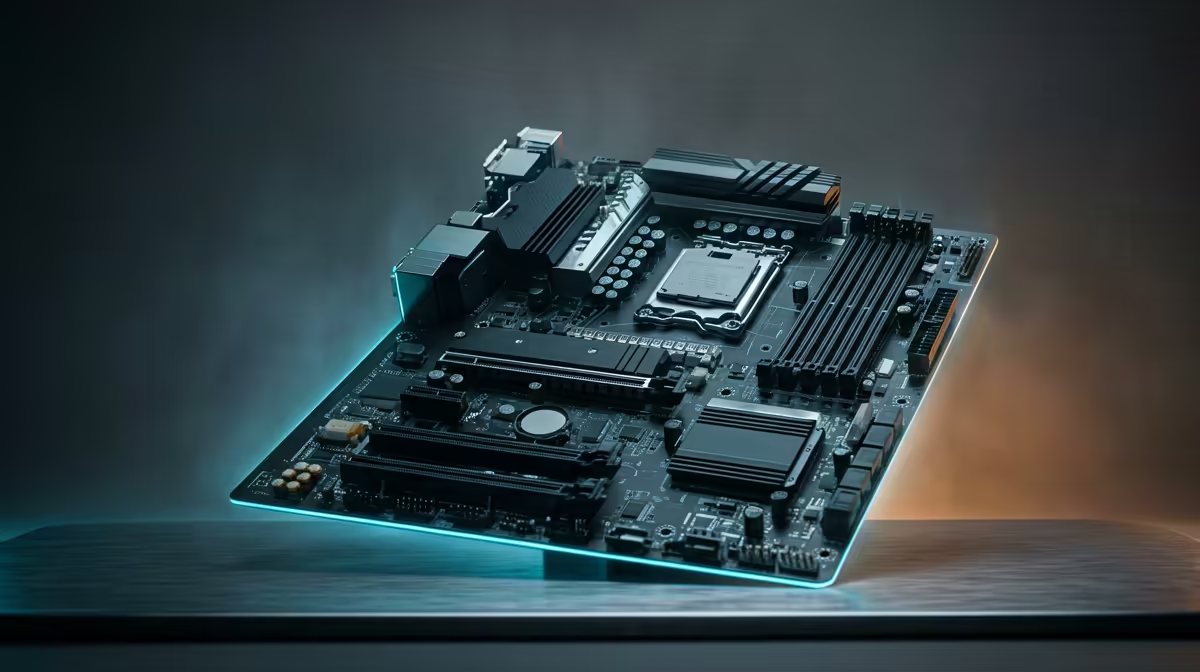
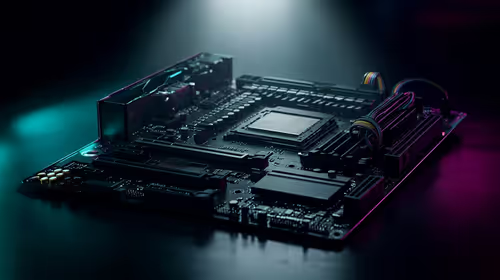
For a home-theatre gaming PC, build the motherboard around quiet, compact platforms in three tiers: budget B760 mATX (around R2,200), balanced B650 ATX with 2.5GbE (around R3,200), and premium X670 with strong VRM and Wi-Fi 6E (around R5,500). All three support DDR5-6000; pick by case size and how far you want to upgrade.
Budget: Quiet And Compact
A B760 or B660 mATX board pairs with a Core i5-14400F and 16GB DDR5 for 1080p and light 1440p in the lounge. It fits a small case that hides behind the TV and keeps fan noise low for movie nights. The board supports a single fast M.2 SSD so games load quickly. This tier targets clean 60fps at 1080p on a mid GPU.
Balanced: The Sweet Spot
A B650 ATX board with 2.5GbE and two M.2 slots suits a Ryzen 7 7700 driving 1440p at 60fps to 100fps. The extra storage slot lets you keep a large game library local. Onboard audio on these boards is good enough that you may not need a separate card for a lounge setup.
Premium: Headroom And Silence
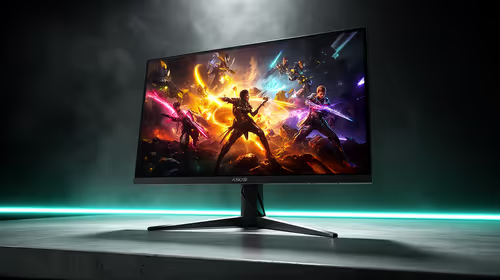
An X670 board with a beefy VRM and Wi-Fi 6E handles a Ryzen 9 7900X for 4K gaming on the big screen and pushes quiet, sustained clocks. It gives you the most upgrade headroom and the best connectivity for a permanent lounge rig.
FAQ
Do I need an ATX board for home-theatre gaming?
Not always; mATX fits smaller media cabinets and still supports a strong GPU. Choose ATX only if you want extra slots or a larger case for cooling.
Which tier is best for 4K on a TV?
The premium X670 tier paired with a high-end GPU. For 1440p at 60fps the balanced B650 tier is the value pick.
Does the board affect lounge audio quality?
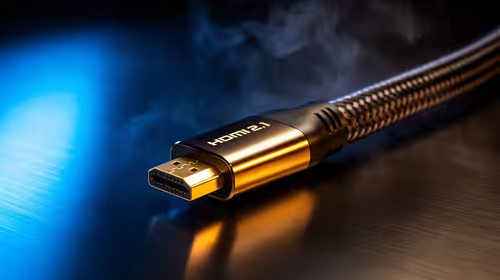
Mid and premium boards have capable onboard audio that drives a TV or AV receiver well over HDMI or optical. A dedicated card is rarely needed for couch gaming.
media cabinet and pick the board form factor that fits with airflow to spare, then match the GPU to your target resolution.