Quick Answer
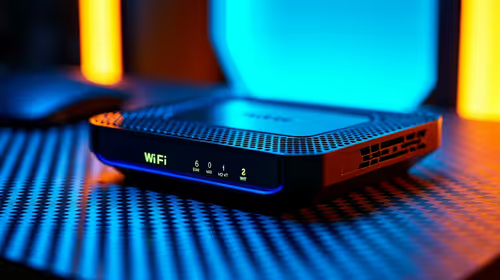
For shared gaming spaces, use budget Wi-Fi routers for occasional use, balanced for daily reliability, and premium only when comfort or performance is used every week. Compare R900-R6,000, Wi-Fi 6, 5GHz coverage, Gigabit Ethernet, WPA3, QoS and 20ms-40ms local latency targets, and real examples such as TP-Link Archer AX-series, ASUS RT-AX-class routers, Openserve fibre ONTs and Vumatel flats before choosing.
Budget, Balanced And Premium
Budget should cover the core job without extra clutter. Balanced is safer for most SA buyers because it adds better controls and fewer compromises. Premium makes sense only when Wi-Fi routers will be used for long sessions or paid work.
Specs And SA Price Anchors
Use numbers to keep the choice honest. For Wi-Fi routers, compare Wi-Fi 6, 5GHz coverage, Gigabit Ethernet, WPA3, QoS and 20ms-40ms local latency targets. Local planning should start around R900-R6,000, with examples such as TP-Link Archer AX-series, ASUS RT-AX-class routers, Openserve fibre ONTs and Vumatel flats keeping the shortlist tied to real hardware.
What To Skip
Skip anything that adds clutter without fixing the main job. That includes spare modes you will not use, adapters with unclear support, weak warranties, and premium trim that does not improve comfort or reliability in shared gaming spaces.
FAQ
How much should SA buyers spend on Wi-Fi routers?
Use R900-R6,000 as a broad planning range, then narrow it by your exact devices. Spending more is justified when it buys Wi-Fi 6, 5GHz coverage, Gigabit Ethernet, WPA3, QoS and 20ms-40ms local latency targets that you will use weekly.
What is the most important Wi-Fi router check before buying?
Confirm compatibility with your main PC, laptop, phone or room layout before extras. For shared gaming spaces, the purchase should solve prioritise coverage, Ethernet and simple controls without uncertain adapters.
When should you choose a premium Wi-Fi router?
Choose premium when comfort, warranty, lower noise, better control or stronger performance affects long sessions. If use is occasional, a balanced model plus a clean setup is usually smarter.
Before checkout, list your main device, room size, required ports or comfort needs, and the one spec you cannot compromise on for shared gaming spaces.