Upgrading from a gear-driven wheel to direct drive can be the largest steering-feedback improvement in a home sim rig. It brings faster response, smoother force and clearer tyre loading. The upgrade is worth it when the pedals, mount and seating are stable enough to reveal that change.
Quick Answer
Move to direct drive if you race most weeks, gear noise or notchiness bothers you and the complete bundle fits the budget. Upgrade pedals or mounting first when braking inconsistency, desk flex or a rolling chair causes more lost control than steering feel.
Compare full systems in the sim racing equipment range. When one cockpit must serve more than racing, inspect flight simulator gear and plan how the stand will hold a throttle, stick and wheel without constant rebuilding.
What Changes Mechanically
A gear wheel transfers motor force through gears before it reaches the shaft. This makes affordable torque possible, but you can feel teeth, backlash and mechanical chatter during small corrections.
A direct-drive base attaches the steering shaft to the motor more directly. It can change force faster and show finer movement without belt stretch or gear lash. Kerbs, tyre scrub and weight transfer become easier to separate when the game and settings provide good data.
The wheel does not invent physics. A weak game implementation or poor force profile can still feel vague. Direct drive gives the signal more room to arrive cleanly.
Torque Is Only One Specification
Entry bases around 5Nm can deliver a clear step from gear drive. Higher torque can create stronger sustained cornering forces and more headroom before the signal clips.
Peak torque does not describe motor smoothness, slew rate, control software or thermal behaviour. A well-tuned lower-torque base can feel better than a powerful unit with poor settings.
Do not chase a number beyond what the mount and your body can handle. Home racing should stay controlled and repeatable. Stronger bases need more careful safety habits.
The Mount Must Become Part of the Rig
Gear wheels often work on a sturdy desk. Direct drive can make that desk twist, shake the monitor and transmit vibration through the floor. A rigid wheel stand or cockpit helps the feedback reach your hands instead of moving furniture.
Check mounting-hole pattern, plate thickness and adjustment range. A light stand can lift under braking or flex at the wheel deck. Include the seat and chair connection because moving backwards changes pedal pressure.
If the rig must fold away, measure folded dimensions and weight. A setup that is hard to move will reduce how often you race.
Pedals Can Become the Weak Link
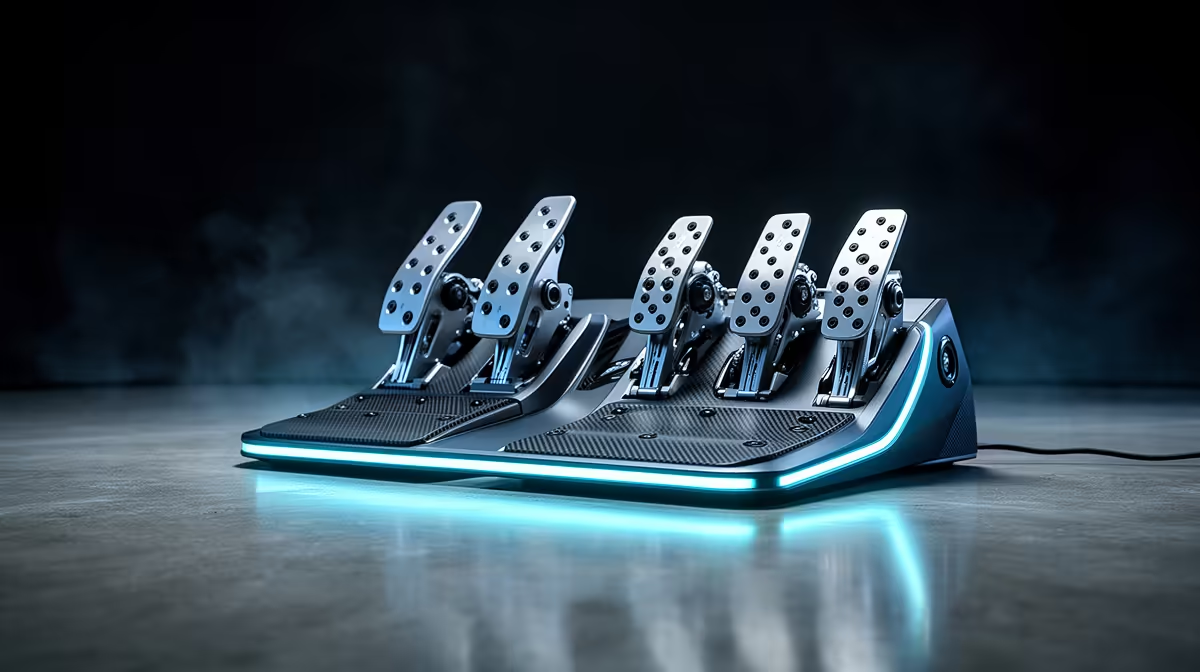
Entry gear-wheel bundles usually include travel-based brake pedals. Direct-drive steering may expose how inconsistent that brake feels.
A load-cell pedal measures force and can help you repeat threshold braking. It needs a fixed pedal plate and seat. On an unsecured office chair, extra brake force pushes you away from the wheel.
Decide whether to split the budget between an entry direct-drive base and better pedals. For lap consistency, that balance can beat putting everything into steering torque.
Price the Complete Ecosystem
Some direct-drive products are sold as a base only. Add the rim, quick release, pedals, table clamp, shifter and platform-compatible hub. A bundle can be better value when it includes every required part.
Check how accessories connect. PC allows more USB mixing, while consoles often require licensed equipment connected through a supported base. A favourite old shifter may need an adapter or may not work at all.
Use named product prices as of July 2026 for both complete rigs. Comparing a discounted base with a gear-wheel-and-pedal bundle hides half the cost.
Console Compatibility Needs Proof
Direct-drive support on PlayStation and Xbox depends on specific licensed hardware. A PC-compatible base does not become console compatible because its USB plug fits.
Verify base, rim and platform as one chain through the maker's current documentation. Game support comes after hardware support. An unofficial adapter can affect buttons, force detail and firmware updates.
If you may switch console family, price the later hardware change now. PC offers the broadest mixing freedom, but it also uses more USB ports and software tools.
Force Settings Need a Fresh Start
Do not copy gear-wheel settings to direct drive. Begin with the maker's safe recommended profile for the game. Set maximum wheel torque, in-game gain, damping and detail in a controlled order.
Avoid clipping. When the game asks for more force than the base or setting can output, several strong events flatten into the same weight. Lower in-game gain until heavy corners retain differences.
Reduce canned road and kerb vibration if it masks tyre loading. Add damping only to control unwanted oscillation or match the steering feel you want. Save profiles per title and car class.
Safety Deserves a Routine
Direct-drive wheels can rotate hard during calibration, a crash or a software fault. Keep fingers outside the spokes, release the rim during a violent unexpected movement and keep children or pets away from a powered rig.
Use an accessible emergency stop where the base supports one. Route power and data cables away from the shaft and pedals. Tighten the quick release and mounting bolts to the maker's specification.
Start at low strength after firmware changes. Confirm steering direction and stops before entering a high-speed session.
Noise Changes Rather Than Disappears
Direct drive removes gear chatter, but the rig can still transmit vibration. Rim buttons, quick releases, shifters and metal stands can rattle.
The motor may be quiet while its cooling fan or power supply is audible. Test at night-use volume. Isolation feet can reduce floor vibration, though they must not make the stand unstable.
Headphones hide sound from you, not from the next room. Ask whether the upgrade is compatible with the home where it runs.
Keep What Still Works
Your existing pedals and shifter may be reusable on PC with direct USB connections or supported adapters. Check electrical and software compatibility before selling them.
A strong wheel stand may accept a new base plate. Reinforcing the existing rig can cost less than replacing the cockpit. Measure bolt patterns and torque rating.
Keep the gear wheel until the new system passes its return window if budget allows. It provides a known fallback and lets you compare both on the same track.
Run a Fair Before-and-After Test
Choose one car and track you know. Record steering settings, pedal calibration and a ten-lap run with the gear wheel. Note lap spread, mistakes, noise and physical fatigue.
Install direct drive, use a sensible profile and repeat after an acclimatisation session. Do not judge from the first five minutes; stronger detail can distract before it helps.
Compare whether you catch slides earlier, hold a line with less correction and enjoy the car more. Lap time is one outcome, while feel and willingness to race also count.
FAQ
Is direct drive faster than a gear wheel?
It can improve feedback and control, but lap gains depend on practice, game physics, pedals and setup.
How much torque does a first direct-drive base need?
Around 5Nm can provide a clear entry step. Mounting, tuning and signal quality matter beside peak torque.
Should pedals be upgraded first?
Yes when braking consistency is the main weakness. A load-cell pedal needs a rigid mount and fixed seat.
Test whether steering or braking limits your rig, price the complete direct-drive ecosystem and strengthen the mount before adding torque.