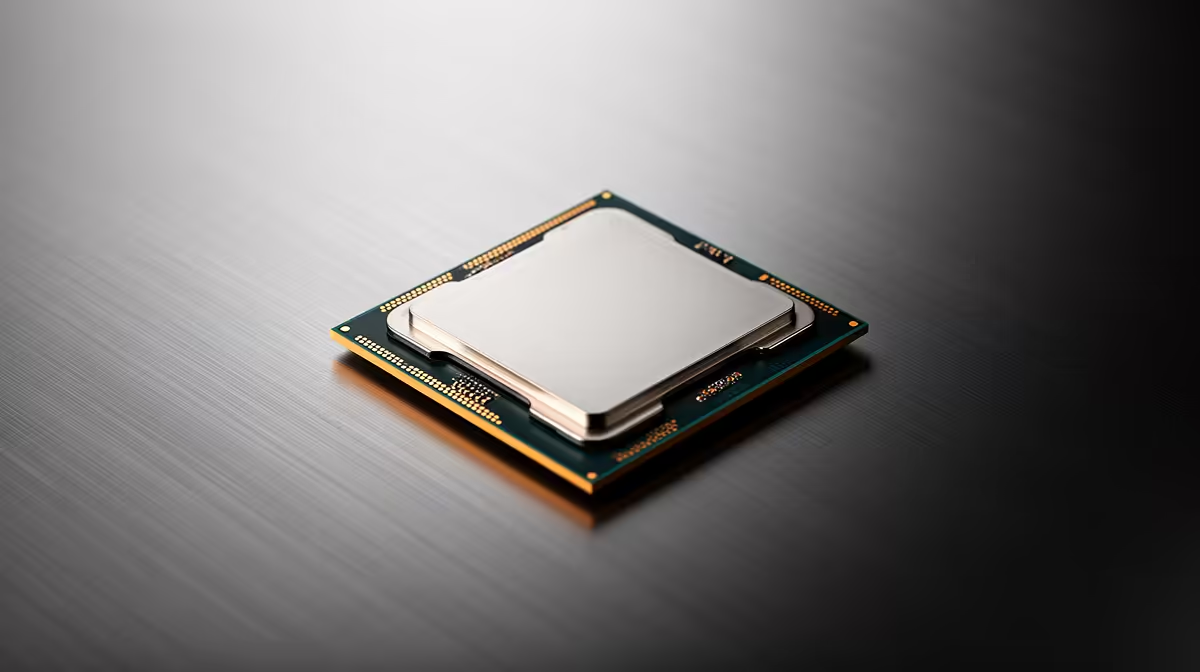
The Core i5-10400F was a good six-core value chip, but an LGA1200 system can now hold back a modern high-refresh graphics card. Its Comet Lake cores, DDR4 platform and PCIe 3.0 connection leave no worthwhile new CPU ladder above it. The next meaningful move replaces the platform.
Quick Answer
Move to AM5 when you want a current DDR5 base and room for a later supported Ryzen upgrade. Choose LGA1700 when a mature Intel CPU, board and reusable DDR4 kit create a much cheaper finished system. Include LGA1851 when its current features or productivity strengths suit a fresh build.
Compare AMD desktop CPU platforms with Intel processor options. Price processor, board, memory, cooler and Windows disruption together.
Confirm the 10400F Bottleneck
The 10400F has six cores and 12 threads, with a maximum turbo frequency up to 4.3GHz. That remains enough for lighter games and modest frame targets. Age becomes obvious in CPU-heavy scenes, competitive high refresh and workloads that favour newer per-core performance.
Save a route from the game that feels worst. Record frame-time lows and GPU utilisation. Lower render resolution or graphics load while leaving simulation settings unchanged. If the GPU relaxes and frame rate stays flat, the CPU or engine is likely setting the pace.
Check memory as well. Some early LGA1200 combinations restricted memory speed, and a single-channel kit hurts performance. Clear cooler dust, close background apps and verify boost behaviour before blaming the processor for a fixable setup problem.
A Drop-In LGA1200 CPU Rarely Solves Enough
The socket can accept selected 10th- and 11th-generation chips depending on board and BIOS. A used Core i7 or Core i9 adds cores, but it keeps older architecture and a platform with no next step. High used prices and stronger cooling needs can erase the attraction.
Check the board's exact support list and power capability before considering one. A budget H- or B-series model built for the i5 may not be the right home for a high-power top-tier chip. Add the used CPU, cooler and uncertain history.
If that total approaches a newer mid-range CPU and motherboard, take the platform change. You gain stronger per-core speed and a cleaner foundation rather than paying heavily to reach the end of LGA1200.
AM5 Is the Longer-Run Option
A Ryzen 5 on AM5 can give the 10400F owner a large per-core uplift, DDR5, PCIe 4.0 or 5.0 connectivity by board, and basic integrated graphics on most desktop models. Later supported CPUs may fit the same motherboard after a BIOS update.
The entry cost includes DDR5 and often a new cooler decision. Choose a sensible B-series board with the USB, M.2 and network features you need. A premium board bought for vague future-proofing can consume the money meant for the graphics card.
Treat socket runway as an option. It has value when you expect to upgrade again and the chosen board has the firmware and power support for that later chip. A system you keep unchanged for six years gains less from the promise.
LGA1700 Can Win on Immediate Cost
LGA1700 supports a wide range of 12th- through 14th-generation Intel processors and boards built for DDR4 or DDR5. Reusing a matched DDR4 kit can cut the cost of leaving LGA1200.
The socket has reached its own end point, since Core Ultra desktop processors moved to LGA1851. Buy LGA1700 as a complete platform for the CPU performance you need now. Do not pay extra on the assumption that a future architecture will drop in.
For a budget gaming build, a Core i5 with a low-cost board can still make sense. Compare current BIOS microcode guidance for 13th- and 14th-generation choices and use Intel Default Settings.
LGA1851 Deserves a Workload Test
Core Ultra desktop processors bring a new socket, DDR5-only memory and updated media, integrated graphics and NPU features on suitable models. Gaming value varies, while mixed productivity can strengthen the case.
Add it when you want a fresh Intel platform, then test the exact CPU against AM5 in your games and work. Do not assume the newest socket wins every frame-rate chart or guarantees a long upgrade path.
Reuse Parts With a Purpose
Your case, PSU, GPU and storage may move across. Inspect PSU age and connectors, measure cooler compatibility and check whether the case offers the airflow a newer processor and GPU need.
DDR4 can move to a matching LGA1700 board, while AM5 and LGA1851 require DDR5. Old storage can transfer, though a clean Windows installation may avoid years of driver residue after a motherboard change.
Keep the 10400F system intact until the new platform passes memory, CPU and game tests. It remains a useful fallback and makes fault-finding easier.
Prepare the Motherboard Change
Back up important files and recovery keys before removing the old board. Record fan connections, storage order and the Windows activation state. Download network and chipset drivers for the new platform while the existing PC still works.
Build the replacement at default settings. Update to a stable BIOS only when needed, test memory before enabling its profile, and confirm the graphics card negotiates the expected PCIe link. Reapply monitor refresh and colour settings after Windows detects the new hardware.
Once the system passes a sustained CPU load and the saved game route, move tuning one change at a time. This clean sequence separates platform faults from memory profiles and makes the performance comparison trustworthy.
Allocate the Budget by Resolution
At 1080p high refresh, the CPU move can transform lows and GPU utilisation. At 1440p or 4K, the graphics card may still set the limit. Compare the new platform with the exact GPU you own or plan to buy.
Set one total. An affordable LGA1700 base plus a faster GPU can beat a premium AM5 board with weaker graphics today. An AM5 system can be cheaper to update later. Choose which value window matches your ownership plan.
The 10400F has done its job when a measured limit now justifies more. Leave LGA1200 through a complete, balanced platform change rather than an expensive last socket upgrade.
FAQ
Is the Core i5-10400F still usable for gaming?
Yes, for lighter games and moderate frame targets. New high-refresh and CPU-heavy titles can expose its age.
Should I fit an i9 into my LGA1200 board?
Only after checking support, board power capability, cooling and used price. A platform change often offers better value.
Is AM5 better than LGA1700 for this upgrade?
AM5 offers a newer upgrade path. LGA1700 can cost less with mature CPUs and reusable DDR4. Compare the complete systems.
Reproduce the Core i5-10400F limit, then compare complete AM5, LGA1700 and LGA1851 systems with the same graphics card.