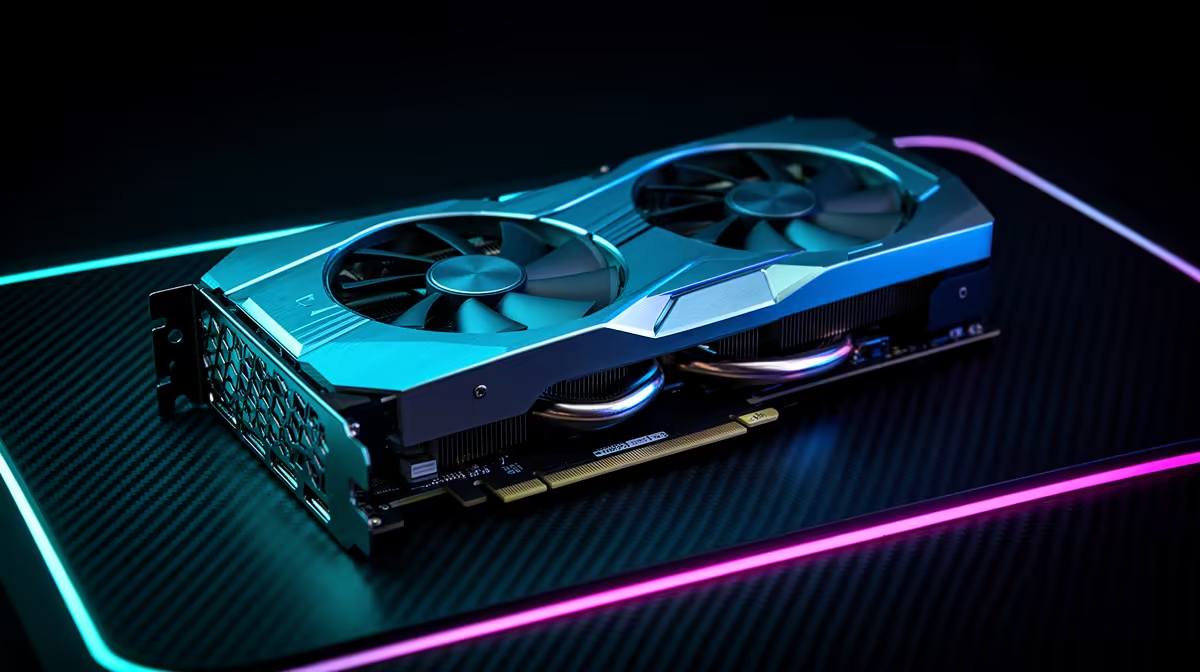
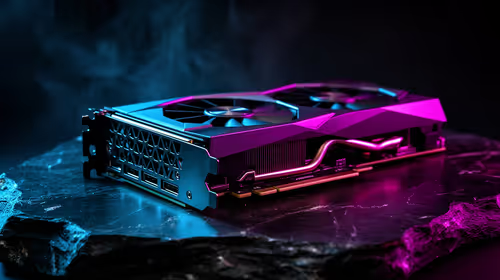
The RX 6700 XT to RX 9070 upgrade changes more than the number on the box. You move from 12GB to 16GB, gain RDNA 4 features and give a fast 1440p screen much more room. The upgrade earns its cost when your present card forces visible compromises, especially in ray-traced or high-detail games.
Quick Answer
Yes, the RX 9070 is a worthwhile step from the RX 6700 XT for strong 1440p play and a useful move towards 4K. The 16GB buffer, newer upscaling path and improved ray tracing make it a complete generational change. Evetech's graphics-card data showed a R13,299 median as of July 2026, so compare exact RX 9070 listings with the full cost of any PSU, CPU or monitor change.
📊 Measure what the 6700 XT can no longer do
Pick the three games that make the old card work hardest. Record the settings, average frame rate, low-frame behaviour and memory use at your screen's native resolution. A clear upgrade case appears when the 6700 XT is fully loaded, frame delivery misses the display target and lowering one or two settings no longer gives an acceptable picture.
If GPU use stays low while one processor core is saturated, the CPU may limit the next card too. Test by lowering resolution. A large frame-rate increase points to a graphics limit; little change suggests the processor or game engine deserves attention.
Explore the wider graphics card category to see where the RX 9070 sits among current choices. The GPU best-seller page gives another local view of the active market.
🧠 Four extra gigabytes add breathing room
The jump from 12GB to 16GB gives high-resolution textures and modded assets more space. At 1440p, 12GB can still work well, so capacity alone should not force the purchase. The larger buffer becomes more persuasive when a title already warns about memory use or you plan to move to 4K.
VRAM cannot fix every hitch. Storage speed, shader compilation and CPU scheduling can all interrupt smooth delivery. Look at the memory graph beside the frame-time trace before blaming the card's capacity.
The RX 9070 also brings a newer architecture and stronger upscaling. Use Quality mode first and compare fine details while moving. Frame generation can improve displayed smoothness after the base rate feels responsive.
🌟 Ray tracing creates a bigger separation
The RX 6700 XT can run selected ray-traced effects, but demanding modes expose its age. The RX 9070 gives you more room to keep reflections, shadows or lighting features without dropping the rest of the image quality as far.
Test the individual effects instead of selecting a maximum preset. One lighting option may transform a scene, while another costs frames for a difference you barely notice. Keep the useful effects and recover performance through the settings that matter less.
Rasterised games still benefit from the new card's extra speed. This makes the upgrade useful even when your library has limited ray tracing. The feature gain should add to strong ordinary rendering, not carry the entire decision.
🔧 Check the case, power and processor
Measure the card space with front fans or a radiator installed. RX 9070 partner cards vary in length and thickness, and a wide cooler needs room for its power cable. Leave clear intake space below the fans.
Read the exact card maker's PSU guidance and compare it with the existing unit's capacity, connectors, age and technical quality. An RX 6700 XT system may already have a suitable supply, but do not assume. Test the finished build at stock before adding any tuning.
A mid-range modern CPU is often enough for high-quality 1440p play. High-refresh esports can expose an older processor, while 4K shifts more work to the GPU. Upgrade the CPU only when monitoring shows it blocking the frame rate you want.
💰 Decide between RX 9070 and XT
The standard RX 9070 is the balanced choice when 1440p is the main target. The XT deserves attention for a fast 1440p panel, heavier ray tracing or a planned 4K display. Both carry 16GB, so the extra spend buys rendering headroom.
Price both as finished systems. If the XT forces you to keep a poor display or questionable power supply, the standard card can deliver the better experience. If the rest of the PC is settled, compare the premium with frame-rate gains in your own games.
Keep the 6700 XT until the new card passes several long sessions. Save your old driver settings, install the current Radeon software and confirm the monitor returns to its intended refresh rate. Once stable, decide whether the old card has a role as a tested spare.
Give the new software profile a clean start. Old per-game frame caps, sharpening values and custom colour settings can carry assumptions from the 6700 XT into the comparison. Reset one troublesome title, test the RX 9070 at default, then rebuild only the adjustments you still need.
If you move to 4K at the same time, test the card on the old 1440p display first. Changing one part per test makes faults easier to isolate and shows how much the GPU alone improved. Connect the new screen only after the card, driver and power path are stable.
Check the display cable specification as part of the 4K move. The wrong port or an older cable can limit refresh rate and make a healthy RX 9070 look like it missed the target.
Frequently Asked Questions
How big is the real-world gain from RX 6700 XT to RX 9070?
It is a substantial architecture and performance step. The visible size depends on resolution, game engine, settings and CPU.
Does 16GB VRAM matter at 1440p right now?
It helps in texture-heavy and modded games, while also giving more room for future releases. Many current titles still work within 12GB.
Will an RX 9070 need a case or PSU upgrade?
Possibly. Check the exact card dimensions, connector guidance and supply recommendation against your current hardware.
Is the RX 9070 XT a better buy than the standard 9070?
Choose the XT when its extra speed serves a fast display or 4K plan. The standard model is the stronger balanced-value choice.
Can my current CPU keep up with an RX 9070?
It may at 1440p or 4K. Monitor CPU and GPU use in your games before deciding on a second upgrade.
Ready to move beyond the RX 6700 XT?
Compare current RX 9070-class options in Evetech's graphics card range and check the full system around your chosen model.