

Black Myth: Wukong 2 Ultrawide Support: 21:9 and 32:9 Setup Guide
Black Myth: Wukong 2 Ultrawide Support: 21:9 and. Clear setup instructions with SA-specific considerations, troubleshooting tips & recommended components.
Read moreAre your USB ports not working on your PC, causing frustrating disconnects with your gaming mouse or keyboard? 😫 This guide provides easy, step-by-step solutions to diagnose and fix common USB issues, from software glitches to hardware checks. Get your gear connected again! 🎮
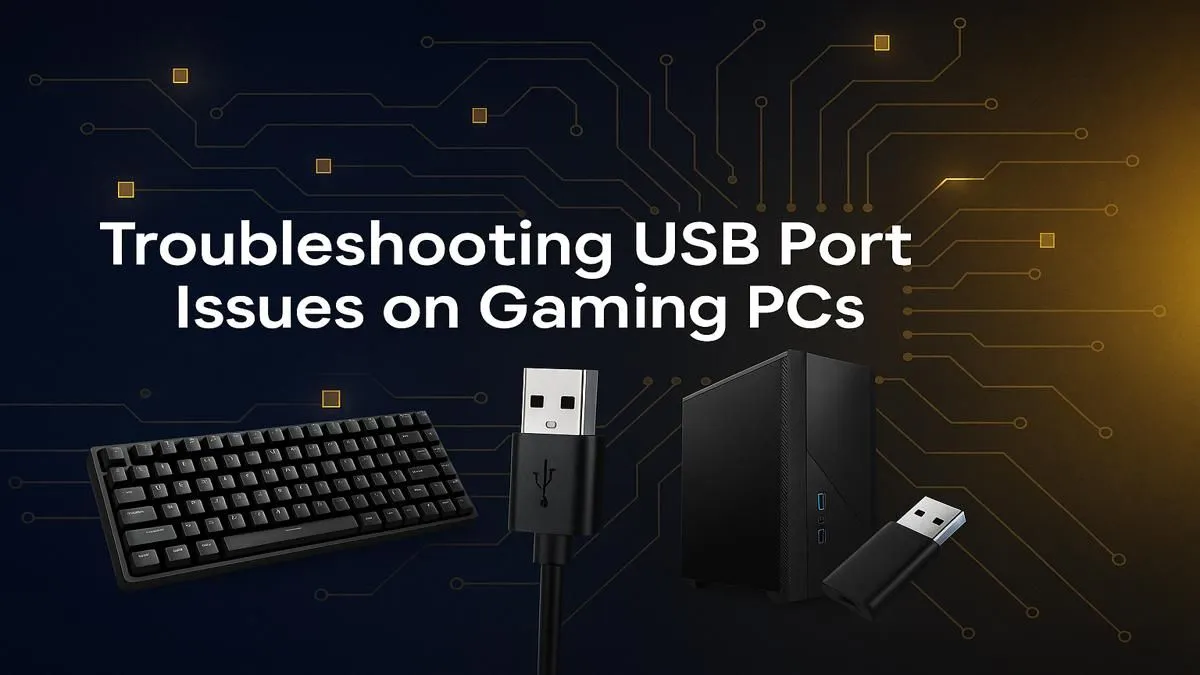
Picture this: you’re in the final circle in Call of Duty: Warzone 2.0, one enemy left. You line up the perfect shot, and... nothing. Your mouse is dead. A quick check reveals the nightmare scenario for any gamer: your USB ports are not working on your PC. Before you rage-quit, take a breath. We’ve got a complete troubleshooting guide to get you back in the game, fast. 🔧
When your PC's USB ports suddenly stop working, don't assume the worst. The fix is often surprisingly simple. Start with these basic diagnostic steps before diving into more complex solutions.
It's a cliché for a reason. A simple restart can solve a surprising number of temporary software glitches or driver conflicts that may cause your USB ports to become unresponsive. Shut down your PC completely, wait 30 seconds, and power it back on.
Next, you need to figure out the scope of the issue. Is it the port, the device, or the whole system?
Windows manages your hardware through drivers. If a driver is corrupt, your hardware won't work correctly.
Windows Key + X and select Device Manager.Universal Serial Bus controllers section.Update driver.A stable system is crucial, whether you're just trying to build your next masterpiece on a reliable Minecraft gaming PC or fragging out in a competitive shooter.
If the basics didn't solve the problem, it’s time to dig a little deeper. These next steps involve checking physical connections and system power settings.
Shine a torch into the dead USB port. Are the internal pins bent or touching? Is it clogged with dust or debris? A quick blast of compressed air can clear out dust, but bent pins often mean the port is permanently damaged. Also, check the connection of your front panel USB ports to the motherboard header inside your case—sometimes they can come loose. It's a common issue on custom builds, even on high-end rigs designed for games like Cyberpunk 2077.
In Windows, go to 'Edit Power Plan' > 'Change advanced power settings' > 'USB settings'. Find 'USB selective suspend setting' and disable it. This stops Windows from turning off your ports to save a tiny bit of power, which can be a lifesaver for peripherals that need constant connection, like audio interfaces or webcams.
Restart your PC and enter the BIOS/UEFI (usually by pressing DEL, F2, or F12 on startup). Navigate through the settings to find options for USB Configuration or Onboard Devices. Ensure that all USB controllers are enabled. A system update can sometimes reset these settings, so it's worth checking to ensure your rig is ready for everything from booting up to causing chaos on a GTA V gaming PC.
Still no luck? If your USB ports are not working after all that, the issue might be more deeply rooted in the system's software or hardware. These advanced steps can often resolve the most stubborn problems.
This sounds technical, but it’s a powerful way to force Windows to start fresh with your USB hardware.
Device Manager again.Universal Serial Bus controllers section.USB Root Hub or Host Controller and select Uninstall device.If you've tried everything and some or all of your USB ports are still not working, it’s time to consider a hardware failure.
At this point, the problem moves beyond a simple fix and into component replacement territory.
Ready for a Reliable Rig? Troubleshooting is a valuable skill, but sometimes old hardware is just... old. If you're tired of components failing at the worst possible moment, it might be time for an upgrade. Stop worrying about dead ports and start focusing on the win. Explore our range of powerful gaming PCs and build a machine you can count on.
USB ports can stop working due to outdated or corrupt drivers, power management settings, a recent Windows update, or a hardware failure on the motherboard itself.
Start by restarting your PC. Then, check Device Manager for driver issues, disable the "USB selective suspend" setting in Power Options, and inspect the port for physical damage.
You can reset them by opening Device Manager, uninstalling all devices under "Universal Serial Bus controllers," and then restarting your PC. Windows will reinstall them automatically.
Yes, motherboard USB ports can fail due to physical damage, power surges, or general component degradation over time. Testing with multiple devices can help diagnose this.
If your front USB ports are not working, it's often because the internal header cable is disconnected from the motherboard. Check the connection inside your PC case first.
Restart your PC and enter the BIOS/UEFI setup. Look for a section like 'Integrated Peripherals' or 'Advanced' and ensure that USB Controller and Legacy USB Support are enabled.
Black Myth: Wukong 2 Ultrawide Support: 21:9 and. Clear setup instructions with SA-specific considerations, troubleshooting tips & recommended components.
Read more
Setting Up HDMI 2.1 Cable. Tested & verified settings for best FPS and visual quality on SA hardware budgets.
Read more
Every spec on PCIe 5.0 explained in plain English. What matters for gaming and creator work in 2026, what's marketing fluff, and how each number translates to real-world performance.
A head-to-head look at WiFi 7: real-world performance, ZAR pricing and which option delivers better value for SA builders. The clear answer — no fluff.
Everything you need to set up and tune PCIe 5.0 properly: the prep work, the settings that actually matter, and the mistakes to skip. Written for SA builders in 2026.
Everything you need to set up and tune X870E Motherboard properly: the prep work, the settings that actually matter, and the mistakes to skip. Written for SA builders in 2026.
Wondering what a 512GB SSD capacity really holds? This guide breaks down how many games, photos, and documents fit on 512GB, with real-world ranges 📦💾
Every spec on vrm explained in plain English. What matters for gaming and creator work in 2026, what's marketing fluff, and how each number translates to real-world performance.
Every spec on motherboard explained in plain English. What matters for gaming and creator work in 2026, what's marketing fluff, and how each number translates to real-world performance.
Premium vs Midrange Motherboards in South Africa: real-world performance, SA pricing, power draw and which one delivers better value for your build for SA buyers. The clear answer — without the fluff.
Wondering what a 512GB SSD capacity really holds? This guide breaks down how many games, photos, and documents fit on 512GB, with real-world ranges 📦💾
Every spec on PCIe 5.0 explained in plain English. What matters for gaming and creator work in 2026, what's marketing fluff, and how each number translates to real-world performance.
A head-to-head look at WiFi 7: real-world performance, ZAR pricing and which option delivers better value for SA builders. The clear answer — no fluff.
Every spec on USB4 explained in plain English. What matters for gaming and creator work in 2026, what's marketing fluff, and how each number translates to real-world performance.