A video-editing PC is worth buying for competitive esports only when the player also produces frequent match videos, highlights or team content. Competitive play itself needs consistent frame time, low-latency controls and the correct display mode rather than extra editing storage or colour features.
Benchmark the match and content project separately
Run the chosen game at tournament settings, recording frame time, CPU and GPU load and temperatures. Then edit a representative capture, checking codec playback, memory, storage and export. Decide which workload sets the higher requirement.
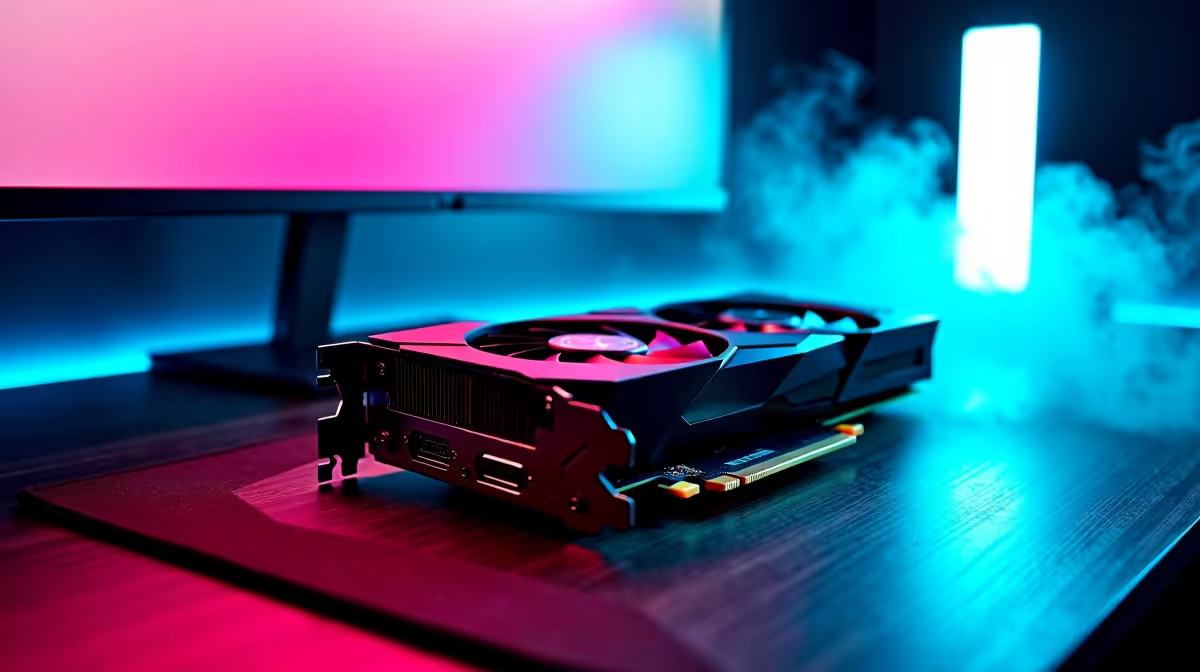
The Palit RTX 5060 8GB at R4,800, ViewSonic VX2779A 240Hz monitor at R2,350 and WD Blue SN5000 2TB at R1,684 are verified component references. They are not a complete compatible system or performance guarantee. Confirm CPU, board, memory, PSU, case, cooling, codec and warranty requirements.
Keep tournament settings in a known-good profile, protect game saves and original captures, and separate editing cache from archive copies. Do not let export jobs or background media transfers run during important matches.
Buy from the esports benchmark first when competition is the priority. Add editing capacity only when finished content proves the second workload is real.
Team footage should be archived after each event so fast internal storage remains available for games and current edits.
Combining esports and editing? > Compare Evetech PCs against both measured workloads.