

AIO Liquid 240mm Setup and Configuration: Complete Tutorial
AIO Liquid 240mm Setup and Configuration. Clear setup instructions with SA-specific considerations, troubleshooting tips & recommended components.
Read moreStruggling with video editing PC troubleshooting? Don't let lag, crashes, or slow rendering ruin your creative flow. This guide provides step-by-step solutions to fix choppy playback, dropped frames, and software freezes. Get back to creating stunning content without the headache! 🖥️✨
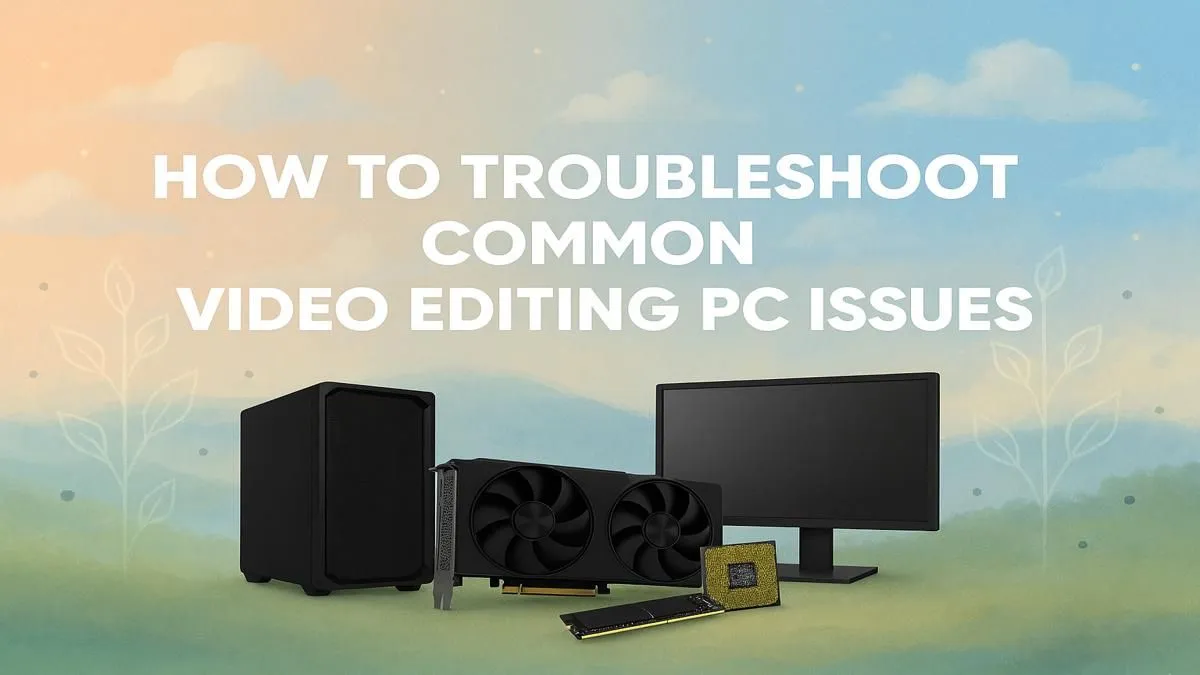
There's nothing worse. Your deadline is looming, the client is waiting, and your PC decides to throw a tantrum. Dropped frames, sluggish playback, and the dreaded crash-on-render... we’ve all been there. Before you hurl your mouse across the room, take a breath. This guide offers some rapid video editing PC troubleshooting tips to fix common issues and get your project back on track, right here in South Africa. Let's get you rendering again. 🚀
Before blaming your hardware, it’s crucial to check your digital workspace. Often, the quickest fixes for video editing performance issues lie within the software itself. An un-optimised setup can make even a powerful machine feel sluggish.
First, check your drivers. Your graphics card is the engine for your editing suite, and outdated drivers are like running on old oil. Regular updates for both NVIDIA and AMD GPUs often include specific performance improvements for creative apps like Premiere Pro and DaVinci Resolve. Ensuring you have the latest drivers for your graphics card can be the single most effective fix. This is especially true for harnessing the full power of CUDA cores in modern NVIDIA GeForce gaming PCs.
Similarly, software and project files can get bloated. Clear your media cache regularly! Over time, this folder can swell to hundreds of gigabytes, slowing down your entire workflow. Every major editing program has a simple "Clean Media Cache" button in its settings… use it. For creators running team red, the latest Adrenalin drivers often boost encoding performance on powerful AMD Radeon gaming PCs, making driver hygiene just as important.
If software tweaks don't solve the problem, it's time to look at the hardware. Troubleshooting your video editing PC often comes down to three key areas: heat, memory, and storage.
Video editing is intense work, and it generates a lot of heat. If your CPU or GPU gets too hot, it will automatically slow down (thermal throttle) to protect itself, resulting in stuttering playback and painfully slow exports.
Are you editing complex 4K timelines with lots of effects? You might be running out of RAM. 16GB is the bare minimum today, but 32GB or more is the sweet spot for smooth performance. A lack of RAM forces your system to use a slower page file on your drive, killing performance.
Your storage speed is just as critical. Editing directly from a traditional Hard Disk Drive (HDD) is a recipe for frustration. Your operating system, editing software, and active project files should all be on a fast Solid State Drive (SSD), preferably an NVMe SSD. The difference is night and day.
For ultimate performance, use a dedicated NVMe SSD just for your media cache and scratch files. Go into your editing software's preferences and point all cache, scratch, and preview files to this secondary fast drive. This separates the workload from your OS drive and your footage drive, dramatically improving timeline responsiveness.
If you’ve tried everything and your machine still can't keep up, the problem might not be a fault… it might be a limitation. Ask yourself: how much time am I losing to troubleshooting each week? If the answer is more than an hour, your PC might be costing you more in lost time and frustration than an upgrade would cost in Rands.
Modern codecs and higher resolutions demand more power. A processor with more cores will slash your render times. This is where the debate between multi-core monsters and single-thread speedsters gets interesting. The incredible multi-threaded performance in the latest AMD Ryzen PC deals makes them render beasts, while the rock-solid stability and strong single-core speed of many custom Intel PC deals make them incredibly responsive editors.
For professionals whose livelihood depends on performance and reliability, purpose-built workstation PCs offer certified components and optimised stability. And if you'd rather just plug in and get to work, today's pre-built PC deals offer incredible value and are expertly assembled to avoid common performance bottlenecks from day one.
Ready to Stop Troubleshooting and Start Creating? While these fixes can get you out of a jam, sometimes the best long-term solution is a hardware upgrade. Stop fighting lag and start mastering your craft. Design your ultimate video editing rig with our Custom PC Builder and get a machine built for your exact workflow.
Even on a good PC, slow editing can be caused by outdated drivers, unoptimized software settings, or using a slow HDD for project files. Ensure your GPU drivers are updated and your media cache is on a fast SSD.
To fix choppy video playback, use editing proxies. These are lower-resolution copies of your media that are easier for your PC to handle. You can also lower the playback quality setting directly in your editing software.
Video editing software crashing often stems from incompatible plugins, insufficient RAM, or overheating components. Try disabling third-party plugins, closing other applications, and ensuring your PC has adequate cooling.
Speed up rendering by enabling hardware acceleration (GPU) in your software's export settings. Also, render your project to a fast NVMe SSD instead of a traditional hard drive to reduce write-time bottlenecks.
While 16GB is the minimum, it's often not enough for complex 4K projects, leading to 'not enough memory for video editing' errors. 32GB is highly recommended for a smoother 4K editing experience without system lag.
Preventing your video editor from freezing involves regular maintenance. Clear your software's cache files frequently, update the program to the latest version, and avoid applying too many heavy effects at once on a single clip.
Yes, a CPU bottleneck is a major cause of poor editing performance, especially during rendering and when processing complex effects. A CPU with more cores and higher clock speeds can significantly improve your workflow.
AIO Liquid 240mm Setup and Configuration. Clear setup instructions with SA-specific considerations, troubleshooting tips & recommended components.
Read more
Setting Up DDR5 64GB Kit. Tested & verified settings for best FPS and visual quality on SA hardware budgets.
Read more
Overwatch 2 Setup Guide Gamers. Clear setup instructions with SA-specific considerations, troubleshooting tips & recommended components.
Read more
R and RStudio on Mac: Data Science Setup Guide. Clear setup instructions with SA-specific considerations, troubleshooting tips & recommended components.
Read more
NVIDIA Broadcast Setup with GPU: Streamer Guide. Clear setup instructions with SA-specific considerations, troubleshooting tips & recommended components.
Read more
Core Ultra 7 265K Temperature Guide: Normal Range. Complete product range with SA pricing, key specs & recommendations for different budgets.
Read more
AMD RX 9050 XT: Rumoured Specs, Price & Release. SA-focused analysis with local pricing data, real-world insights & actionable buying advice.
Can RTX 4080 Super Run AI Workloads for SA Developers Detailed answer with SA data, expert analysis & practical recommendations for local buyers.
Can RTX 4090 Run AI Workloads for SA Developers Detailed answer with SA data, expert analysis & practical recommendations for local buyers.
Top Settings for Intel Arc B580 at Ultrawide 1440p picks evaluated on performance, value & SA availability with current Rand pricing from Evetech.
RTX 4060 CS2 Low Settings at 1080p: FPS Results. Real-world benchmark data, FPS numbers & performance analysis. What SA gamers can actually expect.
Visual Artifacts: Possible GPU Issue Issue #1. Diagnosis steps, proven fixes & when to seek professional help. SA-specific support info included.
Can the RTX 4090 Handle 1440p 144Hz Gaming. Performance testing verdict with real data & practical recommendations for SA buyers.
Top ASUS GPU Under R15000 picks evaluated on performance, value & SA availability with current Rand pricing from Evetech.
GTA 6 Max Settings on RTX 5070. Tested & verified settings for best FPS and visual quality on SA hardware budgets.
Cyberpunk 2077 Max Settings on RTX 5080. Tested & verified settings for best FPS and visual quality on SA hardware budgets.
Starfield Max Settings on RTX 5070 Ti. Tested & verified settings for best FPS and visual quality on SA hardware budgets.
Top RTX 5090 Under R5000 picks evaluated on performance, value & SA availability with current Rand pricing from Evetech.