Quick Answer
In motherboards, VRM quality matters more for CPU performance, while USB ports matter for connecting peripherals; most builds need a strong VRM and a sensible spread of USB ports, not the maximum of either. Prioritise a robust VRM, then count your devices and pick a board with enough USB; quality B650 boards start around R2,500 at Evetech.
Why VRM Quality Is The Performance Factor
The VRM delivers power to the CPU, and its quality decides whether the chip sustains high clocks under load. A strong, well-cooled VRM keeps the CPU boosting through long gaming or rendering sessions, while a weak VRM overheats and throttles, losing performance you paid for. Because this affects the system every time it works hard, VRM quality is the more important spec for performance and stability. USB ports, by contrast, do not affect how fast the system runs; they affect how many devices you can plug in, which is a convenience question rather than a performance one.
Matching USB Ports To Your Devices
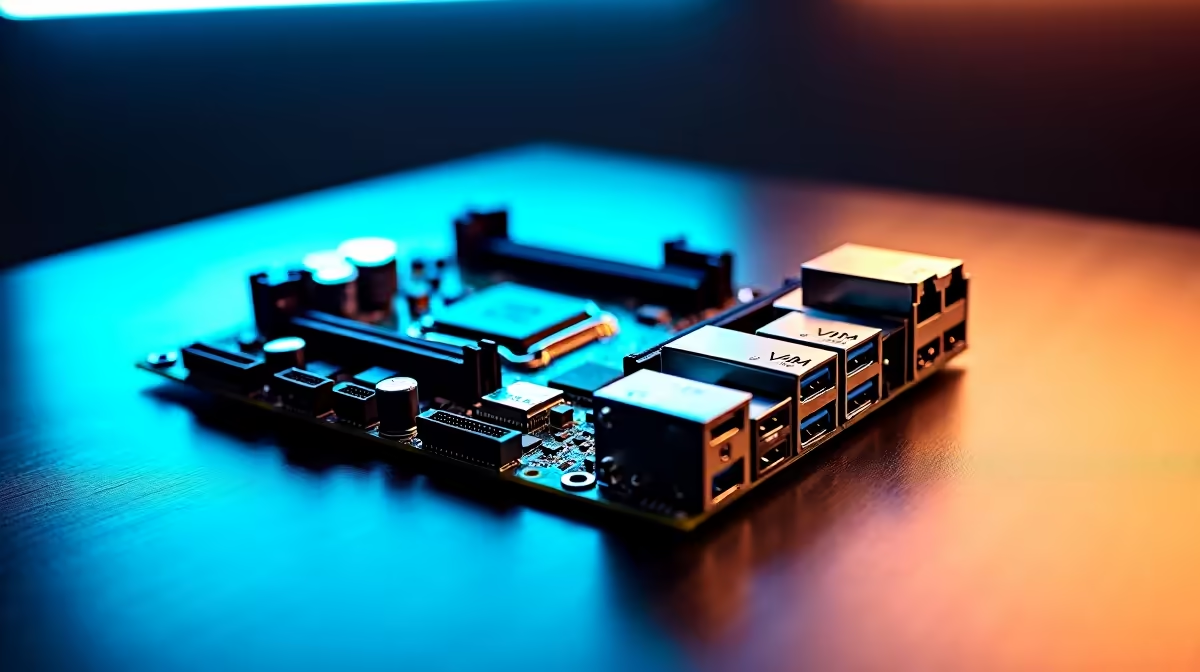
USB provision still matters, just for different reasons. Count what you connect, keyboard, mouse, headset, webcam, external drives, controllers, and choose a board with enough rear and front-header USB ports to cover them comfortably, with a little room to grow. A mix of USB-A and a USB-C port is useful for modern devices. You do not need the board with the absolute maximum number of ports unless you genuinely run many peripherals; a sensible spread is enough. So prioritise a strong VRM for performance, then ensure the board's USB layout suits your devices, rather than overpaying for ports you will never fill.
Prioritise VRM quality for performance, then pick a board with enough USB for your peripherals.
FAQ
Why does VRM quality matter more than USB ports?
The VRM affects how well the CPU performs under load, shaping the whole system whenever it works hard, while USB ports only affect how many devices you connect. So the VRM is the key performance spec.
How many USB ports do I need?
Count your peripherals, keyboard, mouse, headset, webcam, drives, controllers, and pick a board with enough rear and front-header ports to cover them with a little room to grow, including a USB-C port.
Should I buy the board with the most USB ports?
Only if you genuinely run many peripherals. A sensible spread of USB-A and USB-C suits most builds. Overpaying for ports you will not use is better spent on a stronger VRM.
board with a robust VRM for stable performance, then count your peripherals and pick a USB layout that covers them with a USB-C port and a little headroom.