Quick Answer
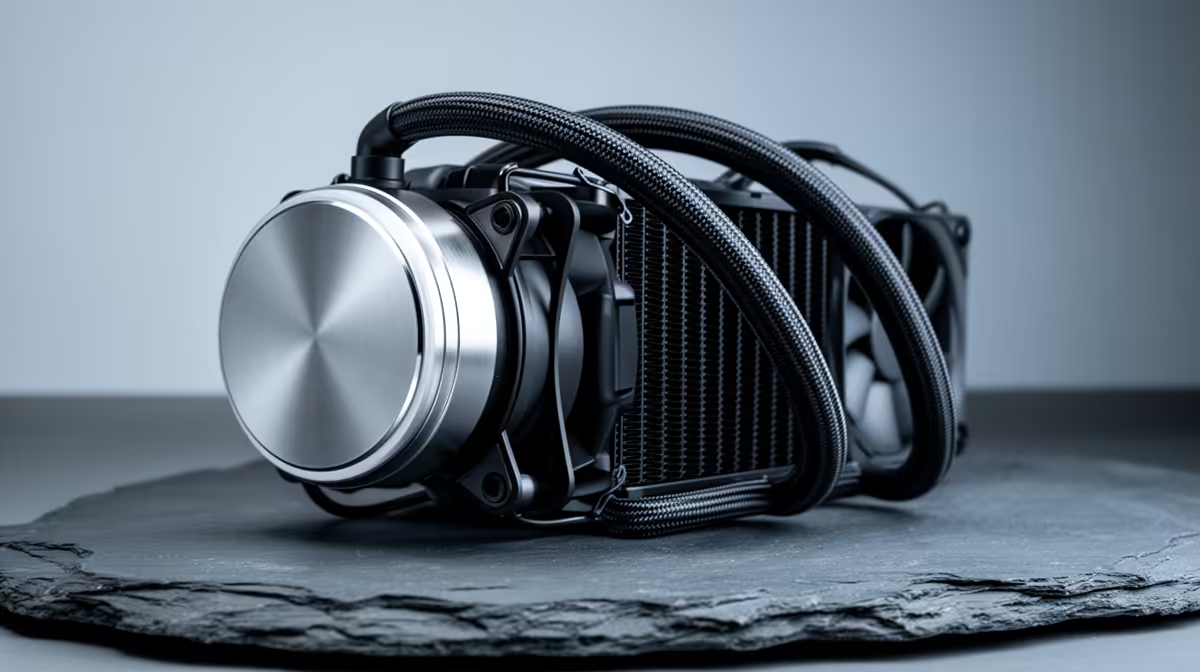
AIO cooler noise comes from the pump, radiator fans, and occasionally air bubbles in the coolant loop. Fans are the dominant source during gaming and can be reduced safely through fan curve tuning. Pump noise is fixed by switching to Quiet pump mode in companion software. Gurgling from air bubbles typically resolves on its own within the first few hours of use.
Identifying Your Noise Source First 🔊
Identifying the noise source before acting prevents pointless changes. Fan noise is a sustained whooshing that rises with RPM and CPU load. Pump noise is a constant low-frequency hum that varies only with pump speed setting. Gurgling indicates air bubbles in the coolant loop, most common in the first hours after installation. Bearing rattle or grinding from the pump or a fan indicates a failing component that should be handled under warranty, not managed through software.
Reducing Fan Noise Safely Through Fan Curves 🎮
Fan noise is the most controllable AIO noise source. In BIOS or companion software, set a custom curve: 700 to 800 RPM below 50 degrees Celsius coolant temp, ramping to 1,100 RPM at 65 degrees, and maximum speed above 78 to 80 degrees. This keeps the system silent during browsing while responding to gaming loads. For SA builders in shared homes or WFH setups, a curve preventing fans above 1,200 RPM during video calls removes nearly all microphone pickup of fan noise. Safety rule: never cap fans below 800 RPM at coolant temps above 70 degrees Celsius, as this risks unsafe CPU temperatures under heavy loads.
Reducing Pump Noise Without Sacrificing Cooling 🔧
Pump noise is controlled through companion software (Corsair iCUE, NZXT CAM, Lian Li L-Connect) or BIOS pump header settings. Switching from Performance to Balanced mode reduces pump speed by 200 to 500 RPM, lowering the hum without significantly impacting cooling on CPUs below 150W TDP. On a Ryzen 7 9800X3D at stock, Balanced mode maintains safe thermals while reducing noise. On a Ryzen 9 9950X under full load, stay at Performance or Extreme mode. The pump must never be turned off; it must run whenever the PC is under any load.
Anti-Vibration Screws Reduce Radiator Fan Rattle ⚡
Many AIO fans and radiator mounts transmit slight vibration through the case at certain RPMs, producing a buzzing sound distinct from blade noise. Replacing standard fan screws with rubber anti-vibration standoffs (available for R30 to R80 at most PC hardware retailers) eliminates this transmitted vibration without any performance trade-off.
FAQ
Is it safe to run my AIO fans at zero RPM at idle?
Yes, on most modern motherboards that support zero-RPM fan mode. The pump continues circulating coolant and the radiator still passively dissipates a small amount of heat even with fans stationary. Only enable zero-RPM mode if your motherboard supports it properly and if the fan curve ramps up reliably when temperatures rise.
My AIO still gurgles after a week of use. Is this a problem?
Gurgling that persists beyond the first week of use and occurs consistently during gaming, not just at startup, may indicate a slow leak or a loop with excess air that was not properly bled during manufacturing. Contact the retailer for a warranty assessment if the sound is persistent and intrusive.
Can case dampening material reduce AIO noise reaching the room?
To a limited extent. Acoustic foam panels on case side panels (available in kits for R300 to R600) absorb some high-frequency fan noise before it exits the case. However, they also reduce case airflow slightly, so balance is needed. Tuning your fan curve to run quieter is more effective and free.
Want a quieter cooling solution for your gaming or work setup?
Find acoustically optimised AIO coolers at Evetech with quality fans and adjustable pump speeds.