Dropping serious ZAR on a flagship processor is a massive investment. But plugging that beast into a budget board is like putting bicycle tyres on a supercar. If you're chasing maximum frame rates or extreme overclocks, you've probably seen the term 24+1+2+2 power phase design thrown around on spec sheets. What does this massive string of numbers actually mean for your daily gaming sessions? Let's break it down.
Decoding the 24+1+2+2 Power Phase Design ⚡
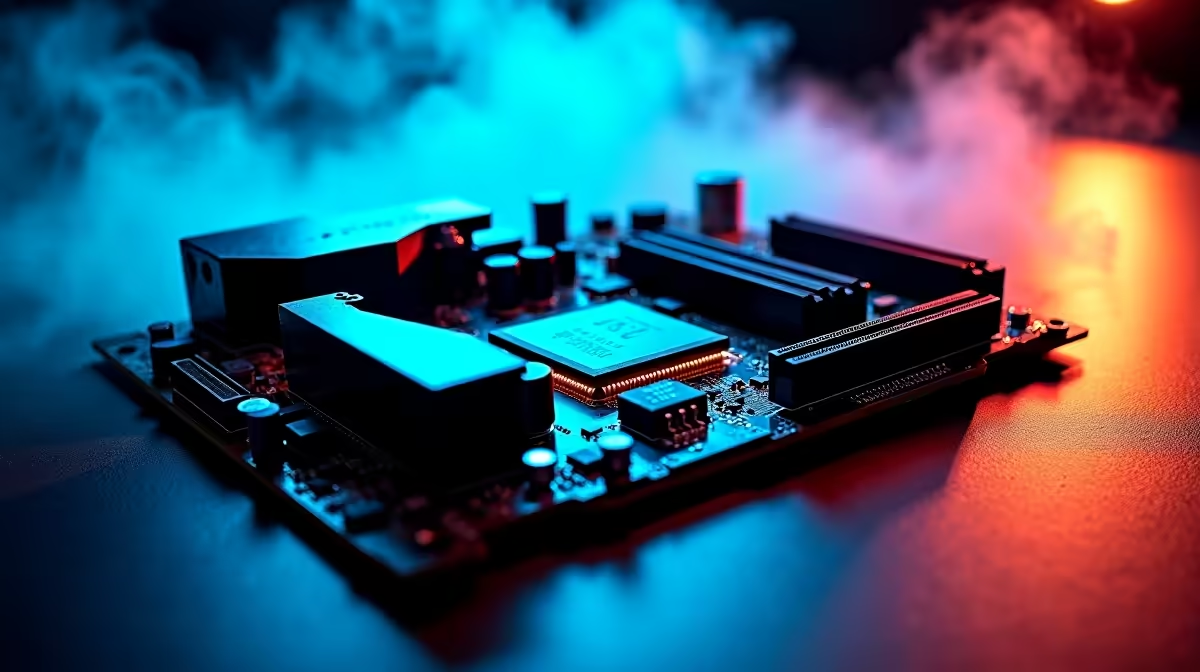
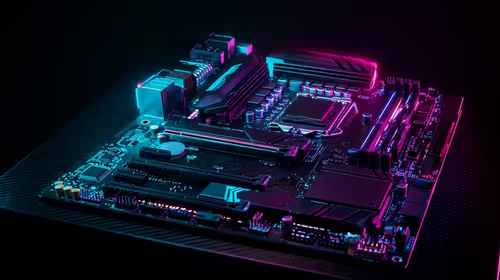
At its core, a power phase or VRM (Voltage Regulator Module) takes the 12V power from your power supply and steps it down to the exact 1.x volts your CPU needs. When you look at premium motherboards, the 24+1+2+2 power phase design represents exactly how that heavy electrical workload is divided.
Think of it like a national highway. A basic 4-phase design is a single lane... traffic gets congested and things heat up incredibly fast under load. A 24-phase design for the CPU core (the "24" in our sequence) is a massive 24-lane superhighway. It shares the immense electrical load across multiple premium components, keeping temperatures incredibly low while delivering rock-solid voltage to your silicon.
Why Your Flagship Processor Demands Clean Power
Modern flagship processors draw an insane amount of current when boosting to 6GHz and beyond. If that supplied voltage fluctuates even slightly during a heavy load, your system will crash straight to the desktop.
This is exactly where high-end ASUS Intel motherboards truly shine. By utilising 24 dedicated power stages just for the CPU cores, they ensure zero voltage droop during intense gaming marathons or heavy 4K rendering workloads. More phases mean each individual phase works less... resulting in a much cooler system overall.
Beyond the Cores... Memory and System Agents 🔧
So what about the rest of those numbers in the sequence? The "+1" usually feeds the integrated graphics on the chip. More importantly, the "+2+2" handles the system agent, memory controller, and critical PCIe lanes.
If you want to optimise DDR5 to its absolute limits, you need incredibly stable power running directly to the memory controller. Pairing a flagship board with blazing high-speed memory kits means you can easily tweak sub-timings and push frequencies without encountering random blue screens. Clean, uninterrupted power delivery across the entire board is the ultimate secret to a stable overclock.
Is Extreme Power Delivery Worth the ZAR?
For the average gamer running a standard mid-range CPU, a 24+1+2+2 power phase design is definitely overkill. But if you're building an elite rig with a top-tier, power-hungry CPU, it's absolutely essential.
Whether you're looking at top-tier ASUS AMD motherboards to push your Ryzen 9 to the limit, or you prefer skipping the intricate build process entirely by grabbing one of our premium pre-built gaming PCs, that robust VRM setup guarantees long-term longevity. Cooler components simply last longer... a vital factor given the warm South African climate and our unique power grid challenges.
Overclocking Pro Tip 🚀
Always ensure your PC case has excellent airflow over the VRM heatsinks. Even with a massive 24+1+2+2 power phase design, trapped hot air can cause thermal throttling. Mount your liquid cooling radiator at the top of the case to pull ambient air across the motherboard power delivery components.