Building a new gaming rig in South Africa? You're probably comparing clock speeds and core counts. But there's a three-letter acronym that's just as crucial, especially with our summer heat... TDP. Understanding what CPU TDP is isn't just for overclocking nerds; it's key to building a balanced, cool, and quiet PC that won't sound like a jet engine during a tense Warzone match. Let's break it down.
Demystifying Thermal Design Power (TDP)
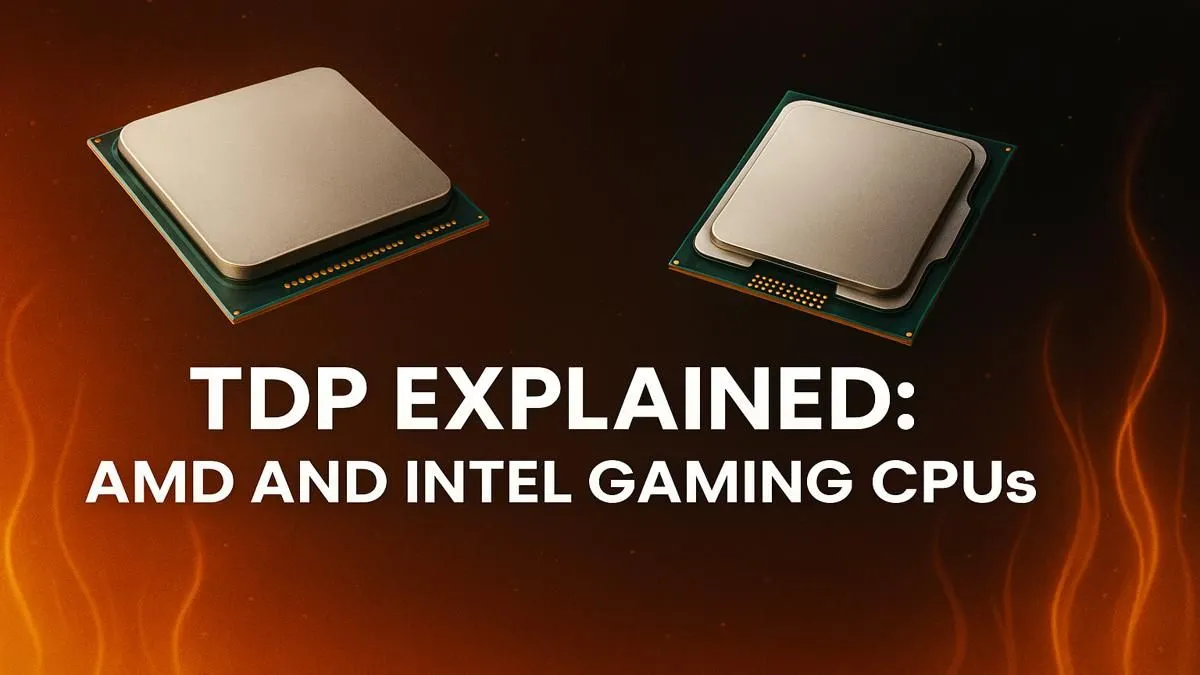
So, what is CPU TDP, really? In simple terms, Thermal Design Power (TDP) is a rating, measured in watts, that tells you the maximum amount of heat a processor is expected to generate under a typical, heavy workload. Think of it as a thermal budget. It's not a direct measure of how much electricity the chip uses from the wall, but rather a guideline for the cooling system required to keep it running optimally.
A CPU with a 125W TDP needs a cooler capable of dissipating at least 125 watts of heat to prevent it from overheating and "thermal throttling"—where it automatically slows itself down to cool off. Getting this right is the first step to unlocking consistent performance.
Why CPU TDP is a Big Deal for Your Gaming Rig
Ignoring TDP is a recipe for a frustrating build. A processor is only as good as its cooling solution, and understanding its thermal output is crucial for several reasons:
- Cooling Costs: A high-TDP chip demands a powerful (and often more expensive) cooler. The stock cooler that comes with a lower-end CPU simply won't cut it. You'll need to budget for a beefy tower air cooler or an All-In-One (AIO) liquid cooler.
- System Noise: More heat means fans have to spin faster and harder to move air. A well-matched cooler can keep a high-TDP CPU cool without sounding like a vacuum cleaner, but a mismatched one will be noisy under load. ⚡
- Case and Airflow: All that heat has to go somewhere! The heat dissipated by your CPU cooler gets exhausted into your PC case. Your case needs good airflow to get rid of that hot air efficiently, otherwise, all your other components will start running hotter too.
- Power Supply Choice: While TDP isn't a direct measure of power consumption, high-TDP CPUs almost always have higher peak power draws. This influences the wattage you'll need from your Power Supply Unit (PSU) to run the entire system stably, especially when paired with a powerful graphics card.
Understanding CPU TDP: The AMD vs. Intel Approach
Here's where things get a bit more technical. AMD and Intel have slightly different philosophies when it comes to defining and advertising TDP, and knowing the difference can save you a headache. It's a key factor when comparing the specs of the latest Intel processors against their rivals.
Intel's Power Limits (PL1 & PL2)
For years, Intel has used a system of Power Limits. You'll often see a "Processor Base Power" (PL1), which is the number that looks like the traditional TDP. However, their CPUs can also boost to a "Maximum Turbo Power" (PL2) for short periods, drawing significantly more power and generating much more heat. For example, a CPU with a 125W base power might boost to over 240W. This is why it's vital to get a cooler that can handle the PL2 value, not just the base TDP.
AMD's Approach
Historically, AMD's Ryzen CPUs have had TDP ratings that more closely reflect their sustained power draw under heavy load. While they also have clever boosting technology like Precision Boost Overdrive (PBO) that can push the limits, the advertised TDP is generally a more straightforward indicator of what your cooling needs to handle for all-core workloads.
Cooler Check 🔧
Before buying a CPU cooler, always check its TDP rating. A cooler rated for 150W TDP will struggle with a CPU that boosts to 200W, leading to thermal throttling and lost performance. Match your cooler's capability to your CPU's maximum expected heat output, not just its base TDP!
Choosing the Right CPU for Your Build
Ultimately, there's no "good" or "bad" TDP. It's all about building a balanced system. A high-TDP processor delivers incredible performance for gaming and content creation, but it demands a robust cooling solution and a well-ventilated case to shine. Don't cheap out on the cooler if you're buying a top-tier chip.
On the other hand, a CPU with a lower TDP can be the star of a quiet, compact, and cost-effective build that still offers fantastic gaming performance. The key is to see the whole picture. By understanding CPU TDP explained in this context, you can make a much smarter decision when choosing the right CPU processor for your budget and performance goals.
Ready to Build Your Ultimate Rig?
Understanding CPU TDP is the key to a balanced, high-performance PC. Now that you know how to match your processor to your cooling and power needs, it's time to bring your dream build to life. Use our award-winning PC Builder and find the perfect components to conquer your world. 🚀