Quick Answer
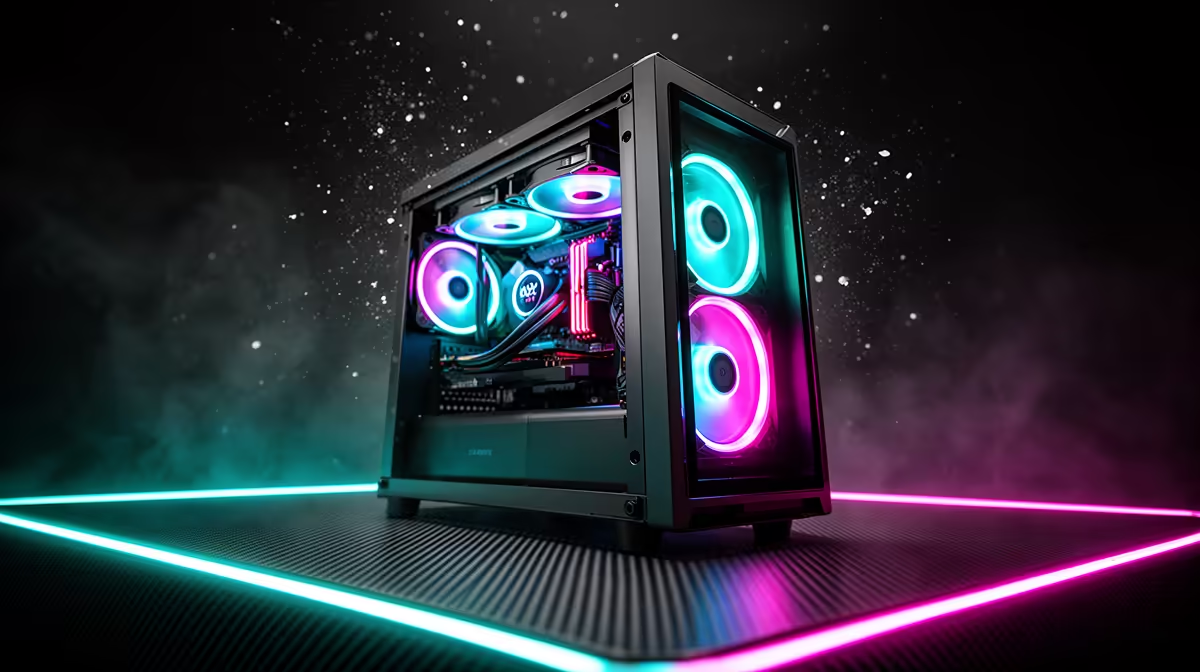
SA builders pairing a large GPU with AIO cooling should prioritise three case specifications in order: confirmed GPU clearance of at least 380mm (440mm for RTX 5090-class cards), confirmed AIO radiator support at the top or front in 360mm or 420mm format, and a minimum 25mm behind-tray cable management depth to handle the thick power cables these high-TDP components require.
GPU Clearance Requirements for Current-Gen Cards in SA 🖥️
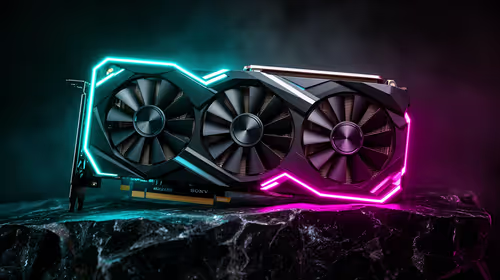
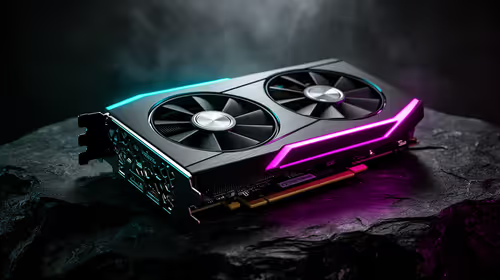
The GPU market in South Africa's 2026 retail landscape centres on the RTX 50-series and RX 9000-series. Most AIB RTX 5070 Ti designs land in the 320 to 355mm range. RTX 5080 triple-fan variants from ASUS, MSI, and Gigabyte reach 350 to 380mm. The RTX 5090 in AIB form stretches to 380 to 420mm depending on cooler design. This means a case with 380mm clearance covers the RTX 5070 Ti and most 5080 designs, while a 440mm clearance case accommodates every current RTX 50-series card.
AIO Radiator Selection and Placement for SA Conditions 🌡️
South Africa's warmer ambient temperatures amplify the benefit of larger AIO radiators. A 360mm AIO handles processors up to the Ryzen 9 9900X comfortably in a 28-degree room. A 420mm AIO maintains safe temperatures for the Ryzen 9 9950X or Core Ultra 9 285K in the same conditions. When choosing between top and front AIO mounting: front mounting gives 3 to 6 degrees Celsius lower CPU temperatures because the radiator draws fresh room air, but it consumes the entire front intake position. Top mounting leaves the front intake free for dedicated GPU cooling fans.
Cable Management at High TDP Levels 🔌
A build combining a large AIB GPU at 400 to 575W with an AIO and a high-end PSU generates a cable bundle unlike anything from five years ago. The RTX 5090 requires a 16-pin PCIe 5.0 power connector, a thick cable assembly needing 30mm or more of behind-tray channel depth to route without bowing the side panel. Add the 24-pin ATX, dual CPU EPS cables, and three to five fan cables, and the cable mass becomes significant. Cases designed for these loads offer 28 to 35mm channel depth, dedicated 16-pin power cable routing clips near the GPU zone, and a PSU shroud with a pass-through grommet sized for the fat 16-pin cable tails.
Route the 16-Pin PCIe Cable First ⚡
When building with an RTX 5090 or 5080 using the 16-pin PCIe 5.0 connector, route this cable through the case before installing any other component. The thick braided cable is inflexible and needs a dedicated path from the PSU to the GPU zone. Routing it after the board and AIO are installed creates stress bends that can damage the connector over time.
FAQ
Can I pair a 440mm GPU clearance case with a front-mounted 420mm AIO without losing drive bays?
In most full-tower cases designed for this combination, you can mount the 420mm AIO at the front and retain at least two 3.5-inch drive bays in a removable cage behind the radiator. Some designs move the drive cage behind the PSU shroud entirely.
Does a large GPU affect front intake airflow in a case with a front-mounted AIO?
No. If the AIO occupies the front intake position, it becomes the primary air mover for the front zone. The GPU draws from the cooled stream passing the radiator, which is one reason front-mounted AIOs often yield better GPU temperatures as well as better CPU temperatures.
How do I know if my specific GPU model will fit with the AIO installed simultaneously?
Cross-reference three measurements: GPU length versus case GPU clearance, AIO radiator size versus case radiator support, and GPU height versus the distance between the PCIe zone and the front AIO bracket. Most case manufacturers publish all three figures in their specification tables.
Building with a large GPU and a 420mm AIO in South Africa?
Evetech stocks cases specifically designed for high-TDP, large-GPU builds with confirmed 440mm clearance and 420mm AIO support. Browse the full range and build with confidence.