Quick Answer
First confirm whether the issue is sag (the free end droops down) or a seating problem (the card is not fully clicked into the PCIe slot). Reseat the card to rule out a seating issue, then install a GPU support bracket to correct sag if the card is heavy. Check the case is on a level surface before drawing conclusions.
Step 1: Confirm the PC Case Is Actually Level 🔧
Before assuming the GPU is the problem, place a spirit level on the top of the case or on the case floor. Many desks, shelving units, and floors have a slight lean that is invisible to the eye but measurable to a level. If the case itself is tilted, the GPU will appear to sag even with zero mechanical deflection. Adjust the case feet or place a thin shim under one side to bring the case fully level, then re-evaluate the GPU position. This step eliminates a surprisingly common false positive and takes under two minutes.
Step 2: Reseat the GPU Fully in the PCIe Slot 🖥️
A GPU that is not fully seated will sit at a slight upward angle at the connector end and may droop at the far end more than normal sag would explain. Power down the system, ground yourself (touch the case metal or use an anti-static wrist strap), remove the GPU, and reinstall it by pressing firmly along the full length of the connector until the retention clip snaps closed. Confirm all PCIe power connectors are fully seated as well, since a partially inserted 16-pin connector can pull the back of the card upward, creating an artificial tilt. After reseating, boot the system and confirm display output is stable before closing the case.
Step 3: Install a GPU Support Bracket If Sag Remains 🎮
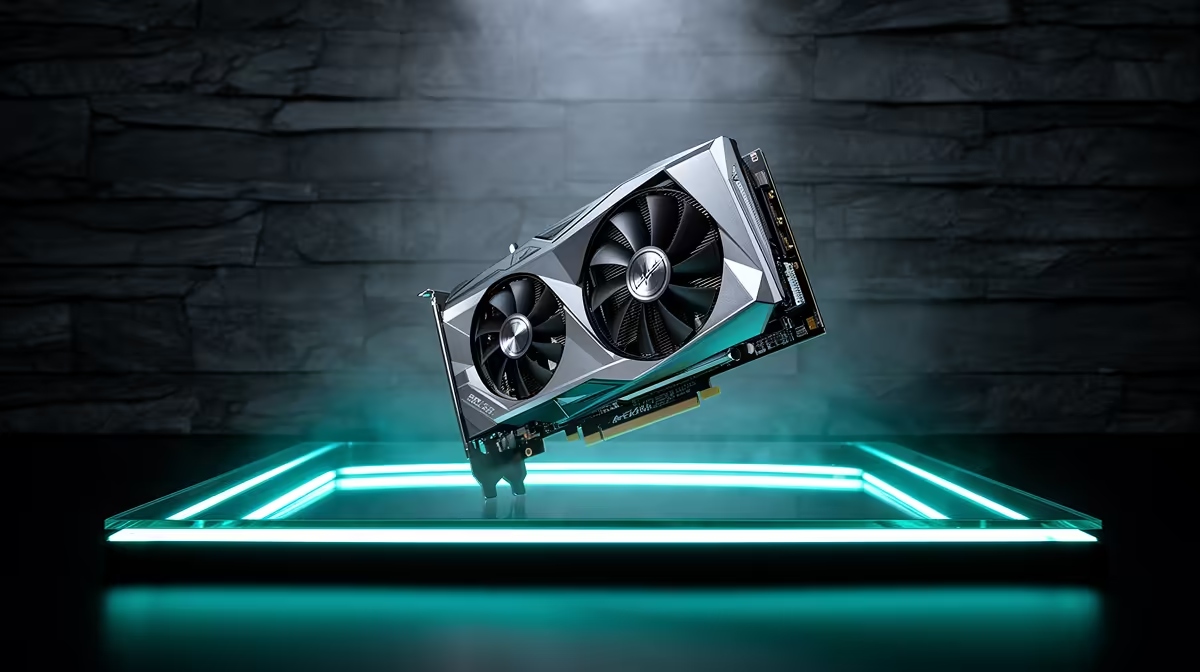
If the case is level and the GPU is fully seated but the card still droops at the far end, you are dealing with genuine gravitational sag caused by the card's weight exceeding what the PCIe connector can hold horizontal without assistance. The correct fix is a GPU support bracket: a height-adjustable post that sits under the GPU shroud and transfers the load to the case floor. Most brackets adjust through a range of 30 mm to 80 mm in height, covering the majority of ATX mid and full-tower cases. Match the bracket's rated load to your card's weight. Cards like the RTX 5080 and RX 9070 XT exceed 1.6 kg, requiring a bracket rated for at least 2 kg. Install the bracket so the contact pad rests gently against the shroud with no upward force applied (pushing the GPU upward creates the same stress on the slot as sag does, just in reverse).
Bracket Contact Pressure: Gentle Is Correct ⚡
A GPU bracket should support the card at its natural level position, not push it up to where you think level is. Install the bracket so the pad just makes contact with the shroud under the card's own weight. If you have to force the post into position or the card visibly lifts when the bracket is placed, you are over-correcting and adding upward stress to the PCIe connector.
FAQ
My GPU looks level when the case is on its side. Does that mean I have no sag problem?
Correct. Most builds are tested with the case horizontal during assembly, which puts no gravitational load on the PCIe slot at all. The sag only becomes apparent once the case is stood upright. Always check GPU level with the case in its normal vertical operating orientation.
Could a bent PCIe bracket on the GPU cause a levelling issue?
Yes. If the metal bracket strip that attaches to the case's I/O panel slot is bent, the card will sit at an angle regardless of PCIe seating. Remove the card and inspect the bracket, then gently straighten it with pliers if it is deformed.
Do I need to remove everything from the case to install a GPU bracket?
No. Most brackets install either via the PCI slot opening at the rear of the case or via the case floor with no component removal required. You may need to temporarily move a cable out of the way for access, but it is a quick job on most mid and full-tower cases.
GPU not sitting level and you need a bracket that fits your case?
Evetech stocks a range of adjustable GPU support brackets for mid and full-tower builds. Browse the accessories section to find the right fit for your card and case combination.