Quick Answer
A paper-like active pen is worth the extra cost in South Africa when you spend more than two hours per day writing on-screen, work in design, illustration, or calligraphy, or have already tried a standard pen and found the glassy screen feel distracting. For occasional annotators, a standard pen at a lower price is adequate.
What Makes a Pen Paper-Like and What It Costs Extra 📝
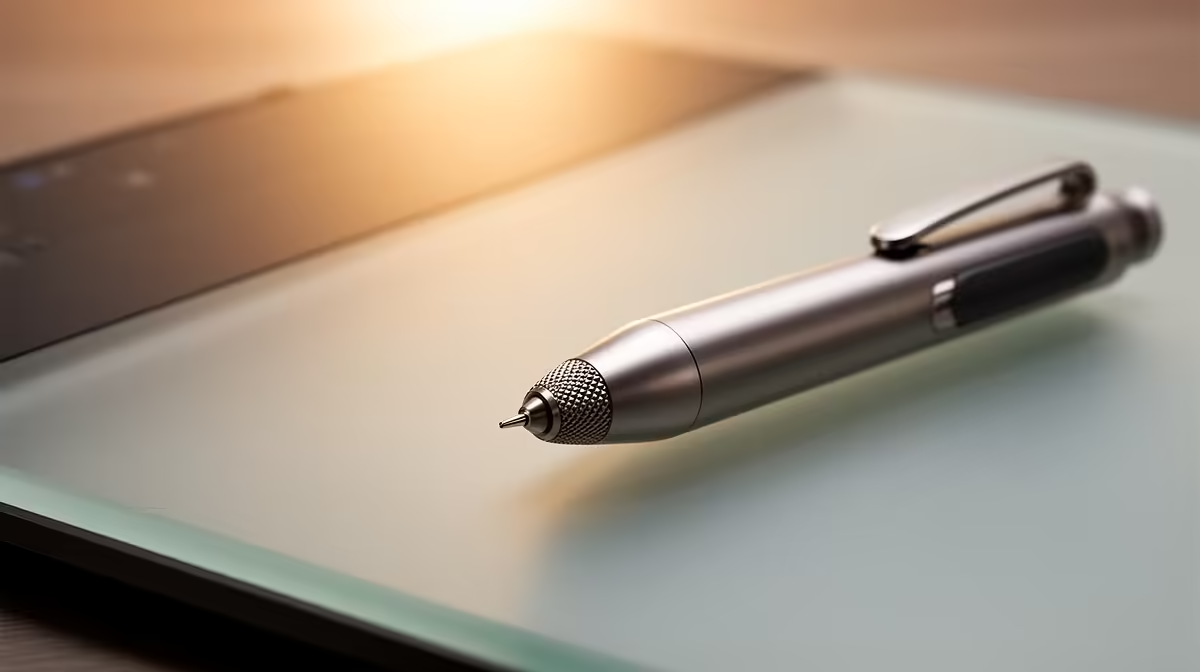
The paper-like feel in a stylus comes from the nib material. Standard styli use hard plastic nibs that glide on glass with minimal friction. Paper-feel pens use softer POM (polyoxymethylene) or fibre-tipped nibs that create microscopic drag, giving the sensation of a pen tip on 80 to 100 gsm paper. Some manufacturers also include a slightly more textured barrel grip and a refined tip spring rate that compresses naturally under normal writing force. In the SA market, pens with genuine paper-feel nibs typically cost R200 to R600 more than equivalent-spec pens with standard plastic nibs.
Use Cases Where the Premium Earns Its Cost 🎨
Handwritten lecture note sessions exceeding two hours benefit immediately: the paper-like nib prevents the hand fatigue caused by the unnatural effort of resisting a slippery surface. Digital calligraphers and hand-letterers who rely on natural stroke variation find paper-feel nibs give more intuitive control because the drag mirrors how a fine-tipped pen behaves on quality paper. Architecture and engineering students sketching technical diagrams at Wits or UP find that the nib friction slows impulsive strokes and improves line accuracy. Remote workers who annotate design comps or legal documents for multiple hours daily report less wrist tension after switching to paper-feel nibs.
When to Save the Extra Spend 💰
If you use your stylus primarily for quick form signatures, short meeting annotations, or navigating a 2-in-1 in tablet mode, a standard nib is entirely adequate. Similarly, if your screen already has a nano-texture matte protector, a standard nib on that rough surface already provides more drag than a paper-feel nib on bare glass. You can achieve paper-feel without buying a premium pen: a quality matte PET screen protector at R150 to R350 combined with a mid-range pen at R1,000 to R1,500 often matches the feel of a dedicated paper-like pen at R2,000 plus.
Replace Soft Nibs at the Three-Month Mark ⚡
Paper-feel nibs wear down faster than hard plastic nibs because the softer material abrades against the screen surface. Heavy daily writers should plan nib replacement at the three-month mark rather than waiting for strokes to start skipping. A nib replacement pack (R100 to R250 locally) typically contains five to ten nibs, covering one to two years of use for most people.
FAQ
Can I add paper-like nibs to a standard stylus I already own?
If your pen brand sells aftermarket nib packs that include softer or fibre-tipped options, yes. Wacom offers a range of nib types for its pens including felt nibs. Check whether your pen barrel diameter and nib locking mechanism are compatible with the nib type before purchasing.
Does a matte screen protector negate the need for a paper-like pen?
For many users, yes. A quality matte protector adds surface texture that increases drag even with a standard plastic nib. If you are budget-constrained, a R250 matte protector on a R1,000 standard pen often gives better value than a R2,000 paper-feel pen on bare glass.
Are paper-like pens available locally in South Africa without importing?
Yes. Several MPP 2.0 and Wacom AES compatible pens with paper-feel nibs are stocked locally by SA tech retailers. Purchasing locally avoids import duty, extended wait times, and the warranty complications that come with grey-market international orders.
Not sure whether a paper-like pen is right for your setup?
Evetech stocks active stylus pens across a range of nib types and price brackets. Browse current availability to compare standard and paper-feel options for your 2-in-1 or drawing tablet.