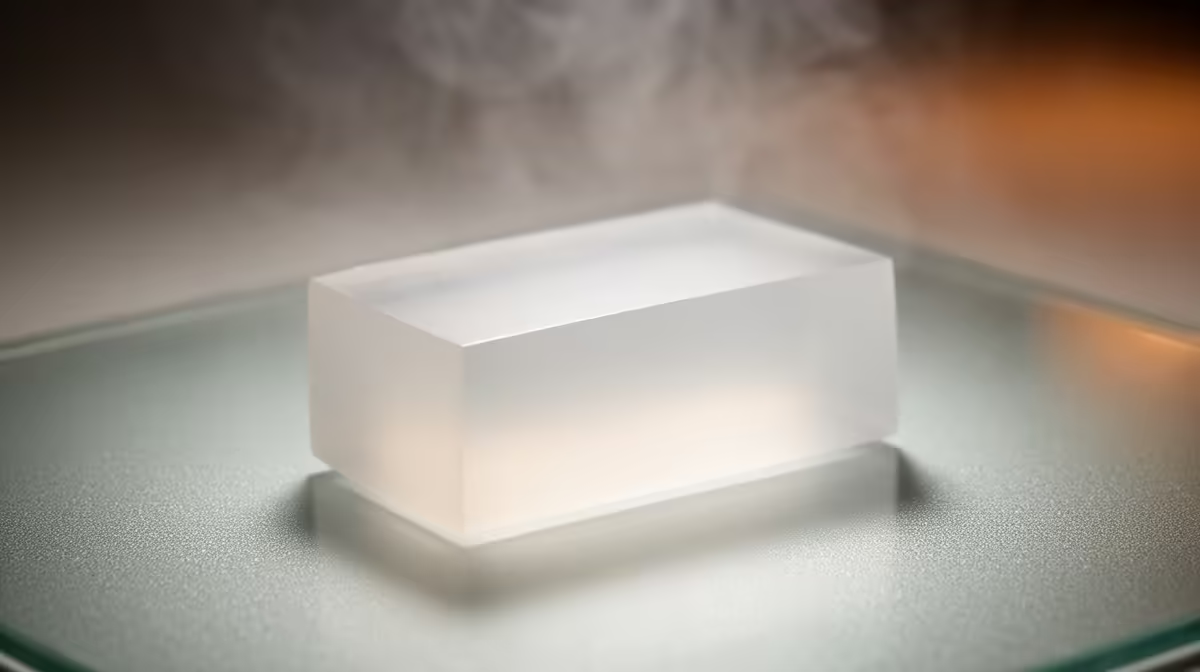
Pour molten gold into a mould packed with leftover residue and the casting comes out pitted, porous and ruined. That single failure point is why castable resin for jewellery exists as its own material class. It is a wax-loaded photopolymer that vaporises almost completely inside a kiln, so the cavity it leaves behind is a clean negative of your printed master. For South African jewellers moving from hand-carved wax to resin printing, understanding how the burnout behaves is the difference between a usable workflow and a bench full of scrap.
Quick Answer
Castable resin is a wax-filled photopolymer that burns out of an investment mould at around 700 to 730 degrees Celsius with minimal ash, leaving a clean cavity for casting gold, silver or bronze. Its trade-off is lower green strength than standard resin, so thin printed masters need gentle handling before they go into investment.
What Makes Castable Resin Different from Standard Resin
Standard SLA and MSLA resins are built to stay solid. That is the last thing you want when the part is meant to be destroyed inside a mould. A standard resin master left in an investment cycle leaves behind a hard carbon shell and ash that blocks the metal from filling fine detail, which is exactly the defect that ruins a ring shank or a prong.
Castable resins are formulated around a wax component, often in the region of 20 percent wax content, so that under heat the part softens, expands gently and then vaporises rather than charring. The result is a residue-free, low-ash burnout that mirrors the behaviour traditional carving waxes have offered for decades. That clean exit is the whole point: it is what lets you cast intricate filigree, textured bands and small lost-wax pieces with crisp edges.
The Burnout Cycle in Practice
A castable resin master does not go straight from print to metal. It is invested in a plaster-based mould, then placed in a kiln that ramps through a staged temperature schedule. A typical cycle begins by loading the flask into a cold oven, then climbs to around 150 degrees Celsius over the first 30 minutes and holds there for two to three hours. That low-temperature plateau lets the wax component soften and flow out slowly so it does not build enough pressure to crack the investment. The cycle then steps through the mid-300s and continues to around 730 degrees Celsius before holding at casting temperature, often 500 to 550 degrees, while the metal is prepared.
Kiln ventilation is critical at the higher stages. When the resin gasifies it needs oxygen to burn off cleanly. In a poorly ventilated kiln the resin carbonises instead of burning, and the carbon deposits left in the cavity show up as dark inclusions in the finished casting. A programmable muffle kiln that can reach at least 850 degrees and hold accurate temperature ramps is not optional for reliable work.
Why the Ramp Matters
The slow early stages give the wax time to melt and flow out before it can expand violently and crack the investment. Rushing the ramp is the most common reason a mould fails, and it has nothing to do with the resin itself. If you are buying a printer specifically for jewellery, factor in that your kiln schedule is as important as the resin you choose. The range of resin and FDM machines in the 3D printer category at Evetech gives you a sense of which platforms suit small high-detail work versus larger prototyping.
Green Strength and Handling
The same wax content that makes burnout clean also makes the cured part more brittle and slightly softer than a standard engineering resin. A delicate prong setting or a thin pavé rail can snap if you pry it off the build plate carelessly. Supports should be cut, not torn, and fine masters are best kept supported until the moment they go into investment.
Choosing a Resin for Gold, Silver and Bronze
The metal you cast influences the resin and cycle you pick. Higher-temperature pours such as bronze and certain gold alloys demand a resin rated to survive the full burnout without leaving carbon, while silver is more forgiving. Reputable castable wax resins are sold with a recommended burnout schedule on the bottle, and following it exactly matters more than the brand name on the label.
Investment Powder and Flask Selection
The resin does not work alone. The investment compound you pack around the master must be rated for resin casting, not just traditional lost-wax, because some standard dental or general jewellery investments trap micro-bubbles more readily against a printed surface than against a carved wax. A phosphate-bonded investment designed for resin masters is the safer starting point. Flask size matters too: the investment wall between the master and the flask edge should be at least 6 to 8 mm on all sides to prevent cracking under thermal stress during the high-temperature hold.
For a working bench, the consumables add up alongside the printer: investment powder, a flask system, cutters and finishing tools. It is worth scanning the top-selling accessories at Evetech when you are kitting out a small casting setup so the tooling does not become an afterthought.
Frequently Asked Questions
Can I cast directly from standard 3D printer resin?
No. Standard resin chars and leaves a hard carbon residue and ash inside the mould, which blocks metal flow and ruins fine detail. Only wax-loaded castable resin burns out cleanly enough for reliable jewellery casting.
Does castable resin leave any ash at all?
Quality castable wax resins are formulated for near zero ash, but no resin is perfectly clean if the burnout cycle is rushed or the kiln lacks adequate ventilation. A correct staged kiln schedule and good airflow are what deliver the residue-free cavity.
Why is my castable master so brittle?
The high wax content that gives clean burnout also lowers green strength. That is normal and expected. Handle thin sections gently, cut supports rather than snapping them, and keep delicate pieces supported until investment.
What kiln temperature does castable resin need?
Most schedules ramp in stages up to roughly 700 to 730 degrees Celsius, with slow early holds around 150 degrees so the wax flows out before the part expands. Always follow the schedule supplied with your specific resin.
Is resin printing accurate enough for fine jewellery?
Yes. Modern MSLA printers resolve detail finer than most hand carving, which is why resin lost-wax has become standard for production rings, pendants and custom pieces. The limit is usually your finishing skill, not the printer.
Ready to move your casting workflow from hand carving to a repeatable digital one? Compare the resin printers in the 3D printing range at Evetech and build a setup that turns clean burnout into clean castings.