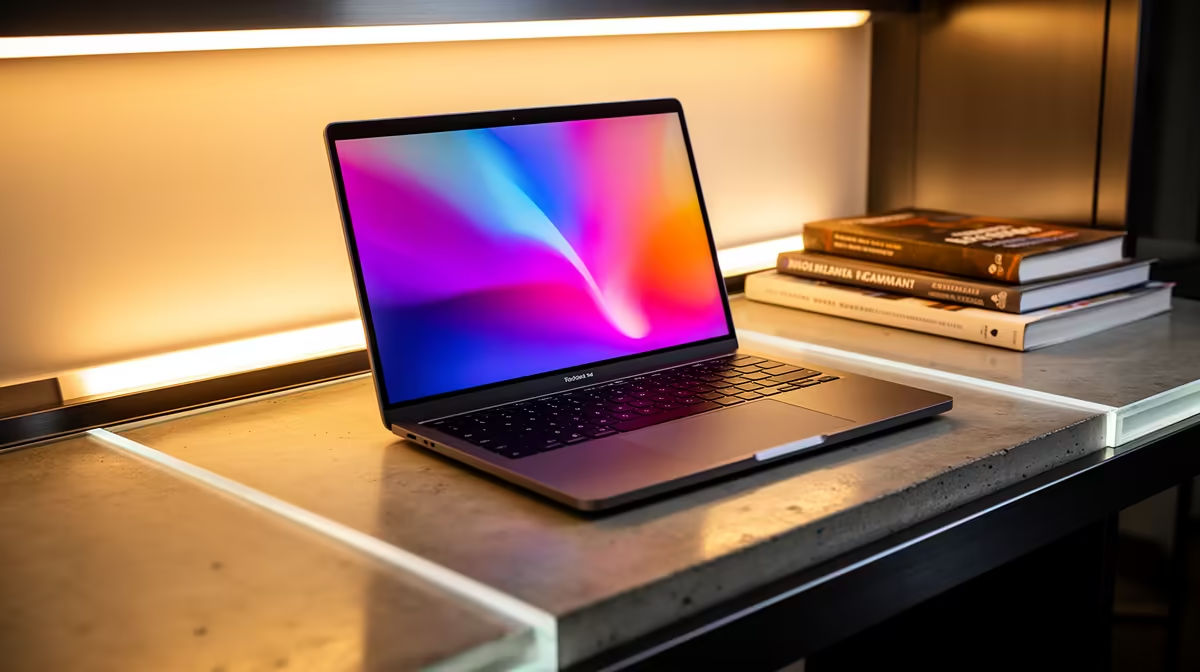
Microsoft stopped supporting Windows 10 in October 2025, which means the operating system on your study machine is no longer getting security patches. For a student starting the 2026 academic year, that turns the Windows 11 question from a nice-to-have into a real requirement. The good news is simple: any new machine you buy now is already built for it. Windows 11-ready student laptops ship with the security hardware Microsoft demands, so you are covered for the full year ahead and well beyond.
Quick Answer
Every new laptop sold today includes a supported processor, a TPM 2.0 security chip and UEFI Secure Boot, which are the three things Windows 11 requires. That makes any current student machine Windows 11-ready out of the box, with solid SA options starting from around R8,000 that comfortably handle lectures, assignments and a full academic year.
What Windows 11 Actually Demands
Windows 11 has a short, strict hardware checklist, and it is the reason so many older machines were left behind. The system needs a 64-bit processor from Microsoft's supported list, a TPM 2.0 module, firmware with Secure Boot enabled, at least 4GB of RAM and 64GB of storage. The two that trip up older laptops are TPM 2.0 and Secure Boot, both security features that protect your login keys and stop untrusted code loading at startup.
Machines built before roughly 2018 often lack the hardware entirely, which is why upgrading an old laptop is frequently a dead end. A new device sidesteps all of it: the chip, the TPM and the Secure Boot firmware are present and switched on from the factory.
Why This Matters For The 2026 Year
With Windows 10 support ended, a machine still running it stops receiving the security updates that keep your banking logins, university portal and personal files safe. For a student who lives on that laptop for a full year, that is not a risk worth carrying. A Windows 11-ready device keeps getting patches throughout 2026 and for years after, which is exactly the kind of longevity that justifies the spend.
What To Look For Beyond The Windows Requirement
Meeting the Windows 11 baseline is the floor, not the goal. For day-to-day study, a few specs decide whether the machine still feels good in second semester.
Memory And Storage
Aim for 8GB of RAM as a sensible minimum and 16GB if your budget stretches, since browser tabs, a video call and a document open at once eat memory fast. For storage, an SSD is essential. It makes the whole machine feel quick and boots in seconds, and 256GB is a comfortable starting point for notes, assignments and a few apps. If your course involves large datasets, recorded lectures or design software, 512GB is worth the modest premium.
Battery And Portability
A student carries a laptop between lectures, the library and res, so weight and battery life matter. A machine that lasts most of a teaching day off the charger saves you fighting for a plug point between classes. Lighter is better when it is going in a backpack every day.
Display Quality
A clear, comfortable screen matters more during long study sessions than most students expect. For note-taking and reading, a 1080p display at 13 to 15 inches is the sweet spot: large enough to work on without straining, compact enough for a crowded seminar desk. Matte or anti-glare panels hold up better under bright lecture-hall lighting than glossy alternatives.
Connectivity and Ports
Check what ports the machine actually has before you buy. A laptop with only USB-C requires an adaptor to connect a projector, a USB flash drive, or a wired network connection. For a student who presents work in class or submits assignments from USB drives, at least one full-size USB-A port and an HDMI output save constant adaptor juggling. Wi-Fi 6 support is worth having for dense campus networks that can get congested during peak hours.
Build And Keyboard
You will type thousands of words on this thing. A keyboard that feels solid and a chassis that survives daily transport are worth more than a slightly faster chip you will never notice in a word processor.
Processor Options Worth Knowing
Not all Windows 11-compatible processors are the same. For straightforward student work, an Intel Core i3 or AMD Ryzen 3 from recent generations handles notes, browsing and video calls without breaking a sweat. An i5 or Ryzen 5 buys noticeably more headroom for heavier workloads: running simulations, editing large spreadsheets, video rendering for media students, or compiling code for computer science degrees. At the student price range in SA, a 12th or 13th-generation Intel Core i5 or a Ryzen 5 7000-series chip delivers a strong balance of performance and battery efficiency that holds up across a full academic day.
Picking The Right Machine For SA Students
The cheapest usable laptops in South Africa start around R8,000, and at that level you get a Windows 11-ready machine fine for browsing, documents and lectures. Spending a little more buys more RAM, a bigger SSD and better battery life, which is usually the smarter call for a device meant to last a full degree. If your work is mostly writing, research and video calls rather than gaming or heavy editing, you do not need to overspend.
For students who work mainly at a desk in res, a compact desktop is worth a thought too, often delivering more performance per rand than a laptop. The mini PC range at Evetech covers small machines that tuck onto a crowded desk while still meeting every Windows 11 requirement. When you want a quick read on what is proving popular and reliable, the top-selling systems at Evetech give a fast sense of where the value sits this year.
Frequently Asked Questions
Is every new laptop automatically Windows 11-ready?
Yes. Current laptops ship with a supported processor, TPM 2.0 and Secure Boot, which are the three hardware requirements Windows 11 enforces. You do not need to check or enable anything yourself on a new machine.
Can I still use a Windows 10 laptop for studying in 2026?
You can switch it on, but it no longer receives security updates after October 2025, which leaves your data exposed over a full academic year. For anything involving logins and personal files, a supported machine is the safer choice.
How much should a student spend on a laptop?
Usable Windows 11 machines start around R8,000 in South Africa. Spending a bit more for 8GB or 16GB of RAM and a larger SSD is usually worthwhile on a device expected to last several years of study.
What is TPM 2.0 and do I need to worry about it?
TPM 2.0 is a small security chip that protects your encryption keys and login credentials. On a new laptop it is already present and enabled, so it is one less thing to think about when you buy current hardware.
Starting the 2026 academic year on the right machine? Browse the systems range at Evetech to find a Windows 11-ready device that lasts your whole degree, not just one semester.