Quick Answer
A standard 360mm AIO costs roughly R1,500 to R2,200 in South Africa, while an LCD AIO with a colour display pump head sits between R2,800 and R4,500. The LCD version delivers no meaningful cooling advantage. You are paying entirely for the screen, and whether that is worth it depends on how much you value aesthetics in a windowed build.
What Standard 360mm AIOs Deliver 🔧
A quality standard 360mm AIO like the Cooler Master MasterLiquid 360L Core or the DeepCool LE720 pushes three 120mm fans across a full-length radiator and keeps a Ryzen 7 9700X under 75 degrees Celsius during sustained Cinebench loads. Pump head aesthetics are limited to an infinity mirror or simple ARGB ring, which is enough for most tempered glass builds. At R1,600 to R2,200 you get genuine thermal headroom for overclockable processors, a manufacturer warranty of three to five years, and no reliance on any display firmware that could bug out after a driver update.
What LCD AIOs Add to the Price 💰
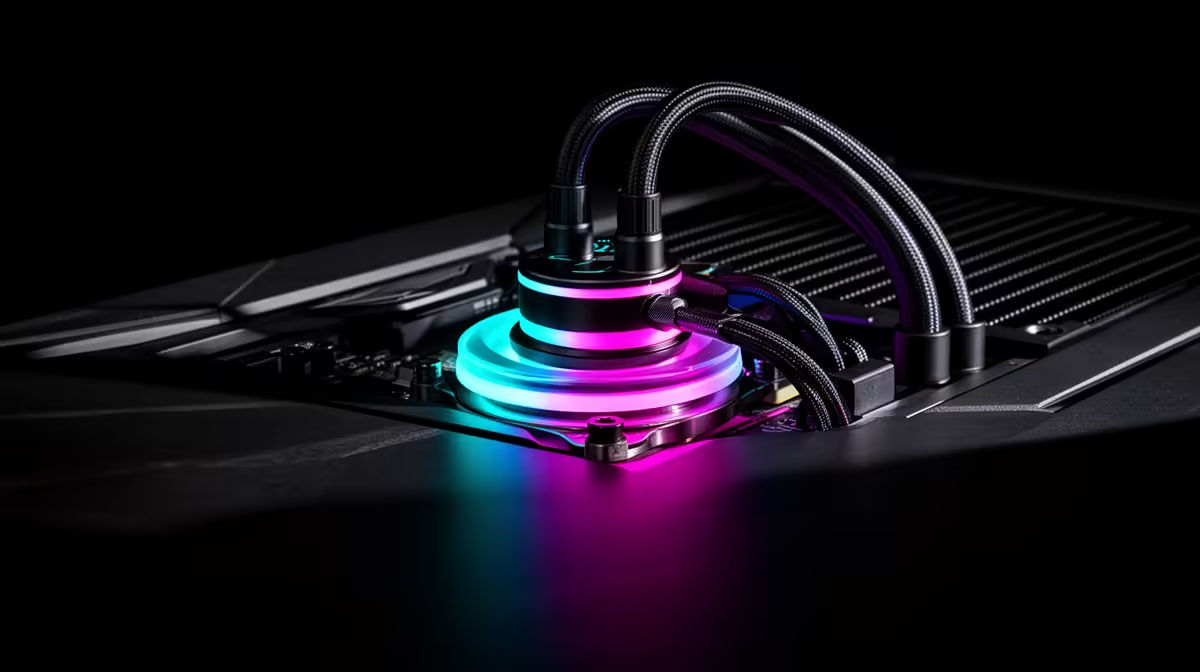
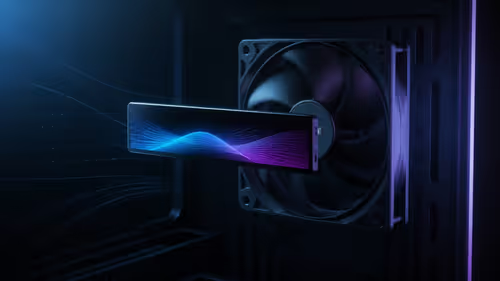
LCD pump heads feature a small colour screen, typically 2.1 inches on units like the Corsair iCUE Elite Capellix XT or NZXT Kraken Elite, capable of displaying CPU temperature, a custom image, or an animated GIF. That screen adds R1,200 to R2,000 to the retail price in the SA market with no improvement to radiator size, fan count, or pump flow rate. Thermal performance between an LCD 360mm AIO and a standard 360mm AIO from the same tier is within 1 to 2 degrees Celsius in real-world testing. The software ecosystem required to run the display (iCUE, NZXT CAM) also consumes a small but measurable portion of RAM and runs in the background permanently.
Which Makes More Sense for SA Builders 🖥️
If your build sits inside a tempered glass case in a visible position and the aesthetic payoff matters to you, the LCD AIO is a legitimate splurge at R3,000 to R4,000. If you are optimising for rands spent on actual gaming performance, that R1,500 saving is better directed at a faster NVMe SSD, more RAM, or a higher-tier GPU. For competitive gaming setups where the case is under a desk, the LCD adds zero value. SA builders on a strict budget building around a Ryzen 5 or Core i5 chip have no good reason to spend R3,500 on a cooler when the chip itself costs R3,200 to R4,500.
Firmware Stability Check Before Buying ⚡
If you want an LCD AIO, search for reports of display firmware bugs on the specific model before purchasing. Some early LCD units required firmware updates to fix flickering displays, and in rare cases the display fails entirely after a year, leaving the pump and fans functional but the feature you paid for dead.
FAQ
Do LCD AIO coolers run hotter than standard ones because of the display?
No, the LCD display draws negligible power and does not affect radiator or pump performance in any measurable way. The thermal performance difference between LCD and non-LCD AIOs at the same radiator size is within 1 to 2 degrees Celsius, which is inside normal variance.
Are 360mm LCD AIOs worth buying for a Ryzen 9 9900X build?
A standard 360mm AIO is fully capable of cooling the Ryzen 9 9900X under gaming and rendering loads. The LCD variant adds no extra thermal capacity. If budget is a concern, the saved R1,200 to R2,000 is better spent elsewhere in the build.
What is the warranty difference between LCD and standard AIOs in SA?
Most LCD AIOs carry the same three to five year warranty as their standard counterparts, but some brands cover only the pump and fans and exclude the display panel from the full warranty period. Read the fine print on the specific model before buying, and confirm local warranty handling is available through the retailer.
Not sure which AIO fits your build?
Compare standard and LCD 360mm liquid coolers side by side at Evetech, with all major brands and local warranty support covered.